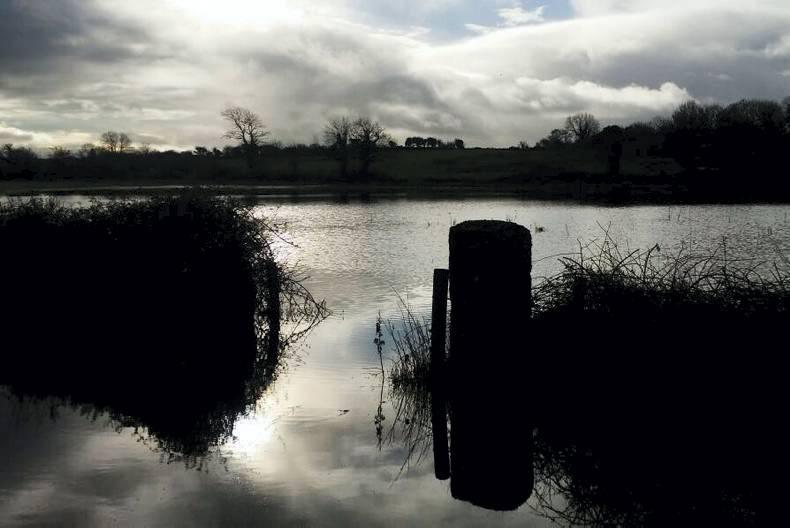
The National Co-ordination Group for Response to Flooding (NCG) met again today, Tuesday 5 January, in the National Emergency Co-ordination Centre to review the flooding situation and the response by emergency services.
The NCG is comprised of representatives from all the main Government departments and all the key State agencies, including the Office of Public Works (OPW), ESB Networks, HSE, Civil Defence, Coast Guard, Defence Forces, An Garda Síochána and Met Éireann.
The meeting was separate to an emergency cabinet meeting, also held today, the purpose of which was to discuss future plans for the prevention of flooding and maintenance of the River Shannon.
At today’s meeting of the NCG, advice was offered to people who have septic tanks and who are currently being affected by flooding of their land or homes.
What should I do if my septic tank is flooded?
If possible, the system should not be used until flooding subsides below the level of the tank, but this is more to prevent water backing up into a property than any other reason.Many systems will be robust, they will be recovered and will be usable after a flood. Where electrical components are used or damage is suspected, then a professional assessment (and repair) is necessary.There is no significant environmental concern above and beyond that posed by the wider flooding event.Septic tanks - what to do after flooding
Due to the potential for toxic gases in all septic systems, any servicing, cleaning, repairs, internal damage assessments and emptying/pumping must be carried out by trained and experienced specialists.After the flooding subsides, replace any dislodged manhole covers and check the system for any external signs of damage, such as settlement, ponding of waste water, overflowing, blocked drains or not accepting water from the house.If you suspect damage, or if your system relies on electrical components such as pumps, have the entire system assessed by a professional service engineer.Ensure that any nearby private wells are checked and disinfected prior to use by following the advice for private well owners on what to do after flooding. The NCG has also reiterated its warning to the public “not to enter flood waters, as manholes may have been dislodged and the flood water will be contaminated and may pose a risk to health”.
Electrical safety advice
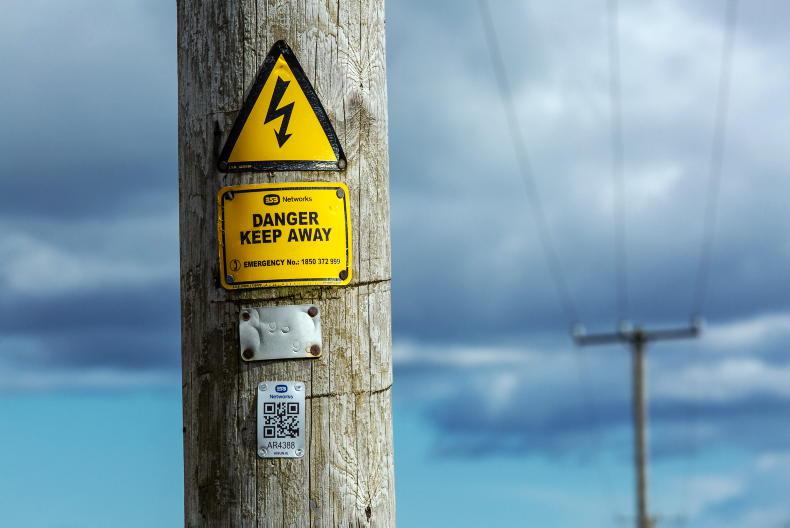
Meanwhile, ESB Networks has issued some pointers for electricity customers, saying they need to be "extra vigilant" during these times of heavy flooding.
When using a boat to travel through floodwaters people need to be extra vigilant, especially when crossing beneath electricity wires at their lowest point. If in doubt, contact the ESB Networks number: 1850 372 999.Avoid any fallen or reduced height electricity wires or ground-mounted equipment that may be partially or fully submerged. The public should report this immediately by calling 1850 372 999.Where your electrical installation is at risk due to flooding, you should turn off your electricity supply at the isolator switch fuse box if it is safe to do so. Fuseboxes are usually near your meter position which may be inside your property or in an outside meter cabinet. If this is not possible you may be able to unplug electrical appliances where it is safe to do so. Above all else ESB Networks says you must never touch any electrical appliances, cables or equipment while standing in water or where appliances are wet or in water.Finally, before reconnecting your electrical installation when the floods recede, you should have it checked out by a registered electrical contractor.Rising water levels
Levels in Lough Derg have increased marginally in the past 24 hours and the flow of water through Parteen Weir will remain at 470 cubic metres per second (cumecs) today. The situation will be reviewed again tomorrow.
The levels in Lough Derg may reach 2009 levels in the coming days and as a result, the flow through Parteen Weir may increase to 500 cumecs.
ESB Networks has warned that this level of water flow will continue to cause flooding to land and property in the vicinity of the Shannon downstream of Parteen Weir, including the areas of Springfield, Montpelier, Castleconnell, Mountshannon (Annacotty) and the University of Limerick.
Moreover, according to the OPW, all gauges on the Shannon catchment are currently indicating a rise in levels.
The OPW has also warned that the Erne catchment remains at a high level and needs to be monitored carefully over the coming days.
It adds that the expected rainfall on Wednesday evening and Thursday morning has the potential to cause surface water and pluvial flooding on the road network and urban areas of counties Monaghan, Cavan, Meath and Louth.
Read more
IFA makes remainder of fodder fund available as farmers battle rising waters
The National Co-ordination Group for Response to Flooding (NCG) met again today, Tuesday 5 January, in the National Emergency Co-ordination Centre to review the flooding situation and the response by emergency services.
The NCG is comprised of representatives from all the main Government departments and all the key State agencies, including the Office of Public Works (OPW), ESB Networks, HSE, Civil Defence, Coast Guard, Defence Forces, An Garda Síochána and Met Éireann.
The meeting was separate to an emergency cabinet meeting, also held today, the purpose of which was to discuss future plans for the prevention of flooding and maintenance of the River Shannon.
At today’s meeting of the NCG, advice was offered to people who have septic tanks and who are currently being affected by flooding of their land or homes.
What should I do if my septic tank is flooded?
If possible, the system should not be used until flooding subsides below the level of the tank, but this is more to prevent water backing up into a property than any other reason.Many systems will be robust, they will be recovered and will be usable after a flood. Where electrical components are used or damage is suspected, then a professional assessment (and repair) is necessary.There is no significant environmental concern above and beyond that posed by the wider flooding event.Septic tanks - what to do after flooding
Due to the potential for toxic gases in all septic systems, any servicing, cleaning, repairs, internal damage assessments and emptying/pumping must be carried out by trained and experienced specialists.After the flooding subsides, replace any dislodged manhole covers and check the system for any external signs of damage, such as settlement, ponding of waste water, overflowing, blocked drains or not accepting water from the house.If you suspect damage, or if your system relies on electrical components such as pumps, have the entire system assessed by a professional service engineer.Ensure that any nearby private wells are checked and disinfected prior to use by following the advice for private well owners on what to do after flooding. The NCG has also reiterated its warning to the public “not to enter flood waters, as manholes may have been dislodged and the flood water will be contaminated and may pose a risk to health”.
Electrical safety advice
Meanwhile, ESB Networks has issued some pointers for electricity customers, saying they need to be "extra vigilant" during these times of heavy flooding.
When using a boat to travel through floodwaters people need to be extra vigilant, especially when crossing beneath electricity wires at their lowest point. If in doubt, contact the ESB Networks number: 1850 372 999.Avoid any fallen or reduced height electricity wires or ground-mounted equipment that may be partially or fully submerged. The public should report this immediately by calling 1850 372 999.Where your electrical installation is at risk due to flooding, you should turn off your electricity supply at the isolator switch fuse box if it is safe to do so. Fuseboxes are usually near your meter position which may be inside your property or in an outside meter cabinet. If this is not possible you may be able to unplug electrical appliances where it is safe to do so. Above all else ESB Networks says you must never touch any electrical appliances, cables or equipment while standing in water or where appliances are wet or in water.Finally, before reconnecting your electrical installation when the floods recede, you should have it checked out by a registered electrical contractor.Rising water levels
Levels in Lough Derg have increased marginally in the past 24 hours and the flow of water through Parteen Weir will remain at 470 cubic metres per second (cumecs) today. The situation will be reviewed again tomorrow.
The levels in Lough Derg may reach 2009 levels in the coming days and as a result, the flow through Parteen Weir may increase to 500 cumecs.
ESB Networks has warned that this level of water flow will continue to cause flooding to land and property in the vicinity of the Shannon downstream of Parteen Weir, including the areas of Springfield, Montpelier, Castleconnell, Mountshannon (Annacotty) and the University of Limerick.
Moreover, according to the OPW, all gauges on the Shannon catchment are currently indicating a rise in levels.
The OPW has also warned that the Erne catchment remains at a high level and needs to be monitored carefully over the coming days.
It adds that the expected rainfall on Wednesday evening and Thursday morning has the potential to cause surface water and pluvial flooding on the road network and urban areas of counties Monaghan, Cavan, Meath and Louth.
Read more
IFA makes remainder of fodder fund available as farmers battle rising waters








SHARING OPTIONS