


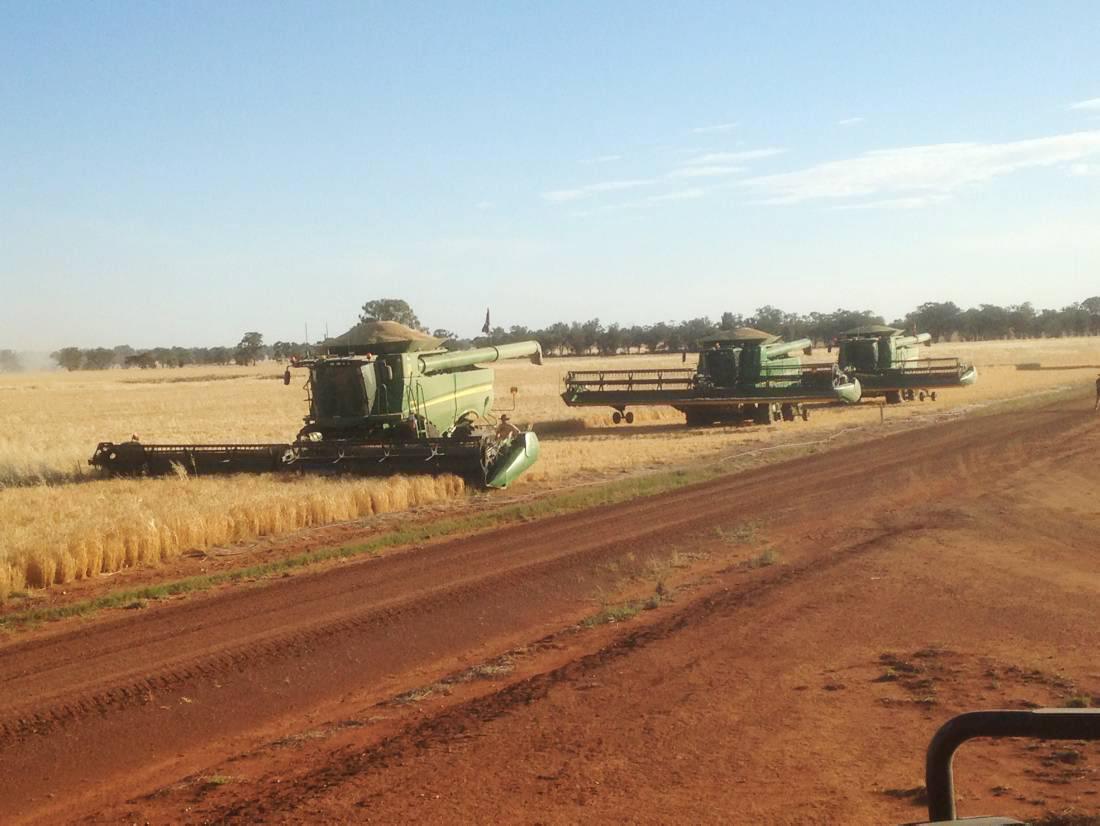
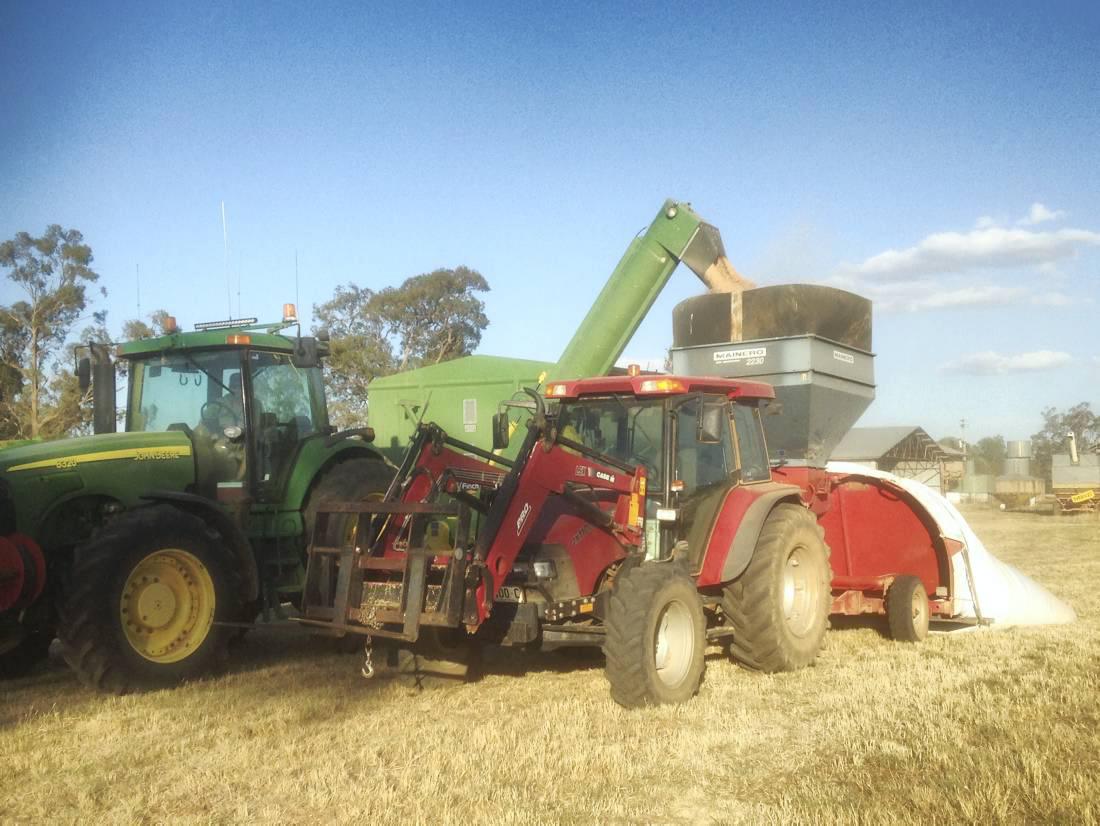
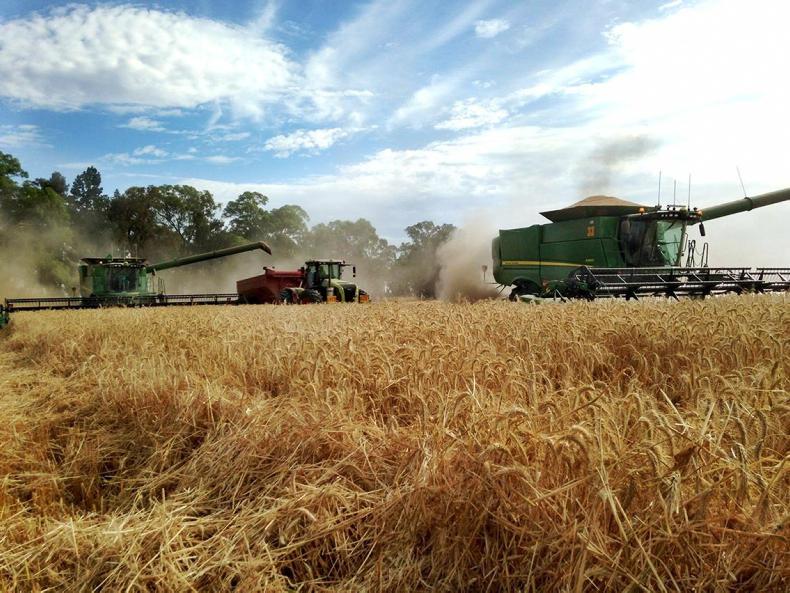
While you in Ireland are nearly in mid-winter, the wheat harvest is nearly complete in parts of Australia. Here on our farm we finished harvesting winter wheat last Thursday, which marks the end of our winter crop for 2014. Now we only have summer crop left to harvest.
This year is the earliest harvest finish in our farming history – about two weeks earlier than ever before. Australia looks to be on track for a 22-23.5Mt wheat harvest (down from roughly 27Mt last year), and our canola (oilseed rape) tonnage is also reduced from last year.
Good crop quality
Protein levels in our wheat have been quite high this year. We have a lot of 12-13% protein, which is probably indicative of the tight finish we have had to our growing season. Parts of southeastern Australia have had among their lowest August-October rainfall levels on record and this is being reflected in reduced grain yields, but with better grain protein than expected.
Oil levels in our canola have been quite good though. There have been a lot of 44-45% oil levels reported and I have even heard of one load of canola in my area being taken in at 49% oil. Despite these high levels, there has been very little, if any, canola exported out of the eastern half of Australia.
This is partly due to the big domestic crush demand, but there are other reasons also. These include the fact that global oilseed supplies are larger than had been expected and that domestic canola basis levels (internal prices) are high due to the smaller domestic canola crop.
Wheat at 3t/ha
We have just finished the wheat harvest with an average yield of about 3t/ha. And our canola averaged between 1.6t/ha and 1.7t/ha. Our barley also yielded about 3t/ha but a lot of the barley land was double-cropped following mung beans, so I couldn’t expect any miracles.
The barley was planted directly behind the mung beans so moisture that fell between January and April (approximately 350mm) would have been used by the mung beans and hence would not have been available to the barley crops that followed. Thus the barley was grown on pretty much in-crop rain (about 220mm) whereas the wheat would have had most of the 350mm fallow rain also which, at even a 50% fallow efficiency, should have meant an extra 175mm water available for plants. However, the wheat and the barley ended up yielding the same.
In this region barley averaged between 3.5t/ha and 5.0t/ha this year, with most varieties going for malting, so it has been a good money-spinner.
Wheat yields were disappointing this year. I believe my early yields were hit by BYDV. My later-planted wheat yielded between 3.5t/ha and 3.7t/ha, but all the research says that the early or long-season wheat should out-yield the late season wheat by about 1t/ha. This is because of greater root extension, longer tillering, better ability to access deep nutrients etc.
Lack of rainfall was a serious issue this year. Crops established well with good rain from April to July but after that, particularly in South Australia and Victoria, the rain basically stopped. I have heard reports of wheat yields in parts of the Wimmera (a very safe grain-producing area in Victoria) yielding only 1.25t/ha when 4t/ha plus would be normal.
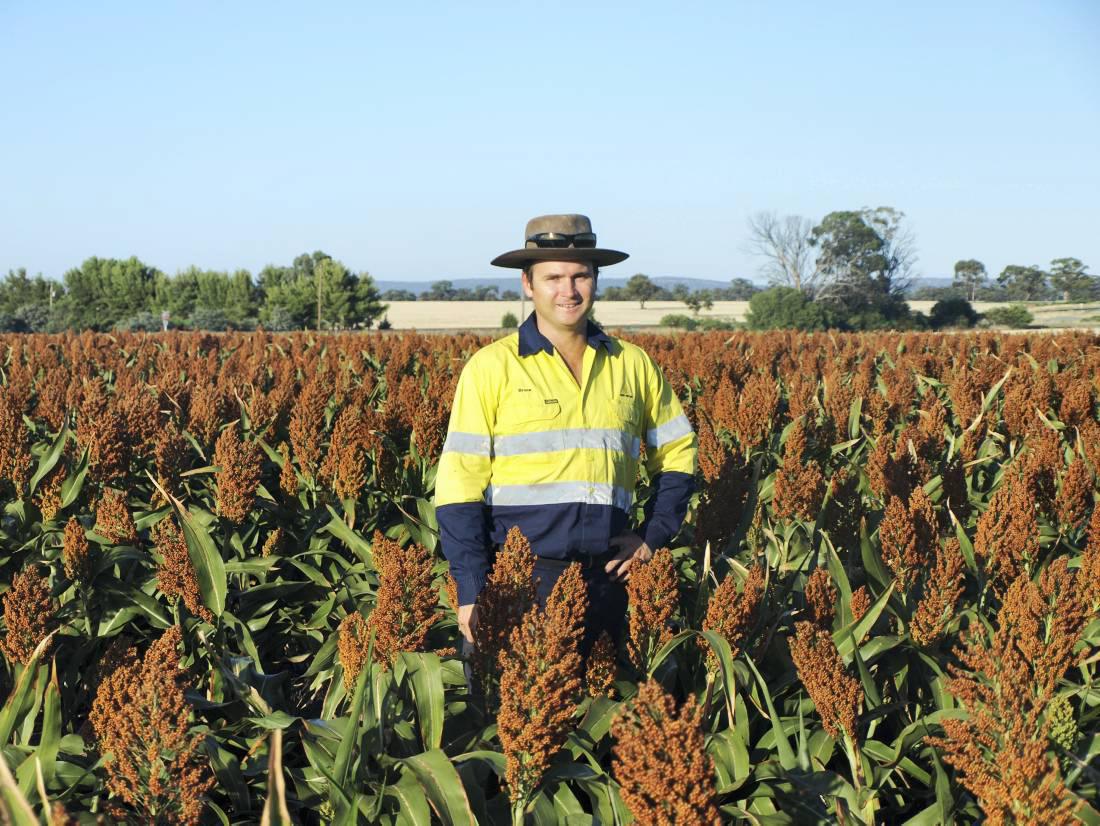
So, in general, grain is not plentiful in this part of Australia this year. Unless we get a big sorghum crop this year, we could export ourselves to a feed grain deficit on the east coast of Australia by the second half of 2015. This could happen given the higher percentage of high protein wheat, and malting barley, which will all be exported. And it appears that cattle-on-feed numbers are still very strong also and these animals need to be fed.
Both South Australia and Western Australia have smaller crops than last year. But there is very little domestic market in either of those states, so the vast majority of that grain needs to be exported. At this point it looks like wheat exports from Australia will be in the vicinity of 16Mt, which is significantly lower than last year.
My rain for August, September and October was about 15-20mm each month (between half to two-thirds of average), which was enough to keep the crop growing but it did hit yields.
Our current price for malting barley is about $275/t or €187/t. Australian Premium White wheat (10.5% protein) is about $260/t (€176/t) but Australian Prime Hard (APH13) (13% protein) is worth $300/t (€204/t). Canola is very much the poor cousin this year at $430/t (€292/t) and I expect to see a reduction in canola acreage next year if that price is maintained till planting.
Current weather
It is very dry here at present. I mentioned earlier that we need a big sorghum crop but very little has been planted so far.
I would love to see 20mm plus of rain shortly before I commit to planting. That land has been fallowed over winter and received 1.2m of moisture since the last crop.
But due to the dry spring and hot temperatures (we have already hit 42°C and it is still technically spring) the top 10cm of soil has dried out. I need about 20-30mm of rain to wet the seedbed. Last weekend’s forecast suggested between 50mm and 70mm from thunderstorms so we will probably have started planting by the time you read this.
Last year I dry-sowed in front of a forecast 30-40mm rainfall event but we only received 14mm, which only germinated about half the paddock. Where the sorghum came up and established well it averaged about 6t/ha; where it didn’t germinate the yield was about 0.0t/ha with just weeds growing and hence my reluctance to dry-sow.
Our forecast for summer is for another hot, dry one. This could affect both this year’s summer crop production and also potentially the coming winter crop if we have poor subsoil moisture levels at planting.
Summer crops
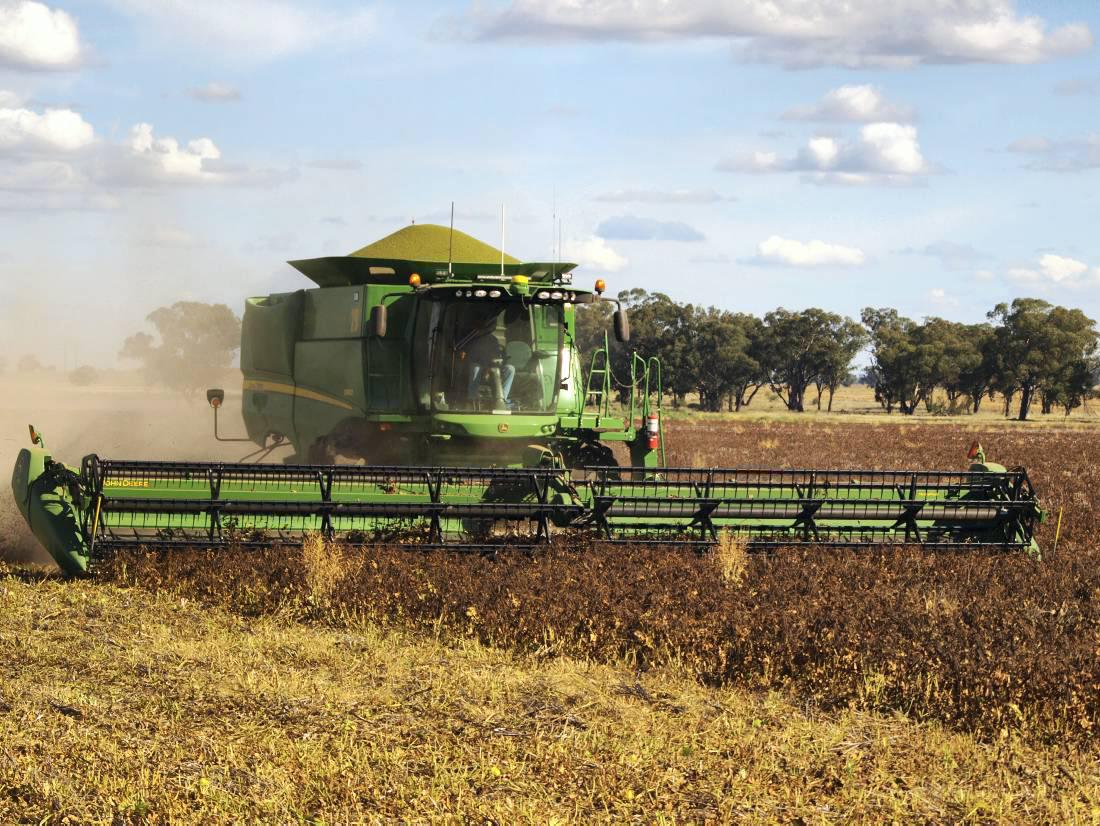
Our summer crop was quite successful this year. Our mung beans averaged about 1t/ha but were worth about $1,000/t (about €680/t) and our sorghum ranged from 0t/ha to 6t/ha, depending on plant establishment. Some of the pictures show summer crops being harvested.
Mung beans are a very fast-growing summer crop (a spring-sown crop for us). They only take about 100 days from planting to maturity. They are a legume, like peas and beans, and are used in the subcontinent (India, Pakistan, etc) in curries, dhal, etc. Mung beans are also used to make sprouting beans or bean sprouts.
The buyer I sell my beans to exports them into Europe, Japan, Taiwan and sometimes the subcontinent. They are a very interesting crop and if you can grow them well they are worth good money.
Trade agreements
Australia has recently signed a free-trade deal with China. However, we also had other recent deals with South Korea and Japan. Hopefully this augers well for food demand into these countries and our ability to supply with reduced tariff and increased quota levels.



SHARING OPTIONS