Co-op risk management, international collaboration and crisis control were all discussed in depth during the ICOS Conference this week. Paidi Kelly reports.
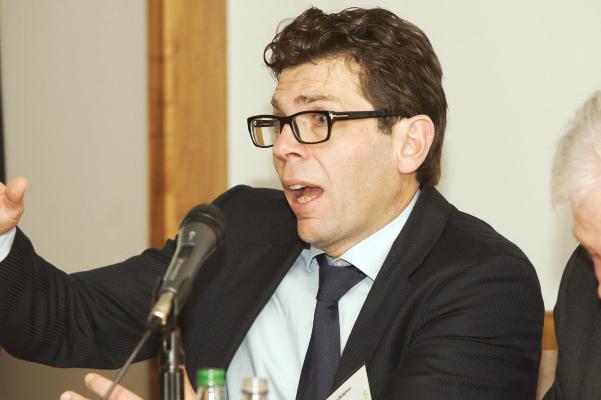
Bart Van Belleghem, M.D. EUCOLAIT, Brussels speaking at the 37th ICOS National Conference in Portlaoise.
ADVERTISEMENT
Q: How does the board of Arla work with people from different countries involved?
Ake Hantoft: The board works like that of any other co-op – with the farmer shareholders’ interest in mind. We don’t discuss specific prices at board meetings. We spend 30% to 40% of our time focusing on the long-term strategies of the co-op that will help us to deliver a better milk price and growth. Each country has their own representative board which elects someone onto the main board.
Q: Will access to capital curtail many expansion plans?
ADVERTISEMENT
Minister Coveney: I have met with the CEOs of all three banks and they assure me they are eager to do business with farmers. They have their agri-sales teams in place and are seeking business. Our TAMS scheme was undersubscribed last year as the weather reduced appetite for on-farm development. More competition in the banking sector would only be positive but farmers must be careful about the amount of money they borrow and that they don’t exceed their repayment capacity.
Q: Is there a point hedging milk price when we can’t lock in input prices and are exposed to volatility from that end?
Bart Van Belleghem: This is true and could actually expose you to more risk. In the US where hedging is popular, feed is one of the main costs on farms. This can be locked in, guaranteeing milk producers a certain margin.
Q: Do we have adequate testing facilities in this country to keep on top of potential food safety scares?
Patrick Wall: Probably not. The Department Lab in Backwesten is an excellent facility but we have a lot of fragmented labs around the country and would be served better by having a centralised lab. It would mean improved traceability and allow us deal with any food safety scares in house as opposed to have to export samples to get them tested.
This content is available to digital subscribers and loyalty code users only. Sign in to your account, use the code or subscribe to get unlimited access.
The reader loyalty code gives you full access to the site from when you enter it until the following Wednesday at 9pm. Find your unique code on the back page of Irish Country Living every week.
CODE ACCEPTED
You have full access to the site until next Wednesday at 9pm.
CODE NOT VALID
Please try again or contact support.
Q: How does the board of Arla work with people from different countries involved?
Ake Hantoft: The board works like that of any other co-op – with the farmer shareholders’ interest in mind. We don’t discuss specific prices at board meetings. We spend 30% to 40% of our time focusing on the long-term strategies of the co-op that will help us to deliver a better milk price and growth. Each country has their own representative board which elects someone onto the main board.
Q: Will access to capital curtail many expansion plans?
Minister Coveney: I have met with the CEOs of all three banks and they assure me they are eager to do business with farmers. They have their agri-sales teams in place and are seeking business. Our TAMS scheme was undersubscribed last year as the weather reduced appetite for on-farm development. More competition in the banking sector would only be positive but farmers must be careful about the amount of money they borrow and that they don’t exceed their repayment capacity.
Q: Is there a point hedging milk price when we can’t lock in input prices and are exposed to volatility from that end?
Bart Van Belleghem: This is true and could actually expose you to more risk. In the US where hedging is popular, feed is one of the main costs on farms. This can be locked in, guaranteeing milk producers a certain margin.
Q: Do we have adequate testing facilities in this country to keep on top of potential food safety scares?
Patrick Wall: Probably not. The Department Lab in Backwesten is an excellent facility but we have a lot of fragmented labs around the country and would be served better by having a centralised lab. It would mean improved traceability and allow us deal with any food safety scares in house as opposed to have to export samples to get them tested.
If you would like to speak to a member of our team, please call us on 01-4199525.
Link sent to your email address
We have sent an email to your address. Please click on the link in this email to reset your password. If you can't find it in your inbox, please check your spam folder. If you can't find the email, please call us on 01-4199525.
ENTER YOUR LOYALTY CODE:
The reader loyalty code gives you full access to the site from when you enter it until the following Wednesday at 9pm. Find your unique code on the back page of Irish Country Living every week.





SHARING OPTIONS