


This story is taken from the KPMG-Irish Farmers Journal AgriBusiness Report on sale with this week's print edition.
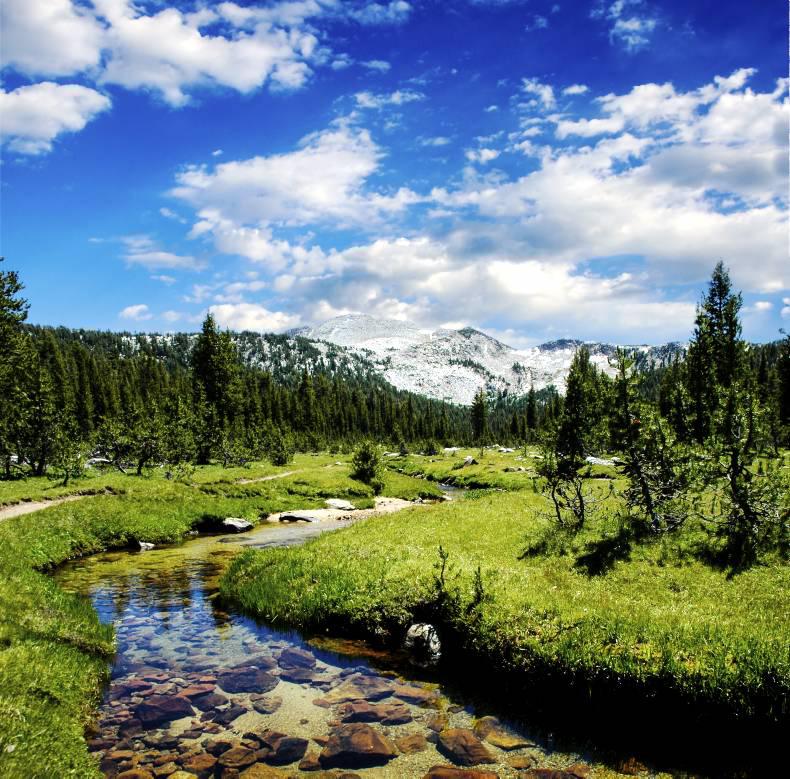
In the middle of the 19th century, the Sierra Nevada mountain range in California was a flurry of activity as prospectors scrambled among the rocks and streams in search of gold.
Fast forward to March 2016 and you will find a different sort of prospector foraging among the hills, but a prospector none the less. The difference today is that the hunt is now for snow – or more precisely the depth of the snow, known as the snowpack.
The US state of California is in the midst of its worst drought in recorded history, a drought that has lasted more than four years. But water officials believe that last year’s heavy snowfall in the Sierra Nevada mountains could finally mean a recovery from the drought is on the way.The snows that fall in the Sierra Nevada mountains are extremely important to California’s hydrology. As the snows melt, the waters drain into the central basin of California, feeding the state’s reservoirs and aquifers and providing about 30% of California’s water needs.
Increasing drought
While many regions of the US, and indeed the world, have always had to contend with drought, it is the growing severity and length of these drought periods that has made people sit up and pay greater attention.
Coupled with the fact that agriculture accounts for more than two-thirds of the world’s water use and humans will have to expand food production by 70% over the next four decades, it is no surprise to see the issue of water scarcity gaining greater prominence on global agendas.
It is on this basis that Michael Burry, the investor who predicted the 2008 financial crisis and made millions betting against the US housing market, now focuses all his financial trading on one commodity – water.
But how do you invest in water? It cannot be bought or traded in the traditional sense. To get around this, Burry invests in food and agricultural land as a proxy for water.
In a rare interview last December, Burry said he found the idea of transporting water to be impractical for both political and physical reasons.
“What became clear to me is that food is the way to invest in water. That is, grow food in water-rich areas and transport it for sale in water-poor areas,” said Burry. “This is the method for redistributing water that is least contentious, and ultimately it can be profitable, which will ensure that this redistribution is sustainable,” he added.
Almond production
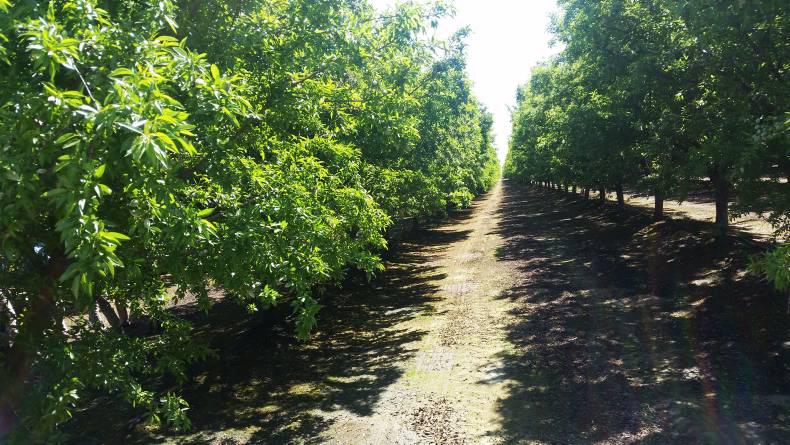
What’s even more interesting is the method of food production that Burry has chosen to invest in – almond farming. Over 80% of the world’s almond supply is grown in California which is an incredibly thirsty crop. It takes almost four litres of water for every almond grown.
California is a major producer of other edible nut crops such as walnuts and pistachios which also require a plentiful water supply to thrive. With strong export demand for these products coming from China, India and the Middle East – all regions where water scarcity is an issue – it is easy to see how water redistribution will become more and more relevant in the years ahead.
One company already facing up to the reality of water redistribution is Almarai, the Saudi-based dairy processor. After years of driving for self-sufficiency in many crops, the Saudi Arabian government reverted its policy towards greater imports of crops in 2008 as domestic production began to have a severe effect on the country’s water reserves.
Saudi Arabia has ceased producing wheat and in December last year it announced that the production of green fodder crops like alfalfa and Rhodes grass, which are used to feed livestock, will be phased out over the next three years.
It is estimated that it takes between 500 and 1,000 litres of fresh water to produce one litre of fresh milk in the Saudi Arabian desert due to the vast amount of irrigation required to grow alfalfa or Rhodes grass.
In the face of this, Almarai has been putting contingency plans in place over the last number of years around how best to feed its 170,000-strong herd of dairy cows from here on. Not happy to just import feed at the mercy of shifting market prices, the dairy processor decided to move back down the supply chain and invested in arable farms outside of Saudi Arabia.
Buying farmland
Since 2011, Almarai has snapped up some 42,000 acres of farmland in Argentina and the US at a cost of more than €140m. The group made its first move into overseas fodder production in 2011 when it paid €73m for Foodomonte, an Argentinian business that operates three large-scale corn and soya farms spread over more than 30,000 acres. At the time, Almarai said the deal would “improve its supply chain and ensure access to the highest quality feed”.
Three years later in 2014, Almarai made its move into the US when it paid almost €42m for a near 10,000-acre farm situated in Vicksburg, Arizona. The Arizona farm is used to produce alfalfa which is then baled and shipped back to Saudi Arabia. And in January this year, Almarai made its latest land acquisition when it paid €28m for a 1,790-acre alfalfa farm in California.
The reaction to Almarai investing in US farmland has been mixed. Many US farmers see it as a positive because they were already exporting bales of alfalfa before Almarai arrived, with most of it actually headed to China and Japan. Local farmers have said that Almarai is now buying more alfalfa hay from its neighbouring farmers and helping to improve the local economy.
However, there is also plenty of opposition to Almarai’s strategy to secure its feed supply. Opponents of the land purchases by Almarai say it makes little economic sense for California to effectively export its water in this way.
US economist Christopher Thornberg went on record saying that it is “insane” for California to be exporting its water in the form of alfalfa for “shockingly low prices”, especially with the state in the midst of its worst ever drought.
Cheap crops
“We grow a wasteful cheap crop in the desert and export it to the world, instead of using it to recharge reservoirs for the next drought, sell it to cities for a high value, sell it to other farmers for high-value crop-growing or use it for environmental needs,” says Thornberg.
“To have a water market is a win, win, win, lose situation. California cities, farmers and the environment all win, while only Chinese and Japanese cows and horses lose.”
Other critics have noted that not only does it result in California exporting its water in the form of alfalfa hay, but it also creates a large amount of carbon emissions transporting heavy bales of animal feed across the ocean by ship to the other side of the world.
Comment
The issue of water scarcity is one that is only going to gain greater prominence in the years to come.
To feed a projected global population of 9bn in 2050, it is estimated that food production will need to expand by a further 70% over the next three decades.
As agriculture and food production accounts for over two-thirds of global water usage, it is a major challenge the industry is going to have to overcome.
As water is not an easily transported or traded commodity, a proxy form of redistributing the water supply is more likely.
As a water-rich country, Ireland has an opportunity in this sense and water scarcity is likely to play into our hands in the years ahead.
Our ability to produce the type of innovative food products needed in water poor markets will determine our level of success in this new redistribution trade.
To read the full Agribusiness report, click here.






SHARING OPTIONS