


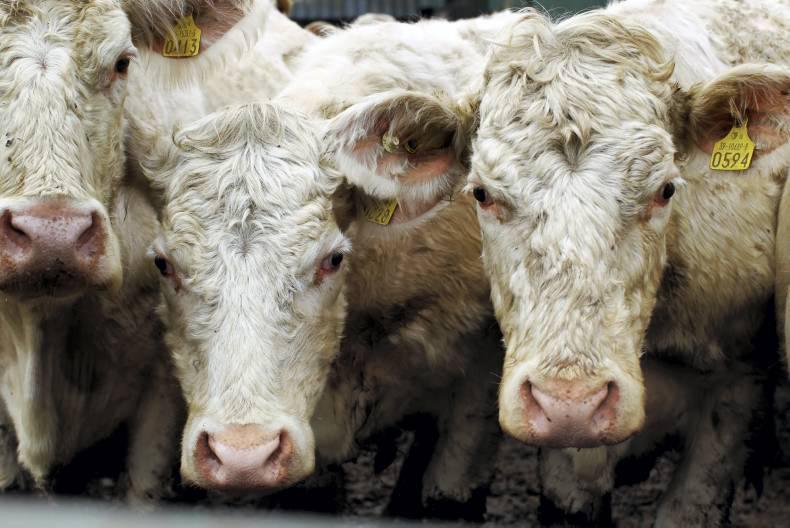
As he announced of the opening of the Knowledge Transfer scheme this Wednesday, Minister for Agriculture Michael Creed has confirmed it will allow participation by farmers in two groups in different sectors.
This is a change to the rules announced at the launch of the scheme last year and it comes after much criticism from stakeholders to the rule that allowed farmers to participate only in one group.
In a statement issued today, the Department of Agriculture said that “given the overlap between the content of the groups across sectors, such dual participation will attract a 50% payment rate for both the facilitator and the farmer in respect of the second group joined.”
This means that each farmer participating in two groups is due the original full payment of €750 per year in their primary sector and €375 per year in their secondary sector over the three-year programme, subject to fulfilling the terms and conditions of the scheme.
Another modification
One other modification that has been made to the scheme’s rules since the launch is that farmers can now arrange for an approved nominee to attend in his/her place at a meeting of the group should the need arise.
Knowledge Transfer scheme
The €100m Knowledge Transfer scheme, which opened on Wednesday 18 May, is one of a number of measures included in Ireland’s €4bn Rural Development Programme, 2014-2020. It is the third most-funded scheme under the RDP after the Green Low Carbon Agri-Environment Scheme (€1.3bn) and the Beef Data and Genomics Programme (€300m).
Opening the Knowledge Transfer scheme, Minister Creed, said: “The scheme builds significantly on the previous discussion group model and is designed in such a way as to ensure the farmer and adviser engage in one-to-one discussions on key aspects of a farmer’s business, such as controlling input costs, environmental sustainability, breeding and herd health. This one-to-one engagement will be complemented by group-based discussion and the sharing of experience and information between farmers.”
Knowledge Transfer groups will be implemented for some 27,000 farmers across six sectors – beef, sheep, dairy, tillage, equine and poultry – and will be delivered by qualified facilitators, with the first groups expected to be approved in June.
Department considers farmer involvement in more than one KT group




SHARING OPTIONS