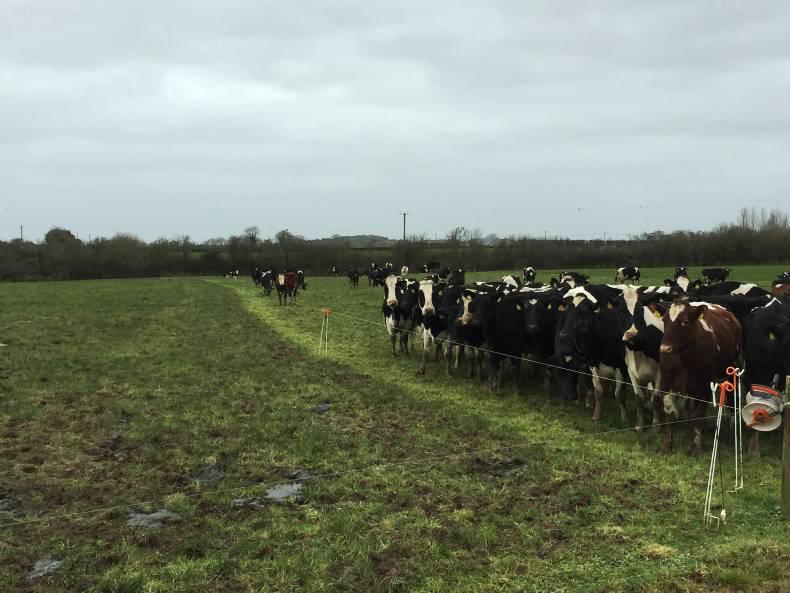
Such has been the weather this spring that achieving any amount of grazing has been a huge challenge, with many herds not having seen grass yet this year.
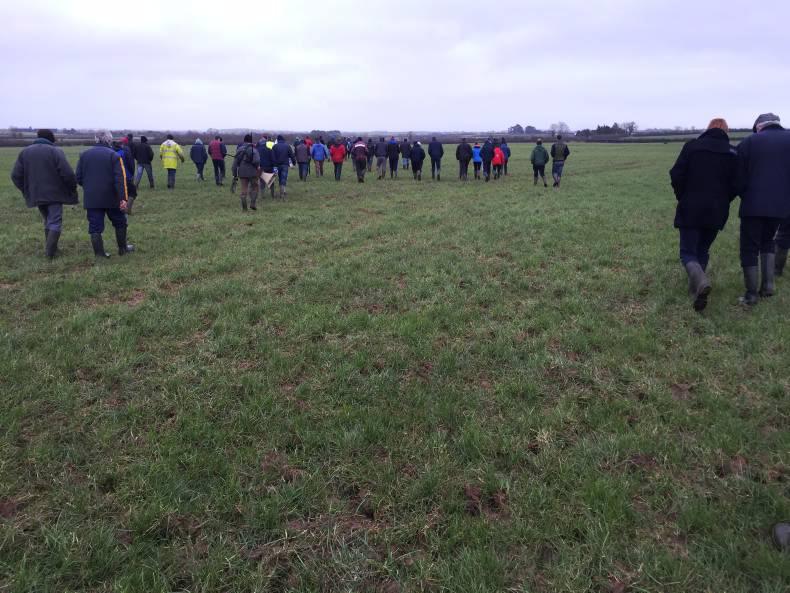
In contrast, Limerick dairy farmer Padraig Condron has a staggering 46% of his farm grazed, but it hasn’t been easily achieved. Speaking at a Teagasc farm walk on his farm on Tuesday he had this to say about grazing this spring: “It’s been tough going, and some mornings I really questioned what I was at, but I stuck with it and got the area grazed. Some days, the cows were barely out for two hours before being brought back in again.
“I think they were happier to be outside than inside. I decided to leave them in one morning after milking but they all went to the gate and wouldn’t go back to the shed so I let them out.”
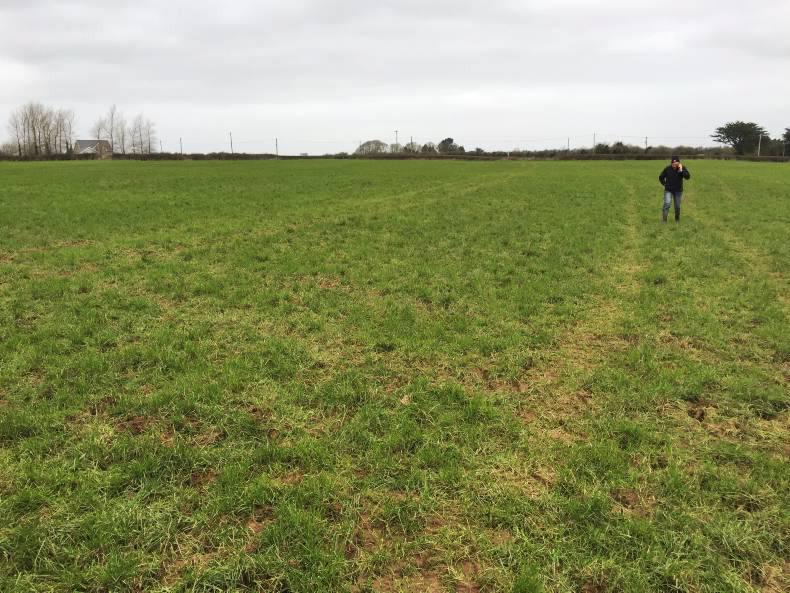
A lot of the grazed paddocks on the farm look damaged, with plenty of hoofmarks over most of the fields. The knock-on effects this will have on subsequent growth are yet to be seen. Teagasc adviser Ger Courtney said some of the paddocks have been damaged quite heavily in parts, but this represents a small proportion of the overall farm and he said they will recover in time.
Padraig is farming on relatively dry land outside the village of Croom in east Limerick. Over 190mm of rain has fallen in that area since 4 February. The cows went out to grass every day during February and were out for four nights too.
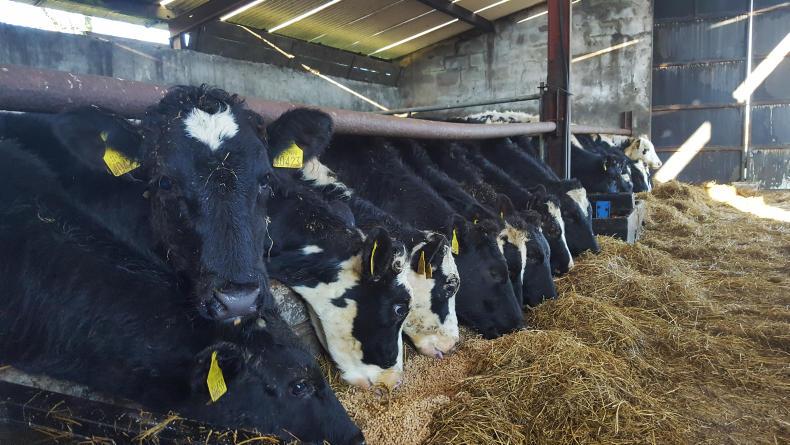
Padraig has 110 of his 130 cows calved, they are getting grass by day, silage by night and 3kg of meal in the parlour. His average farm cover is 740kg, growth rate is about 5kg per day and he is planning on stretching the first rotation out until 7 April.
The cover on the first grazed paddocks is low at 250kg, but with 35kg of urea/acre spread on the farm last week, Padraig, and everyone else is hoping for a lift in growth over the coming weeks.
“If the weather stays bad and I don’t get a lift in growth rates over the next few weeks I’ll have no choice but to feed more silage and house the cows.
“But I’m prepared to do this as I haven’t fed much silage up to now and normally the deficits at that time of year only last for less than a week.”
Speaking at the event, the second walk held on the Condron farm this spring, Teagasc specialist John Maher said that on average across the 20 farms hosting farm walks this spring, 25% of the farms have been grazed and 75% of them have had fertiliser spread on 75% of their land area.
With an improvement in the weather forecast, John advised the farmers at the walk to do the following;
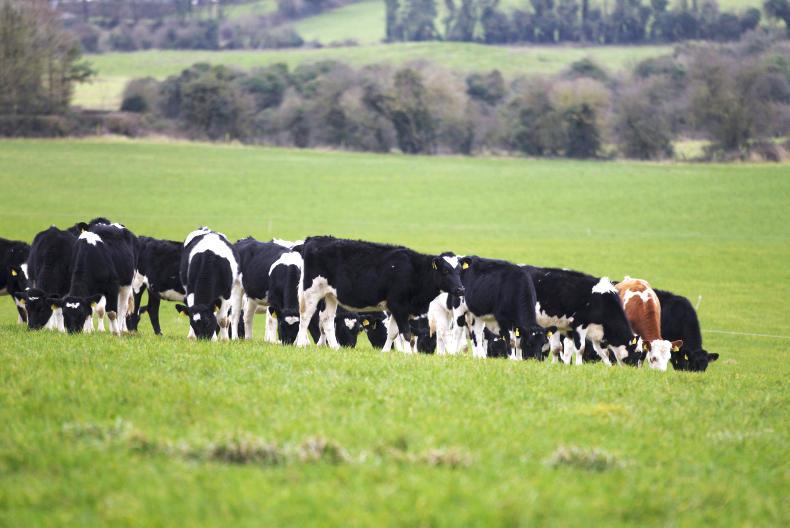
Get cows out day and night as soon as conditions allow.If no fertiliser has been spread to date, spread one bag/acre of urea as soon as possible.Spread slurry on grazed ground and/or low covers.Remove silage from the diet as soon as possible.For those on target for area grazed, ie 30 to 40% grazed, then the start of the second rotation should be around 7 April, but one week later for those with less than 10% grazed today.Spread extra phosphorus on poached areas as this will aid tiller development and root growth.
Such has been the weather this spring that achieving any amount of grazing has been a huge challenge, with many herds not having seen grass yet this year.
In contrast, Limerick dairy farmer Padraig Condron has a staggering 46% of his farm grazed, but it hasn’t been easily achieved. Speaking at a Teagasc farm walk on his farm on Tuesday he had this to say about grazing this spring: “It’s been tough going, and some mornings I really questioned what I was at, but I stuck with it and got the area grazed. Some days, the cows were barely out for two hours before being brought back in again.
“I think they were happier to be outside than inside. I decided to leave them in one morning after milking but they all went to the gate and wouldn’t go back to the shed so I let them out.”
A lot of the grazed paddocks on the farm look damaged, with plenty of hoofmarks over most of the fields. The knock-on effects this will have on subsequent growth are yet to be seen. Teagasc adviser Ger Courtney said some of the paddocks have been damaged quite heavily in parts, but this represents a small proportion of the overall farm and he said they will recover in time.
Padraig is farming on relatively dry land outside the village of Croom in east Limerick. Over 190mm of rain has fallen in that area since 4 February. The cows went out to grass every day during February and were out for four nights too.
Padraig has 110 of his 130 cows calved, they are getting grass by day, silage by night and 3kg of meal in the parlour. His average farm cover is 740kg, growth rate is about 5kg per day and he is planning on stretching the first rotation out until 7 April.
The cover on the first grazed paddocks is low at 250kg, but with 35kg of urea/acre spread on the farm last week, Padraig, and everyone else is hoping for a lift in growth over the coming weeks.
“If the weather stays bad and I don’t get a lift in growth rates over the next few weeks I’ll have no choice but to feed more silage and house the cows.
“But I’m prepared to do this as I haven’t fed much silage up to now and normally the deficits at that time of year only last for less than a week.”
Speaking at the event, the second walk held on the Condron farm this spring, Teagasc specialist John Maher said that on average across the 20 farms hosting farm walks this spring, 25% of the farms have been grazed and 75% of them have had fertiliser spread on 75% of their land area.
With an improvement in the weather forecast, John advised the farmers at the walk to do the following;
Get cows out day and night as soon as conditions allow.If no fertiliser has been spread to date, spread one bag/acre of urea as soon as possible.Spread slurry on grazed ground and/or low covers.Remove silage from the diet as soon as possible.For those on target for area grazed, ie 30 to 40% grazed, then the start of the second rotation should be around 7 April, but one week later for those with less than 10% grazed today.Spread extra phosphorus on poached areas as this will aid tiller development and root growth.
SHARING OPTIONS