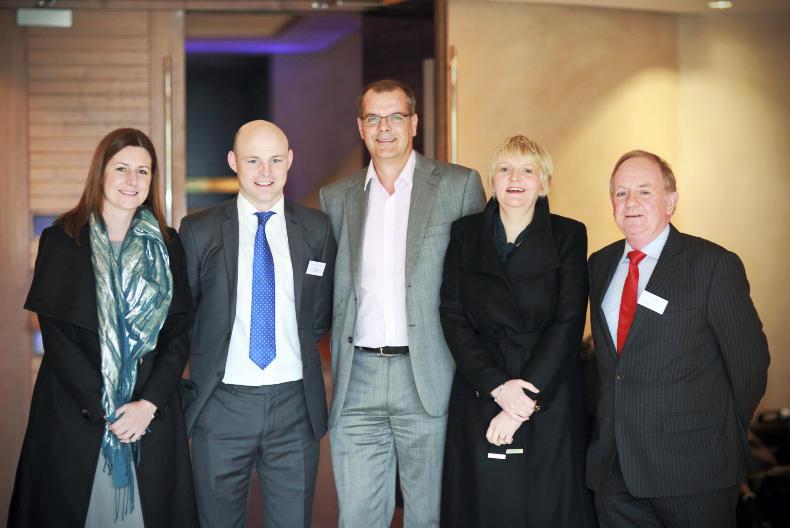
Minister Michael Creed and Prof. Dr Hisham Saad Aljadhey, the Executive President of the Saudi Food and Drug Authority (SFDA) exchanging signed agreement on enhanced access for Irish Beef to Saudi Arabia.
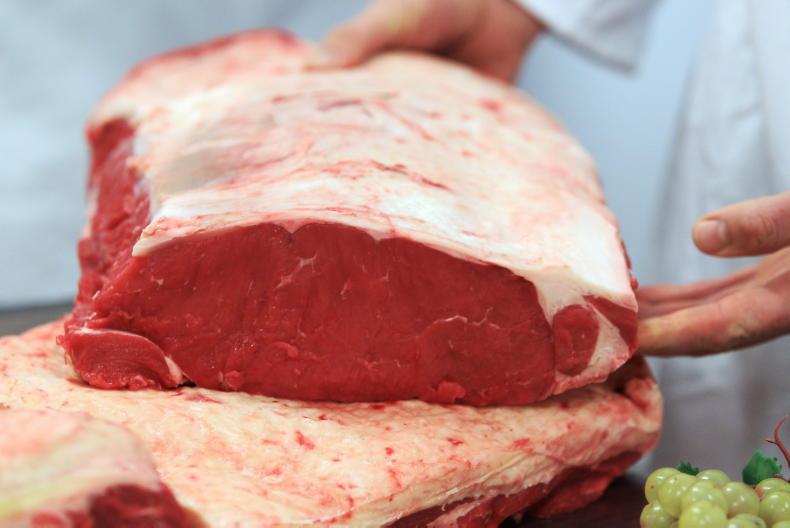
The announcement yesterday by Minister Creed of an extension of Ireland’s beef approval to Saudi Arabia is another step in the pursuit of normalisation for export markets. However, in terms of the amount of beef sold, it will not make much difference for Irish farmers.
Saudi Arabia is a wealthy country by virtue of its massive oil reserves and has a population of 33m, most of whom are Muslim. This means that any beef sent to Saudi Arabia must be Halal-slaughtered, while most Irish factories operate with what is considered to be the more humane stun and bleed process. It is also a requirement of many major customers of Irish beef that their suppliers use this system of slaughter, despite the fact that they also carry ranges of Halal-slaughtered beef and lamb to satisfy their Muslim customers.
197t exported last year
ADVERTISEMENT
Ireland is approved to export to 70 countries but Saudi Arabia is at the lower end of this list in importance for Ireland. In 2016 according to CSO figures, it bought just 197t of Irish beef products, worth €518m.
As well as the requirement of Hal Al-slaughter excluding the majority of Irish factories, there is also the requirement for all cattle to be under 30 months at slaughter, thereby excluding many steers and heifers as well as all cow beef.
All this means that Saudi Arabia, despite the securing of extended approval to include minced, processed and bone in beef, will remain a small market for Irish exporters.
This content is available to digital subscribers and loyalty code users only. Sign in to your account, use the code or subscribe to get unlimited access.
The reader loyalty code gives you full access to the site from when you enter it until the following Wednesday at 9pm. Find your unique code on the back page of Irish Country Living every week.
CODE ACCEPTED
You have full access to the site until next Wednesday at 9pm.
CODE NOT VALID
Please try again or contact support.
The announcement yesterday by Minister Creed of an extension of Ireland’s beef approval to Saudi Arabia is another step in the pursuit of normalisation for export markets. However, in terms of the amount of beef sold, it will not make much difference for Irish farmers.
Saudi Arabia is a wealthy country by virtue of its massive oil reserves and has a population of 33m, most of whom are Muslim. This means that any beef sent to Saudi Arabia must be Halal-slaughtered, while most Irish factories operate with what is considered to be the more humane stun and bleed process. It is also a requirement of many major customers of Irish beef that their suppliers use this system of slaughter, despite the fact that they also carry ranges of Halal-slaughtered beef and lamb to satisfy their Muslim customers.
197t exported last year
Ireland is approved to export to 70 countries but Saudi Arabia is at the lower end of this list in importance for Ireland. In 2016 according to CSO figures, it bought just 197t of Irish beef products, worth €518m.
As well as the requirement of Hal Al-slaughter excluding the majority of Irish factories, there is also the requirement for all cattle to be under 30 months at slaughter, thereby excluding many steers and heifers as well as all cow beef.
All this means that Saudi Arabia, despite the securing of extended approval to include minced, processed and bone in beef, will remain a small market for Irish exporters.
If you would like to speak to a member of our team, please call us on 01-4199525.
Link sent to your email address
We have sent an email to your address. Please click on the link in this email to reset your password. If you can't find it in your inbox, please check your spam folder. If you can't find the email, please call us on 01-4199525.
ENTER YOUR LOYALTY CODE:
The reader loyalty code gives you full access to the site from when you enter it until the following Wednesday at 9pm. Find your unique code on the back page of Irish Country Living every week.
SHARING OPTIONS