This week's notes cover body condition of hill ewes and its importance in breeding performance, selecting appropriate flukicides and the clean livestock policy for sheep.
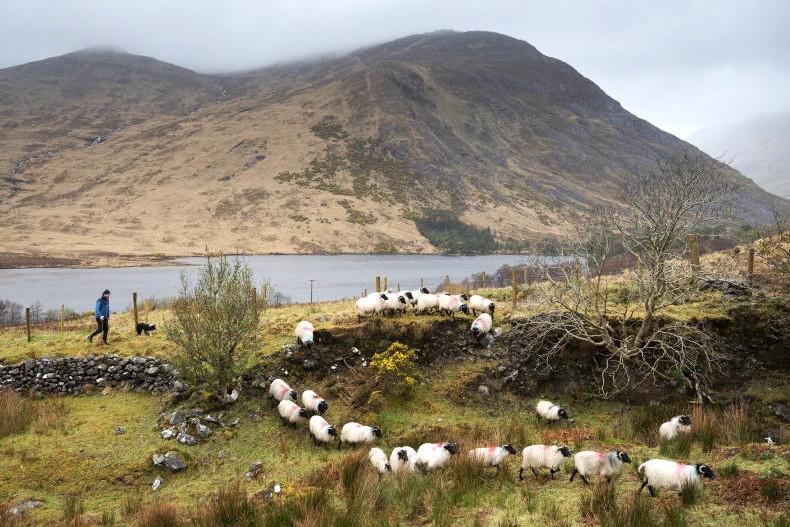
Condition of hill ewes: Breeding is still three to four weeks away for many hill flocks but the emphasis should not be taken from having ewes in optimum condition. Teagasc research has shown a very strong association between the liveweight of Scottish Blackface ewes at mating and subsequent litter size (increasing from BCS 2 to 3 lifted the lambing percentage by 13.5%). Having hill ewes in the optimum body condition score of 3 to 3.25 will also serve to reduce barren rates and tighten the lambing spread.
Work carried out by Teagasc through Ciaran Lynch in his work with the BETTER farm Sheep Programme and Seamus Hanrahan lists the following weight targets. Ewe lambs should weigh at least 61% of mature weight at breeding, hoggets should weigh 84%, while 30-month-old sheep should weigh at least 91% of mature weight with mature sheep hitting their potential weight to optimise breeding performance. Mature weight differs between regions and the strain of Scottish Blackface ewes. On harder hills, the mature weight of smaller framed Scottish Blackface ewes ranges from 47kg to 52kg while larger framed ewes on more productive lands can be up to 60kg to 65kg at mature weight. Ewes falling behind weight targets should be grouped where possible for preferential treatment and access to better quality grazing.
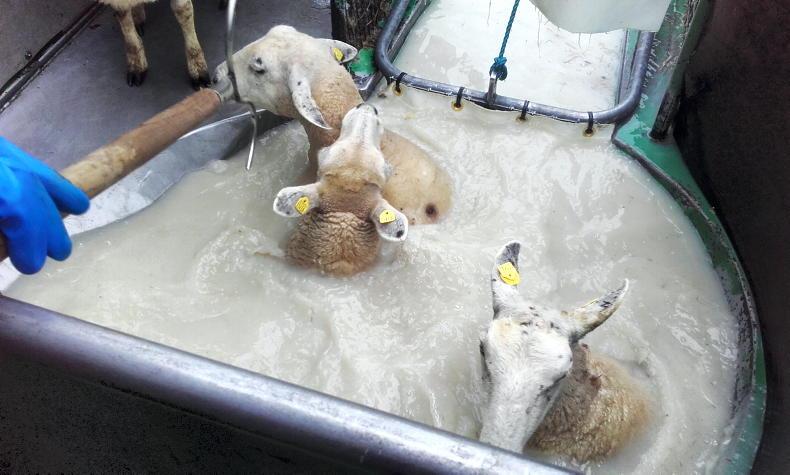
Selecting fluke products: Factories and vets in areas of high liver fluke burdens are reporting rising levels of active liver fluke parasites post-slaughter. Product selection is key at this stage of the year with the greatest threat in the coming months stemming from acute live fluke, caused by a high presence of early immature and immature parasites. It is vital to select a product with the correct active ingredient. Table 1 shows the active ingredients for sheep and the stage of liver fluke each treats. Alternate between products to reduce resistance developing. It is also advised to steer away from using products containing oxyclozanide unless only treating mature fluke as products containing this ingredient are the only ones that provide treatment for rumen fluke.
ADVERTISEMENT
Clean sheep policy: Huge confusion remains in the area of a clean livestock policy for sheep with a number of factories continuing to point to a policy launched by Department of Agriculture at the ploughing, highlighting guidelines contained in a leaflet produced by Teagasc. The current state of play is that there has been no policy launched for sheep with a consultation period ongoing between the Department, the Meat Industry, Teagasc and farm organisations. While there is no policy in place, the guidelines presented by Teagasc, which can be found at www.teagasc.ie/publications/2016, provide practical advice to help ensure sheep are delivered for slaughter in the optimum condition.
Register for free to read this story and our free stories.
This content is available to digital subscribers and loyalty code users only. Sign in to your account, use the code or subscribe to get unlimited access.
The reader loyalty code gives you full access to the site from when you enter it until the following Wednesday at 9pm. Find your unique code on the back page of Irish Country Living every week.
CODE ACCEPTED
You have full access to the site until next Wednesday at 9pm.
CODE NOT VALID
Please try again or contact support.
Condition of hill ewes: Breeding is still three to four weeks away for many hill flocks but the emphasis should not be taken from having ewes in optimum condition. Teagasc research has shown a very strong association between the liveweight of Scottish Blackface ewes at mating and subsequent litter size (increasing from BCS 2 to 3 lifted the lambing percentage by 13.5%). Having hill ewes in the optimum body condition score of 3 to 3.25 will also serve to reduce barren rates and tighten the lambing spread.
Work carried out by Teagasc through Ciaran Lynch in his work with the BETTER farm Sheep Programme and Seamus Hanrahan lists the following weight targets. Ewe lambs should weigh at least 61% of mature weight at breeding, hoggets should weigh 84%, while 30-month-old sheep should weigh at least 91% of mature weight with mature sheep hitting their potential weight to optimise breeding performance. Mature weight differs between regions and the strain of Scottish Blackface ewes. On harder hills, the mature weight of smaller framed Scottish Blackface ewes ranges from 47kg to 52kg while larger framed ewes on more productive lands can be up to 60kg to 65kg at mature weight. Ewes falling behind weight targets should be grouped where possible for preferential treatment and access to better quality grazing.
Selecting fluke products: Factories and vets in areas of high liver fluke burdens are reporting rising levels of active liver fluke parasites post-slaughter. Product selection is key at this stage of the year with the greatest threat in the coming months stemming from acute live fluke, caused by a high presence of early immature and immature parasites. It is vital to select a product with the correct active ingredient. Table 1 shows the active ingredients for sheep and the stage of liver fluke each treats. Alternate between products to reduce resistance developing. It is also advised to steer away from using products containing oxyclozanide unless only treating mature fluke as products containing this ingredient are the only ones that provide treatment for rumen fluke.
Clean sheep policy: Huge confusion remains in the area of a clean livestock policy for sheep with a number of factories continuing to point to a policy launched by Department of Agriculture at the ploughing, highlighting guidelines contained in a leaflet produced by Teagasc. The current state of play is that there has been no policy launched for sheep with a consultation period ongoing between the Department, the Meat Industry, Teagasc and farm organisations. While there is no policy in place, the guidelines presented by Teagasc, which can be found at www.teagasc.ie/publications/2016, provide practical advice to help ensure sheep are delivered for slaughter in the optimum condition.
If you would like to speak to a member of our team, please call us on 01-4199525.
Link sent to your email address
We have sent an email to your address. Please click on the link in this email to reset your password. If you can't find it in your inbox, please check your spam folder. If you can't find the email, please call us on 01-4199525.
ENTER YOUR LOYALTY CODE:
The reader loyalty code gives you full access to the site from when you enter it until the following Wednesday at 9pm. Find your unique code on the back page of Irish Country Living every week.






SHARING OPTIONS