


Grass tetany:
Tetany remains a high-risk threat given the high quality of grass present in many swards, and fluctuations in weather and temperature acting as a trigger along with nutritional deficits or changes to the normal diet (switch from bare pastures to lush leafy swards).
Prevention centres on ensuring animals achieve their daily magnesium intake. This can take the form of supplementation or reducing the rate of forage digestion. Supplementation is most easily achieved through offering ewes access to high-mag lick buckets, feeding concentrates containing sufficient magnesium, administering magnesium bullets or the addition of magnesium to water. Adding magnesium to water is less reliable during heavy rainfall, while another option of dusting pasture with calcined magnesite is infrequently used. Supplementation should be introduced two to three days in advance of the high-risk period, with buckets placed at locations that are likely to promote ewe intake.
Fluke dose:
Winter has been relatively mild, but this should not mask the possibility of outwintered ewes needing a fluke dose. The main threat at this stage of the year is from chronic liver fluke. As such, mature fluke are the main target and products that treat immature and mature liver fluke should give a good clear-out of parasites. Now is also a good time to alternate between products and select one with a different active ingredient. Focusing on the active ingredient is an important component to remember, as there are numerous products on the market with the same class.
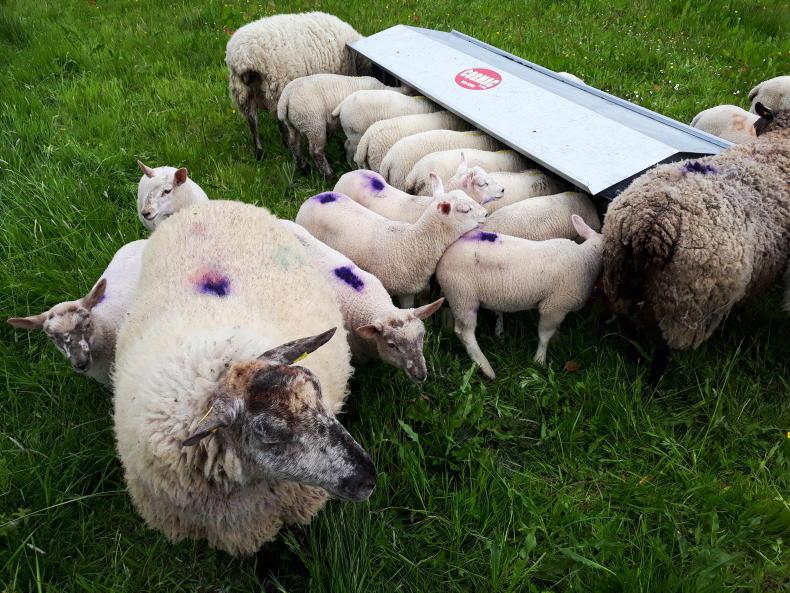
Creep feeding: Creep feeding represents a higher cost of production, but targeted use is preferred in some systems where the aim is to get lambs finished early or take the pressure off ewes rearing three lambs or lactating yearling hoggets. The cost can be limited by the method of feeding and type of feed offered. Once lambs are accustomed to eating there is no need for high-cost cooked or crunch-type feeds. Energy is the most important component, particularly where lambs have access to sufficient grass. Therefore a standard cereal-based ration, with 12% crude protein content, will suffice and could reduce the cost by €40 to €50 per tonne.
Offering lambs ad-lib access to meal will lead to a substitute effect where lambs consume high levels of meals at the expense of grass consumption. Limiting intake, where possible, with 0.3kg to 0.5kg the maximum rate advised, will also improve its economics. This can be achieved by feeding lambs in troughs in a creep-grazing scenario or through a creep gate in the corner of a field. Creep grazing will deliver the same benefit at a tiny cost.
TAMS deadline:
The deadline for tranche five of TAMS II is Friday 7 April. Applications must be submitted through the Department’s agfood.ie facility. The minimum investment is €2,000 excluding VAT. Grant aid is payable at 40% for general applications and 60% for young, trained farmers with a maximum investment ceiling of €80,000 and €160,000 for partnerships. Timely items include sheep fencing and mobile handling equipment. Full details can be found at www.agriculture.gov.ie/farmerschemespayments/tams.



SHARING OPTIONS