


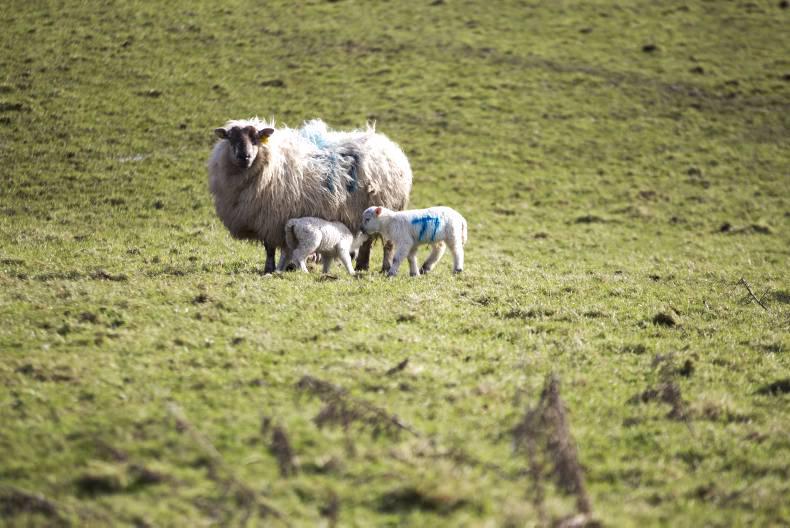
Why consider grass-based lambing?
1. Feed costs - grazed grass is around 30% cheaper than high quality grass silage (per kilogram of dry matter) and potentially has a much higher feed value.
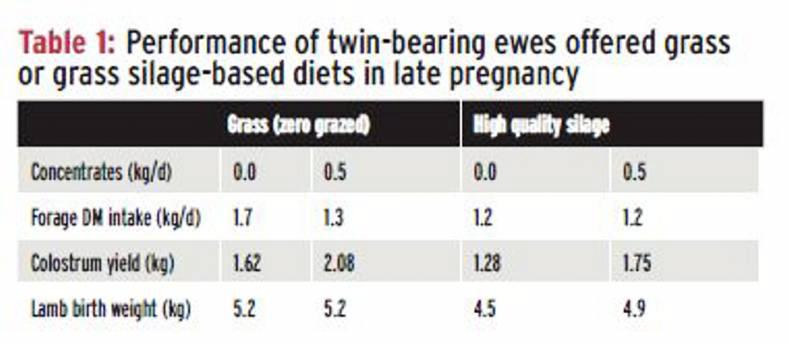
2. Nutritional value - when managed correctly, early spring grass has a digestibility (or D-value) of 5-10 percentage units higher than most grass silages and a nutritional value similar to an 18% protein ewe mix. When grazing conditions are suitable, ewes at grass will also consume up to 50% more DM compared with those fed good quality grass silage (Table 1). With its high nutritive value and high intake characteristics, early spring grass has the potential to meet the nutrient requirements of single and twin bearing ewes without the need for extra concentrates.
3.Milk supply - a typical twin-bearing Mule ewe must produce around 1.6 kg colostrum during the first 24 hours after lambing to help ensure lamb survival is not compromised.
Ewes fed grass in late pregnancy are capable of meeting this target level without the need for additional concentrates, as shown in Table 1. In contrast, ewes fed grass silage require significant inputs of concentrate, even when the silage is top quality.
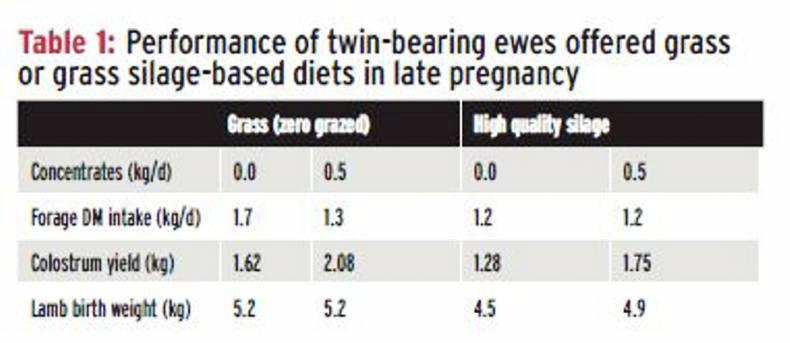
4.Lamb birth weight – lambs born to grass-fed ewes can be up to 0.7 kg heavier at birth when compared with ewes fed grass silage (Table 1). This birth weight ‘boost’ is particularly beneficial to ewes under nutritional stress, such as triplet-bearing ewes.
5.Labour – ewes lambed outdoors typically require 30% less labour input compared with those lambing indoors.
outdoor lambing
It is unlikely that grass supply and ground conditions will permit all ewes to be lambed at grass. However, for most flocks, it is possible to lamb a proportion of the flock outdoors.
Consider giving priority to triplet-bearing ewes and ewe lambs carrying twins, since the boost in lamb birth weight and colostrum production will benefit them most.
Triplet ewes are capable of producing adequately sized lambs and sufficient colostrum without feeding any additional concentrates, provided there is an adequate supply of quality grass available.
However, where grass supplies are limited, it is advisable to supplement triplets with 0.3-0.5 kg per day concentrates during the final two weeks before lambing.
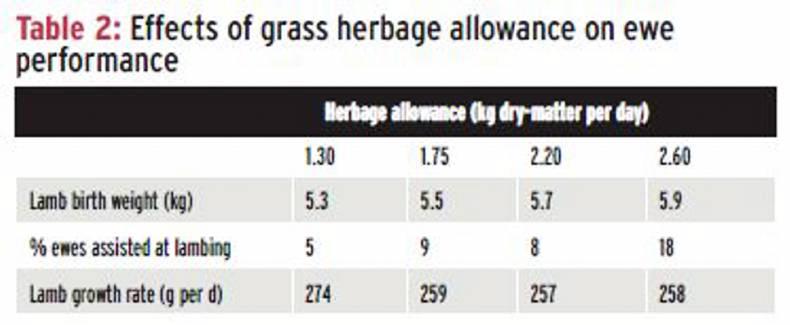
When lambing single and twin-bearing ewes outdoors, controlling grass intake is crucial. Table 2 outlines how the daily herbage allowance affects performance of twin-bearing ewes. Heavy grass covers encourage higher intakes but there is a real risk that lambs will become oversized and subsequently require more assistance at lambing.
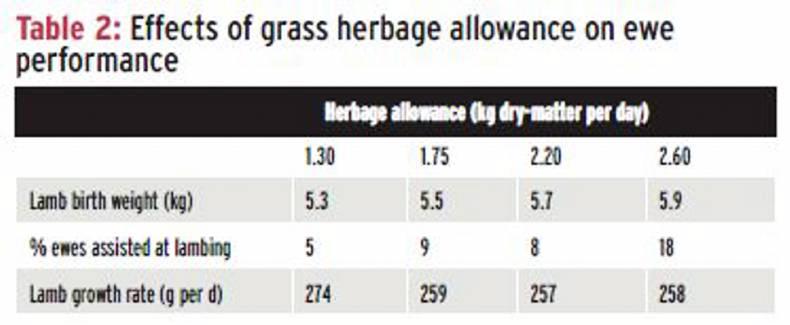
When conditions are favourable, turning ewes out to short swards (3-5cm) three to four weeks before lambing, and stocking at a level sufficient to maintain this sward height, should be sufficient to meet the ewes’ nutritional requirements without the need for additional concentrates. The target stocking rate will vary depending on ground conditions and grass growth but is typically around 12 ewes per ha (five ewes per ac) for a mid-March lambing flock. Choice of lambing paddocks is also important. A dry, sheltered field located close to the main yard is ideal.
Alternatively, where weather and/or ground conditions are unpredictable, bringing ewes indoors at night will enable most of the benefits of outdoor lambing to be exploited.
* Ronald Annett is based at the Agri-Food & Biosciences Institute, Hillsborough and this article was first published in February 2012.


SHARING OPTIONS