


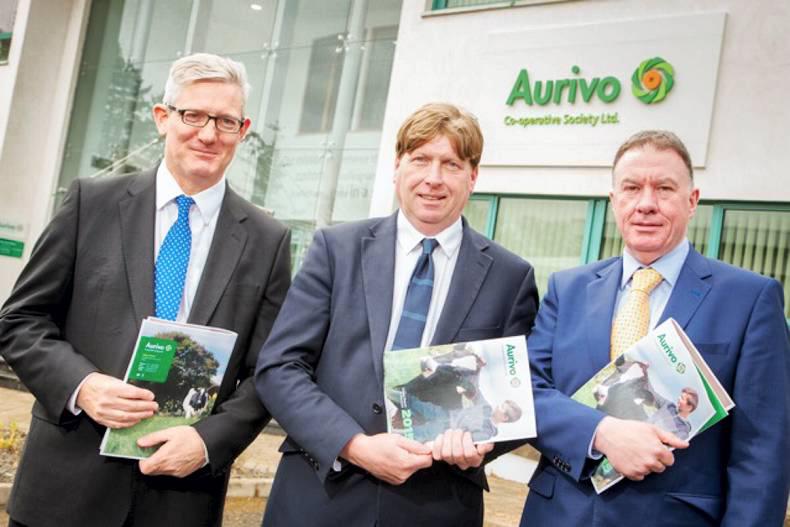
Last year, Aurivo saw its operating profits halve (down 55%) to €3.03m. The drop in profits was directly attributed to supporting the milk price by 2c/litre, knocking €8m off overall earnings.
Despite the large support, earnings (EBITDA) fell by a relatively smaller €2.4m (20%) to €9.7m, indicating that earnings were bolstered by new acquisitions. Overall group operating margins fell from 1.4% in 2014 to 0.7% last year.
Revenues decreased 6% to €420m, despite processing a record 411m litres, 12% more milk than 2014. The co-op paid an average price of 30.06c/l including VAT. While creditors have increased, this is mainly driven by the deferred consideration for the My Goodness acquisition. Net assets at year end were largely unchanged at €56.8m.
My Goodness
Although Aurivo’s profits are still exposed to dairy commodity headwinds, this was partially offset by an increase in profits from consumer foods and the addition of profits from My Goodness Ltd, which it bought last March.
In a move that CEO Aaron Forde describes as “transformational”, the co-op entered into the lucrative sports nutrition category for the first time last year.
Although the profit margins in this business are not stripped out in the annual accounts, other players in this market are making margins in the region of 15% – much more than the circa 4-5% margins in a traditional dairy consumer foods businesses.
But usually high-margin businesses command high purchase prices, and although the price paid was not disclosed, it is understood to be a significant acquisition.
At first glance, My Goodness appears to have made a significant positive contribution to Aurivo’s profits last year. This allowed it to support prices in what Forde described as a “very challenged year for dairy commodities”.
The business, which sells performance nutrition drinks, mainly in the UK and Irish market, had a “very strong year of growth”, according to Forde. He added that this business, along with the consumer foods business, provides an almost perfect hedge to any weakness in the dairy ingredients business.
Price supports
While the business supported prices, the tight operating margins indicate there is little wriggle room. Asked if it will continue to support price in the future, Forde said: “The co-op has a strong record of supporting price and will continue to do so, but it really depends on trading performance through the full year.” He added that the co-op also needs to invest in the long term.
He said one of the main reasons supports are possible is through the continued focus on driving efficiencies in the business, through consolidation and investment. For example, 2015 was the first full year in which liquid milk was processed from a single site at Killgordon in Donegal.
This has brought significant savings on the cost-per-litre of milk processed. He now wants to do the same with butter, moving all packing to the highly efficient Ornua Kerrygold plant in Mitchelstown, which is due to open later this year.
He said that since Aurivo took over the plant in Donegal, it has now doubled production volumes, with minimal investment processing 100m litres per year today.
One of Aurivo’s strengths has been its low debt levels. However, with the recent acquisitions, net debt has increased €7m to €8.6m. In all, €2.7m of this related to investments, including a new packing line at Ballaghaderreen to manufacture value-added ranges and new pack formats.
While the debt has risen, it is still low and roughly the same as one full year’s earnings. However, it is expected that once My Goodness is fully paid for at year end, net debt will increase to three times earnings.
Forde is confident this debt level is manageable for two reasons: firstly, My Goodness is throwing off significant cash, and secondly, the co-op has strong banking facilities.
Directors and senior management salaries and bonuses totalled €1.8m during the year.
Forde says as farmers continue to expand, Aurivo will need to invest in capacity in 2020 and that the first investment requirement will be an additional evaporator and dryer at Ballaghaderreen.
Liquid milk
Aurivo, which has always paid some of the highest liquid milk prices, recently won a significant contract to supply Tesco with own-branded milk from mid-2016. Although Aurivo wouldn’t comment on the contract, it is understood to be almost 20m litres in total.
Forde said since losing the Tesco contract two years ago, it had grown volumes and branded milk with all customers. He is confident farmers will supply any additional volumes required and that the co-op now has very efficient and sustainable production facilities that allow it to compete on cost.



SHARING OPTIONS