Grain prices remain under considerable pressure as early harvest indications and recent stock estimates point to high overall supply for the year ahead. While much of the world’s grain remains to be harvested, we are now in wheat and barley harvest and good yields are being reported. From here on, it will take some form of disaster to prevent some of this crop from being harvested.
The output from the higher maize area remains less certain. Some areas in the US are suffering drought, while other regions had good early season moisture levels. However, with pollination now under way, the crop remains particularly sensitive to high temperatures, which can damage seed-set. For this reason, markets are particularly sensitive to forecasts around this time.
We are now in harvest pressure and crop estimates continue to increase. This makes crops more difficult to sell as buyers hold out for lower prices in the future. Most prices and values tend to be nominal. Wheat remains very competitive compared to maize, but the gap is narrowing as maize attempts to buy back demand.
ADVERTISEMENT
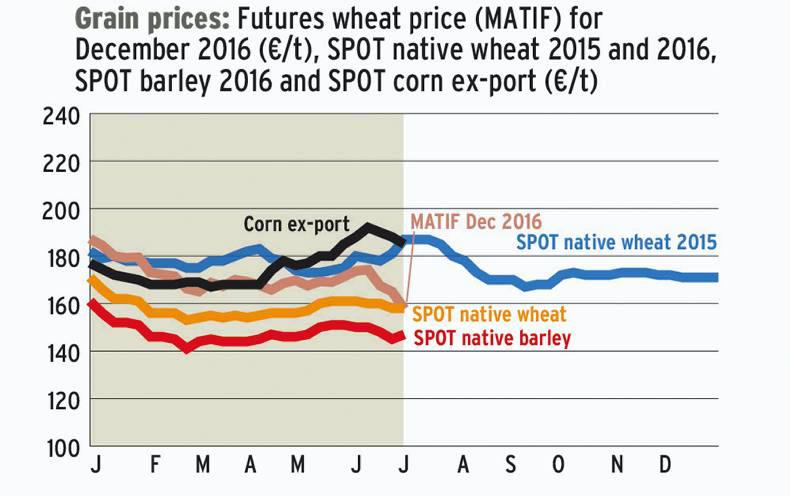
While futures are generally down, our native physical crop values remain broadly similar to last week. While the real value of spot wheat and barley might be regarded as €160 and €150/t respectively, there is little or no business taking place at these price levels. Seller do not want to sell and buyers do not want to buy.
Indeed, one might argue that there is little or no market activity at the moment.
Register for free to read this story and our free stories.
This content is available to digital subscribers and loyalty code users only. Sign in to your account, use the code or subscribe to get unlimited access.
The reader loyalty code gives you full access to the site from when you enter it until the following Wednesday at 9pm. Find your unique code on the back page of Irish Country Living every week.
CODE ACCEPTED
You have full access to the site until next Wednesday at 9pm.
CODE NOT VALID
Please try again or contact support.
Grain prices remain under considerable pressure as early harvest indications and recent stock estimates point to high overall supply for the year ahead. While much of the world’s grain remains to be harvested, we are now in wheat and barley harvest and good yields are being reported. From here on, it will take some form of disaster to prevent some of this crop from being harvested.
The output from the higher maize area remains less certain. Some areas in the US are suffering drought, while other regions had good early season moisture levels. However, with pollination now under way, the crop remains particularly sensitive to high temperatures, which can damage seed-set. For this reason, markets are particularly sensitive to forecasts around this time.
We are now in harvest pressure and crop estimates continue to increase. This makes crops more difficult to sell as buyers hold out for lower prices in the future. Most prices and values tend to be nominal. Wheat remains very competitive compared to maize, but the gap is narrowing as maize attempts to buy back demand.
While futures are generally down, our native physical crop values remain broadly similar to last week. While the real value of spot wheat and barley might be regarded as €160 and €150/t respectively, there is little or no business taking place at these price levels. Seller do not want to sell and buyers do not want to buy.
Indeed, one might argue that there is little or no market activity at the moment.
If you would like to speak to a member of our team, please call us on 01-4199525.
Link sent to your email address
We have sent an email to your address. Please click on the link in this email to reset your password. If you can't find it in your inbox, please check your spam folder. If you can't find the email, please call us on 01-4199525.
ENTER YOUR LOYALTY CODE:
The reader loyalty code gives you full access to the site from when you enter it until the following Wednesday at 9pm. Find your unique code on the back page of Irish Country Living every week.







SHARING OPTIONS