


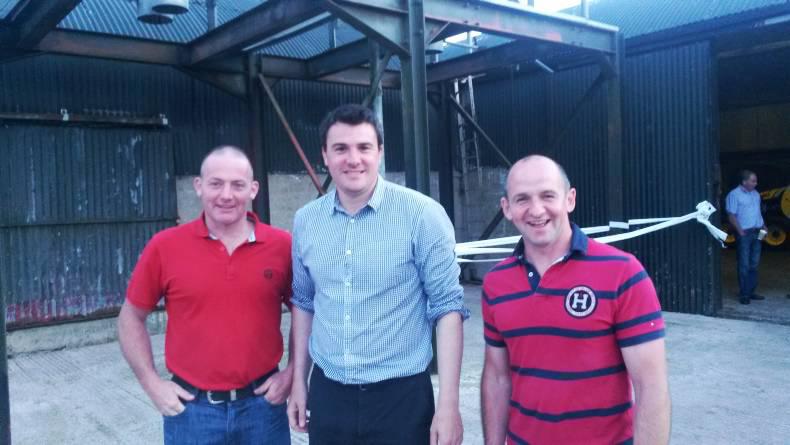
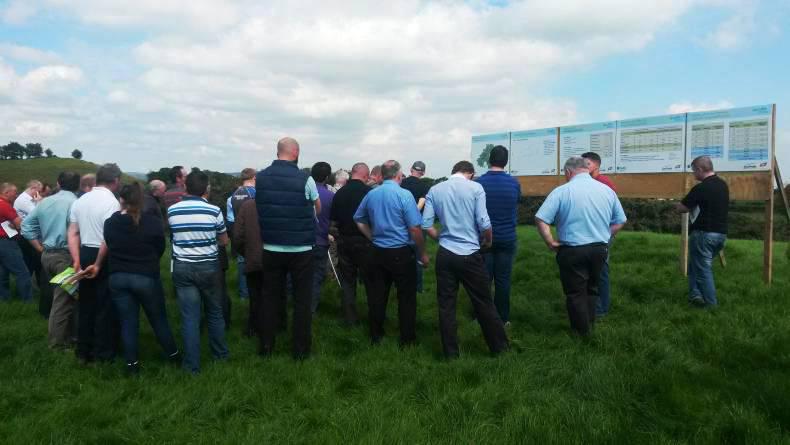
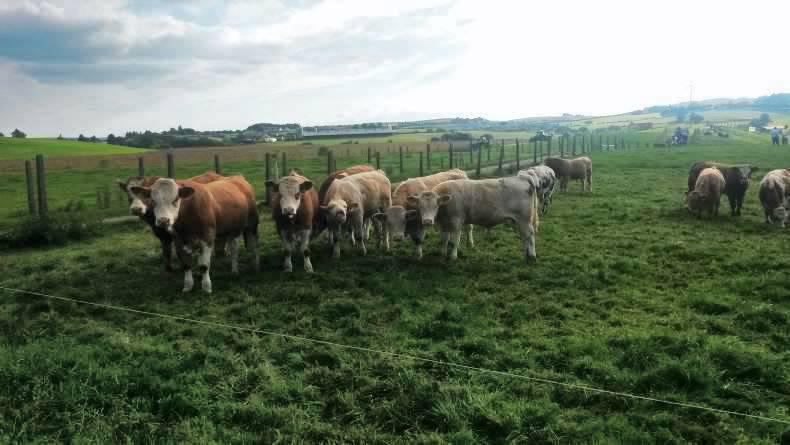
The importance of selecting the appropriate system to suit your farm was the main message delivered by Northern Ireland Suckler Beef Programme (NISBP) adviser Francis Breen yesterday. This is something Francis has developed with Declan and Aidan since they joined the programme in 2014.
The farm extends to 170 acres over six different land blocks, with a large variation in land type throughout the farm.
Poorer land away from the farmyard is best used for dry cows in the summer. An autumn-calving herd makes best use of this ground.
A separate spring-calving herd makes excellent use of the best ground on the farm for spring-born steers, bulls and heifers and then lactating cows and their calves.
Before joining the programme, cows calved for 11 months of the year on the farm, with progeny sold as weanlings, stores and finished cattle. Now all cattle are finished.
“Two distinct calving blocks suit the facilities we have here. When compared with calving nearly all year round like before, management is much simpler,” Declan said.
Increasing stocking rate
Another important focus for Declan and Aidan is to increase their stocking rate from 1.47 cow equivalences (CE) per hectare to 2.22CE/ha eventually. To achieve this, they need to grow more grass and then utilise it through rotational grazing and using weekly grass measurements to match demand and supply.
Aidan said: “Before, I would say our cattle were growing well, but this was because we were too reliant on concentrates and not making enough use out of the cheapest feed that is grass.”
Visitors to the farm were told that when looking to improve grassland, it is wise to correct your best ground first. Declan and Aidan have done this with targeted use of fertilisers and lime after carrying out soil analysis, addressing drainage and soil compaction problems. Finally, they reseeded when everything else was correct.
Listen to an interview with Declan Rafferty and his adviser here:
Subsoiler
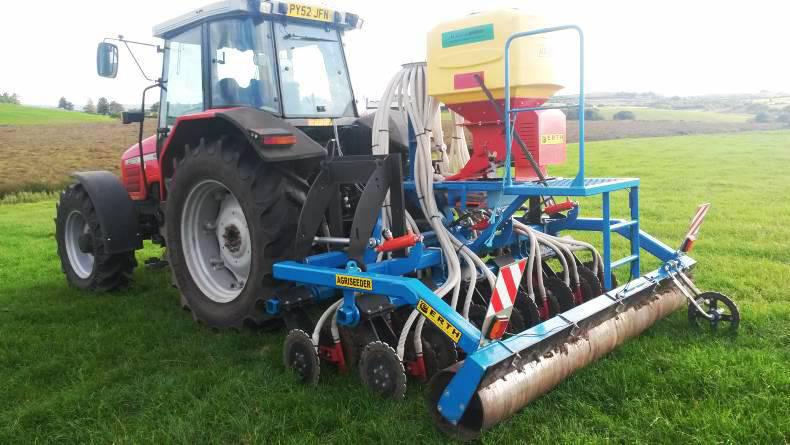
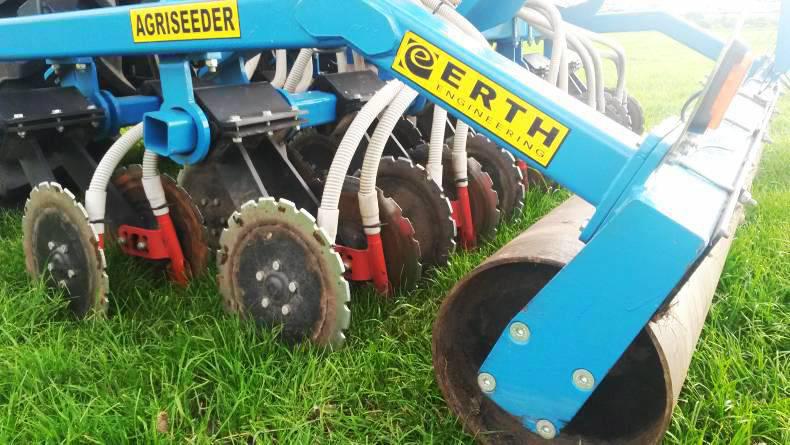
Most of their land has been subsoiled using an Erth Panbuster. They found that this addressed a soil compaction problem by aerating the soil. Four discs in front are followed by four tines directly behind that disturb the soil at a depth of 8in to 10in.
Local CAFRE adviser Brian Hanthorn said: “The purpose of the Panbuster is to allow maximum disturbance below the surface and minimum disturbance above it. This time of year is ideal for subsoiling, as traffic over most ground is reduced in the run up to and during winter.”



SHARING OPTIONS