


Those who attended the RDS Spring Show before its demise in 1992 will fondly recall the wonderful fragrance of wallflowers that filled the air. The scent was sweet and warm, especially on a nice sunny day in May, when the many flowering cherry trees produced a great show of spring blossom.
The wallflowers were grown in massed beds in various parts of the show ground, often teamed with tulips, all planted with an eye to Spring Show week. The garden staff would have prepared the ground and planted the young plants during the previous October and carefully tended to them until their week in the sun.
Wallflowers are one of those traditional garden flowers, along with sweet William, roses and Brompton stock, that were grown as much for scent as colourful flowers, or at least, scent was considered a great asset in a flower. There is hardly any emphasis on growing for scent any more, the focus being on colour and form, and these plants, including wallflowers, are not as much grown. The effort involved in growing masses of wallflowers in flower beds has reduced in popularity too and the style of growing bedding plants in rows has become old-fashioned.
Wallflowers were traditionally grown as expendable spring bedding plants, discarded as soon as their first crop of flowers was over. But there is now a greater appreciation that the wallflower can be quite long-lived, in the right conditions. The plant gets its common name for the fact that they grow readily in the loose lime mortar of old stone walls. Normally these plants are yellow-flowered and are probably very close to the original wild species, but red ones also appear sometimes. The occasional ‘garden escape’ wallflower is sometimes seen growing by a roadside, usually in a gravelly dry soil. These plants are remarkably long-lived, struggling each summer to stay alive but managing to flower again every year, although the plants can look a bit scrawny.
When grown in dry soil, the plants can be kept for years and just trimmed lightly after flowering. But when they are grown in heavy ground or very rich soil, they tend to become soft and susceptible to root rot diseases, and to cabbage root fly damage as the larvae of this pest eats the skin of the roots, wallflowers being part of the cabbage family. Wind-rocking of over-grown big plants also tends to cause a shortening of their life.
If you want to grow some wallflowers for their colour and scent, sow seeds in trays or in a nursery bed outdoors, later this month or next for flowering in spring next year. Prick out the seedlings and space the young plants about 25cm apart to let them grow to good size. They are lifted, with a ball of soil at the roots, and planted out in autumn. Or plants can be purchased in October.
Set them out in flower beds to replace summer bedding, as was traditional practice, or plant a few groups of three or five plants to be left for at least a few years, trimming after flowering to clip away the seed-heads that weaken the plants.
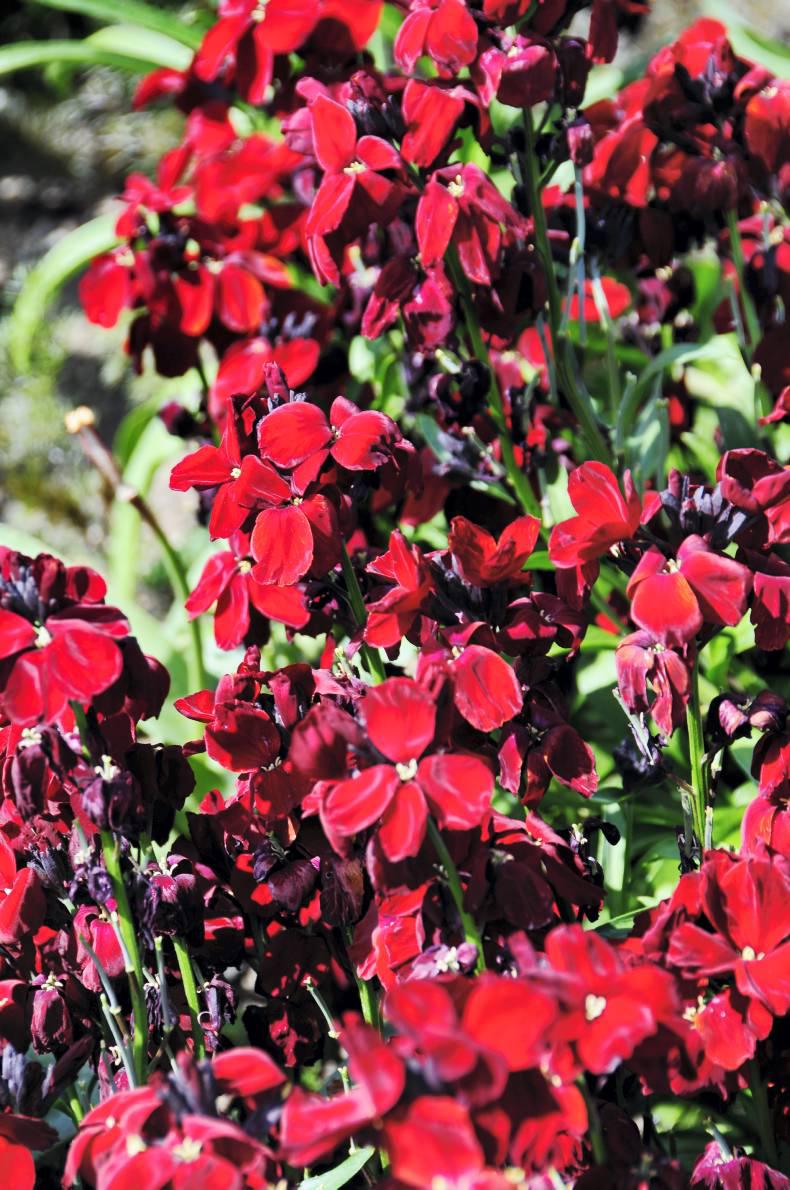
The colour range is mostly yellow and red with some pastel shades. ‘Cloth of Gold’ is a favourite yellow variety and ‘Fire King’ is a rich, deep red, as shown. There are mixtures of colours, such as ‘Persian Carpet’ or ‘Tequila Sunrise’ in light pastel shades. CL
>> This week
Fruit, vegetables and herbs
It is still too early to plant out tender vegetables such as sweetcorn and runner beans, except in very mild areas. Sow maincrop vegetables such as carrots, broccoli and peas. Sow seeds of cabbage and cauliflower for autumn and winter to plant out in about six or eight weeks. Make repeat sowings of lettuce and peas. Spray for apple scab and pear scab disease and check for greenflies.
Flowers
Slugs and snails were not very active in the cool weather, but a few warm days can see them cause severe damage to susceptible plants like hostas and ligularia. Bedding plants can be planted out in the coming two weeks or so. Do not be in a hurry with bedding plants unless you are in a very favoured area in the south of the country. Dahlias and gladiolus can now be planted out.
Lawn
Feed a lawn that is not growing well or is pale in colour. Carry out any lawn repairs while the soil is still moist in case of a dry spell. Trim the edges around flower beds or borders, before the grass gets long. Grass growth is strongest during May as the grasses attempt to flower. Regular mowing removes the flower heads and encourages the grass to thicken its growth.
Trees, shrubs and roses
If rose bushes or climbing roses were affected by rose blackspot last summer, showing black spots and losing leaves, they will be affected again and it will be necessary to use a rose spray. Prune spring shrubs as they go out of flower, if they are too big or of bad shape. Forsythia, flowering currant, kerria and spring spirea might need pruning if the bushes are growing too large.
Greenhouse and house plants
House plants can be re-potted now, using half and half peat compost and ordinary garden soil. Plant out tomatoes, chilli peppers, cucumbers and sweet peppers as soon as space becomes available in the greenhouse. Feed greenhouse plants strongly now to get good growth before mid-summer and water well. Ventilate and spray a grapevine if it had mildew disease last year.
Placing pea sticks
The cold spring was a severe challenge to early sown peas. Many sowings came up patchily and some did not come up at all. Usually when this happens, millipedes eat the shoot or the seed itself, or small slugs may eat the shoots as they push up through the soil. When the seedling is growing rapidly neither of these pests are anything like as damaging, presumably because the seedling simply outgrows them.
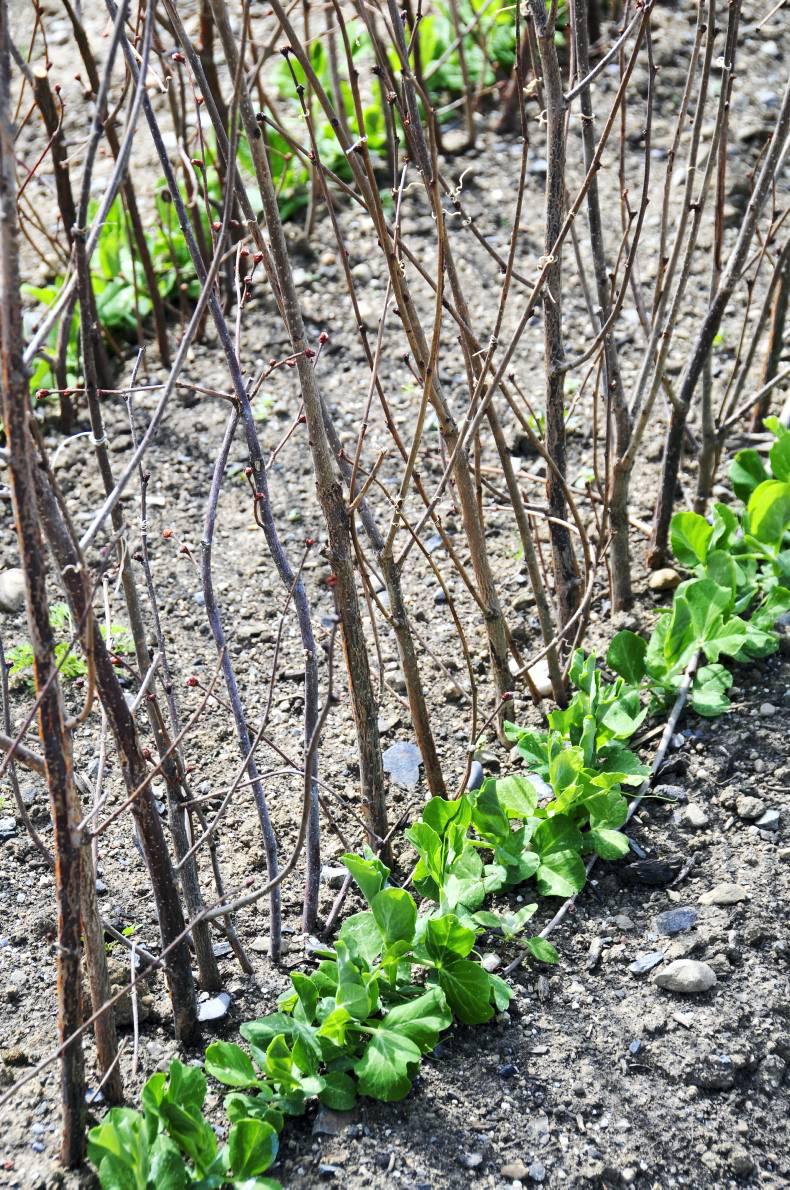
Pea plants are more productive when allowed to grow on a support of some kind, such as wire or pea sticks. The latter can be any kind of prunings, ideally free of leaves, let to dry out and stiffen for a few months. These can be shoved into the ground close to the row of pea plants so the peas begin to climb as soon as possible. It is much easier then to hoe the rows.


SHARING OPTIONS