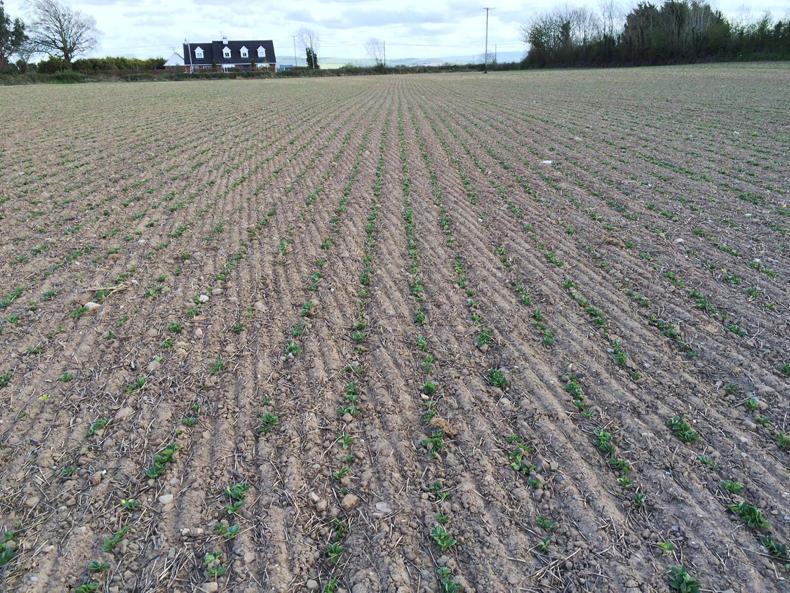
Strip tilling can work well for beans, providing land is in good structural condition and good fertility, but fertiliser can be incorporated using this system also.
ADVERTISEMENT
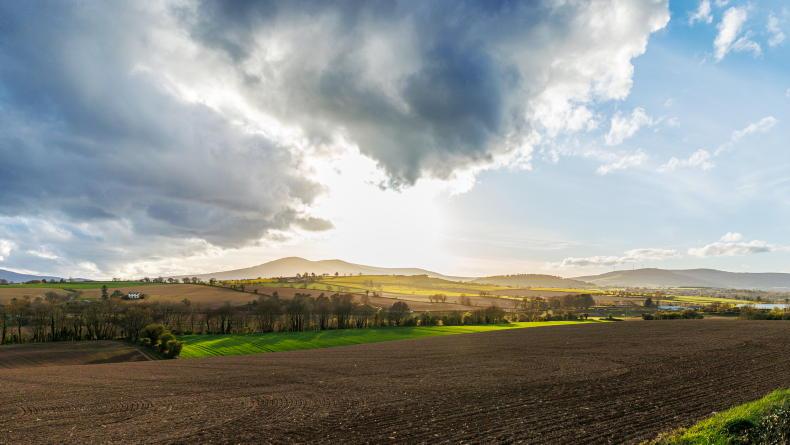
At this point it looks like most areas have a largely dry week ahead so there may be some opportunities for planting, especially on dryer land. Beans, spring wheat, spring oats and malting barley should be the first to go in, roughly in that order, depending on what crops you have to plant. This time last year most land was very wet. Perhaps the condition of the ground at sowing has a bearing on stress at grain fill, which is a precursor of skinning in barley.
The decision to plant should be dictated by soil conditions only. This might mean sacrificing a small patch to get the majority of the field sown. As always, the condition of the soil below the seedbed is equally or even more important than the seedbed itself, as it governs the risk from rain post planting and it is the rooting zone.
Plan for close to 350 seeds/m2 for wheat and oats and around 30-35 seeds/m2 for beans. You need a good guide on seed size from your seed supplier to do this, but it can be very useful. You should aim to establish 350 plants/m2 for malting barley so perhaps you need to drill 370-380/m2.
ADVERTISEMENT
Where possible put P and K down with the seed at planting, especially where soil indices are low. If pH is low apply some granlime – it might even be better value than P or K. If you can’t get the P and K down with the seed, it should at least be applied and incorporated into the seedbed. A 7t/ha crop of spring barley on index 2 land requires 37kg P/ha and 95kg K/ha.
This content is available to digital subscribers and loyalty code users only. Sign in to your account, use the code or subscribe to get unlimited access.
The reader loyalty code gives you full access to the site from when you enter it until the following Wednesday at 9pm. Find your unique code on the back page of Irish Country Living every week.
CODE ACCEPTED
You have full access to the site until next Wednesday at 9pm.
CODE NOT VALID
Please try again or contact support.
At this point it looks like most areas have a largely dry week ahead so there may be some opportunities for planting, especially on dryer land. Beans, spring wheat, spring oats and malting barley should be the first to go in, roughly in that order, depending on what crops you have to plant. This time last year most land was very wet. Perhaps the condition of the ground at sowing has a bearing on stress at grain fill, which is a precursor of skinning in barley.
The decision to plant should be dictated by soil conditions only. This might mean sacrificing a small patch to get the majority of the field sown. As always, the condition of the soil below the seedbed is equally or even more important than the seedbed itself, as it governs the risk from rain post planting and it is the rooting zone.
Plan for close to 350 seeds/m2 for wheat and oats and around 30-35 seeds/m2 for beans. You need a good guide on seed size from your seed supplier to do this, but it can be very useful. You should aim to establish 350 plants/m2 for malting barley so perhaps you need to drill 370-380/m2.
Where possible put P and K down with the seed at planting, especially where soil indices are low. If pH is low apply some granlime – it might even be better value than P or K. If you can’t get the P and K down with the seed, it should at least be applied and incorporated into the seedbed. A 7t/ha crop of spring barley on index 2 land requires 37kg P/ha and 95kg K/ha.
If you would like to speak to a member of our team, please call us on 01-4199525.
Link sent to your email address
We have sent an email to your address. Please click on the link in this email to reset your password. If you can't find it in your inbox, please check your spam folder. If you can't find the email, please call us on 01-4199525.
ENTER YOUR LOYALTY CODE:
The reader loyalty code gives you full access to the site from when you enter it until the following Wednesday at 9pm. Find your unique code on the back page of Irish Country Living every week.





SHARING OPTIONS