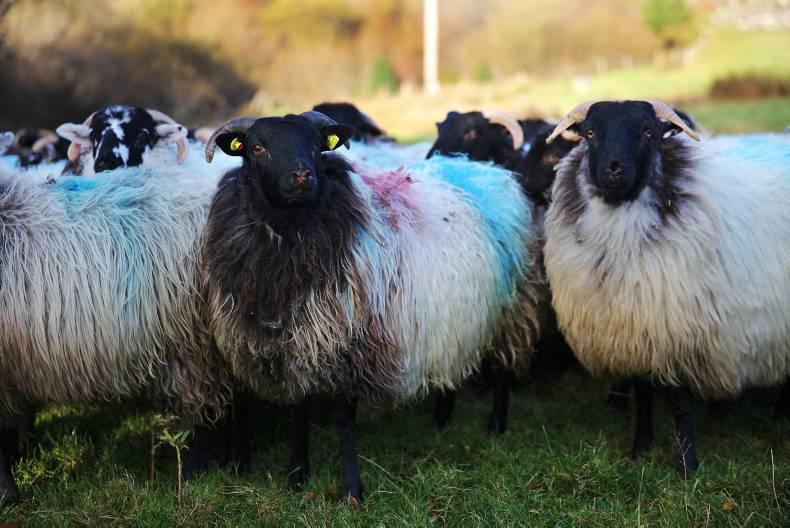
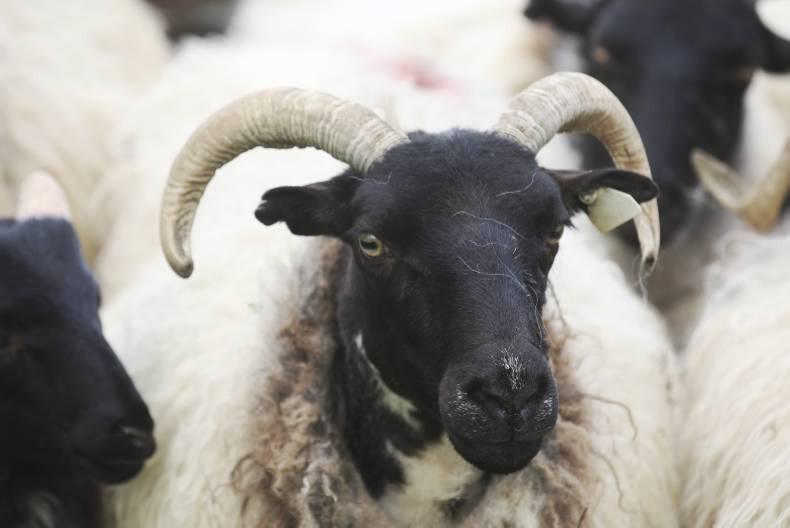
According to Department of Agriculture figures, 39% of the national ewe flock were deemed hill breeds in the 2014 sheep census. These hill breeds have very important characteristics valuable for upland and commonage management, including an ability to forage and utilise poor-quality vegetation, along with a toughness and maternal ability that transmits to pure- and cross-bred daughters, which in turn can have a significant impact on profitability in both hill and lowland flocks.
Hill sheep can be split into two main categories:
Category one: Hill ewes that spend the majority of their breeding lives on upland and mountains, playing a very valuable role in grazing and maintaining these habitats. These flocks generally are on farms with a very small amount of enclosed green land and generally produce store lambs for sale, while retaining most replacements for breeding.Category two: Hill ewes on farms that spend more time on enclosed land, producing lambs for the factory and for the cross-bred and pure-bred replacement market. They are essentially hill-bred ewes treated as a lowland flock.Scanning
Scanning is an essential tool for all sheep farmers. Most flocks in category two are scanned at this stage, with many scanning 1.3 to 1.5 lambs per ewe to the ram. The harder hill ewes described in category one will generally be lambing later, in mid- to late April, and a target for them is to scan 0.9 lambs per ewe to the ram.
Scanning data should be used to separate doubles, singles and barren ewes. Two-year-old ewes that did not reach the target bodyweight at mating are more likely to be barren. These ewes can be given a chance the following season, but records should be maintained to allow identification and culling if not pregnant that year.
Hill farmers breeding purebred stock that may be retained as stock rams need to be vigilant not to keep rams from dams that have been barren previously, as this trait is heritable and will be passed on to his daughters.
Reducing mortality
The biggest killer of lambs is starvation, with up to 50% of the losses occurring in the first 48 hours of life. This figure can be reduced substantially at lambing time by having ewes in good condition, not carrying a parasite burden and feeding well in the weeks leading up to lambing, along with adequate grass and/or supplementary feeding post-lambing.
Poorly fed, thin ewes will have a tendency to walk away from lambs, as they will not have milk and may be too hungry to show proper maternal characteristics.
Management tasks
A few basic management tasks will help to avoid this situation and ensure a better lamb crop.
Condition scoring: All ewes should be condition-scored at scanning, with ewes lambing for their first time in 2016 and older ewes given particular attention. The younger sheep getting permanent teeth, which makes foraging more difficult, will require concentrate and forage supplementation. A target body condition score (BCS) in mid- to late pregnancy is 2.5, with lowland type flocks targeting BCS of 3. The last three weeks of wet and windy weather has been difficult on out-wintered sheep. As such, increased vigilance is needed regarding dosing for liver fluke and separating thinner ewes. The higher-output hill flocks need immediate attention to avoid potential issues, while the purer hill flocks lambing out in late April still have some time to play with.
Dosing: Due to the very wet weather recently, hill sheep are in somewhat poorer condition. It is very important to dose for liver fluke now following a treatment in early December, as out-wintered sheep are continually ingesting fluke larvae while others are developing internally. Animals should be dosed with a good-quality product that is active against at least immature and mature fluke. Many of the combination fluke and worm drenches kill only adult fluke and this is not fully effective. Yearling hoggets wintered outdoors need treatment for both fluke and worms every six weeks, while adult ewes should only receive fluke treatment, on this timescale.
Case studies
The following case studies present challenges facing farmers in different systems and on different land types and give farmer experiences of management practices currently being undertaken.
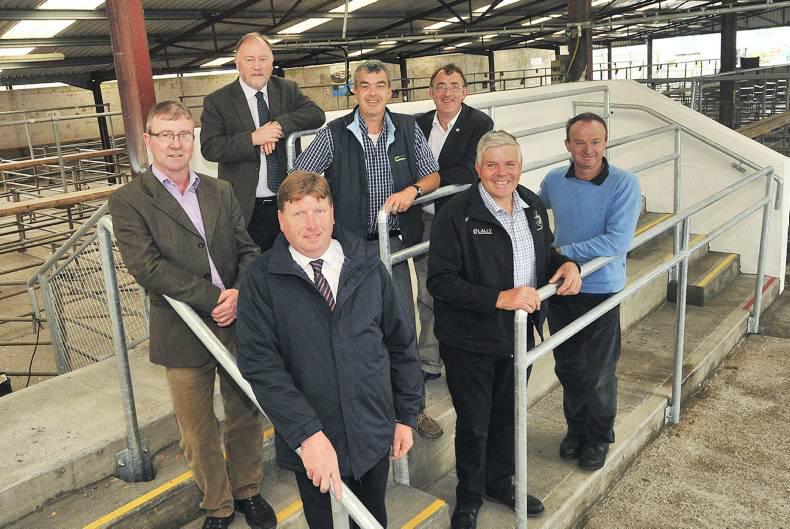
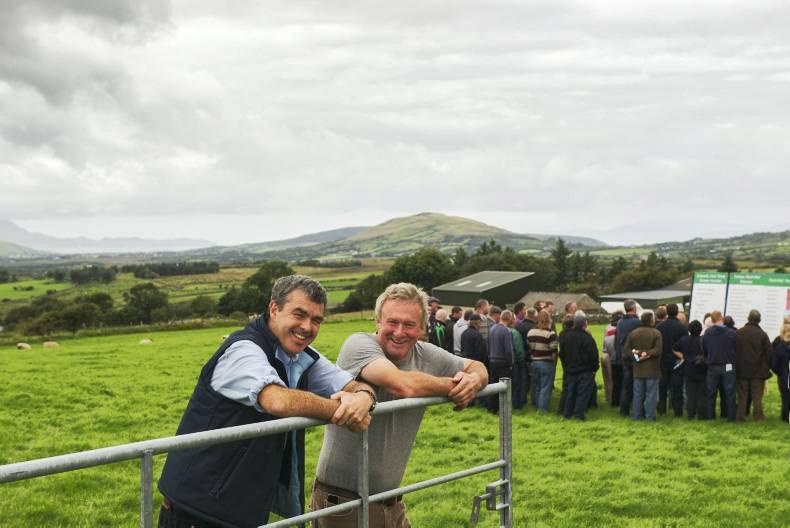
Case study 1: James Lally, Durless, Kilsallagh, Westport, Co Mayo
James Lally’s hill farm, part of the Teagasc BETTER farm sheep programme, scanned 220 Mayo Blackface ewes on 3 February and had a scan rate of 1.27 with 3% barren.
The farm has a large proportion of commonage, with some very good enclosed land and more upland-type grassland which is used for mixed grazing sucklers and sheep.
All ewes received a fluke dose, with singles returned to the hill and doubles housed on ad-lib very good-quality silage. They will be started on concentrates six weeks pre-lambing, with a concentrate selected containing good energy sources such as barley, maize, oats and distillers.
There will be special emphasis on soyabean meal in the last three weeks pre-lambing to ensure plenty of colostrum, milk and the birth of strong lambs.
The single-bearing ewes will be brought from the hill at the start of the second week of March, with the first ewes due to lamb on St Patrick’s Day – none will receive concentrates.
Closing off fields began in late October, with a target of 60% closed by late November.
The drier fields will receive 23 units of urea to boost grass supplies when weather improves.
Case study 2: Raymond Prendergast, Lettereneen, Tourmaceady, Co Mayo
Raymond Prendergast carries a flock of 245 pure Lanark, Lanark-cross and pure Mayo Connemara ewes. All are bred to Bluefaced Leicester and Lanark rams on a farm with slightly more lowland than commonage ground.
The flock scanned positively at 1.57 lambs, with 6% barren ewes. Lambing will start on 5 March. Raymond reckons that the higher barrenness is attributed to not culling older ewes more strictly in autumn.
Ewes were housed in late December following footbathing and all were run through the footbath again at the end of January. They will receive Heptavac P four weeks pre-lambing. All doubles are receiving 1.5lb (0.71kg) meal supplementation at a flat rate up to lambing, while singles are being fed 1lb (0.45kg) and triplets 2lb (0.91kg) per day, also at a flat rate until lambing.
Closing of paddocks began in mid-November, with over 50% of grazing land closed by the end of November. He hopes to get out nitrogen once weather improves, and is aiming not to feed meals once ewes are turned out with lambs. All rams are raddled and ewes (coloured to denote late lambing) will be let out and fed silage and meals to provide extra lambing space for earlier lambers. They will be rehoused in late March.
Raymond sees the benefits in housing for lambing as being able to readily check all ewes’ udders, feed precisely (thus reducing mismothering) and dagging tails before turnout to have cleaner sheep throughout the summer.
Case study 3: Eneas Kane, Dooagh, Achill,
Co Mayo
Eneas Kane farms at Dooagh, Achill, Co Mayo. He carries 150 Mayo Connemara Blackface ewes on a mainly commonage farm with a small amount of enclosed green land, typical of the area. The ewes scanned 1.03 lambs in the last few days.
Following a fluke dose, the singles will go back to the commonage, while the doubles will be kept on the green land.
All ewe lambs are trained to eat concentrates and the doubles will receive 1lb/head (0.45kg) for six weeks pre-lambing.
The singles will come back from the hill one week pre-lambing and will be grazed on grass saved from mid-November.
Eneas has little or no veterinary problems or lambing difficulties and has been recording with Sheep Ireland for the last seven years.
He selects his replacements based on the recorded data, placing great importance on ewe longevity and the ability to hold condition in spring, along with ewes having good mothering ability.
This is a strong contributor behind the favourable lambing performance.
According to Department of Agriculture figures, 39% of the national ewe flock were deemed hill breeds in the 2014 sheep census. These hill breeds have very important characteristics valuable for upland and commonage management, including an ability to forage and utilise poor-quality vegetation, along with a toughness and maternal ability that transmits to pure- and cross-bred daughters, which in turn can have a significant impact on profitability in both hill and lowland flocks.
Hill sheep can be split into two main categories:
Category one: Hill ewes that spend the majority of their breeding lives on upland and mountains, playing a very valuable role in grazing and maintaining these habitats. These flocks generally are on farms with a very small amount of enclosed green land and generally produce store lambs for sale, while retaining most replacements for breeding.Category two: Hill ewes on farms that spend more time on enclosed land, producing lambs for the factory and for the cross-bred and pure-bred replacement market. They are essentially hill-bred ewes treated as a lowland flock.Scanning
Scanning is an essential tool for all sheep farmers. Most flocks in category two are scanned at this stage, with many scanning 1.3 to 1.5 lambs per ewe to the ram. The harder hill ewes described in category one will generally be lambing later, in mid- to late April, and a target for them is to scan 0.9 lambs per ewe to the ram.
Scanning data should be used to separate doubles, singles and barren ewes. Two-year-old ewes that did not reach the target bodyweight at mating are more likely to be barren. These ewes can be given a chance the following season, but records should be maintained to allow identification and culling if not pregnant that year.
Hill farmers breeding purebred stock that may be retained as stock rams need to be vigilant not to keep rams from dams that have been barren previously, as this trait is heritable and will be passed on to his daughters.
Reducing mortality
The biggest killer of lambs is starvation, with up to 50% of the losses occurring in the first 48 hours of life. This figure can be reduced substantially at lambing time by having ewes in good condition, not carrying a parasite burden and feeding well in the weeks leading up to lambing, along with adequate grass and/or supplementary feeding post-lambing.
Poorly fed, thin ewes will have a tendency to walk away from lambs, as they will not have milk and may be too hungry to show proper maternal characteristics.
Management tasks
A few basic management tasks will help to avoid this situation and ensure a better lamb crop.
Condition scoring: All ewes should be condition-scored at scanning, with ewes lambing for their first time in 2016 and older ewes given particular attention. The younger sheep getting permanent teeth, which makes foraging more difficult, will require concentrate and forage supplementation. A target body condition score (BCS) in mid- to late pregnancy is 2.5, with lowland type flocks targeting BCS of 3. The last three weeks of wet and windy weather has been difficult on out-wintered sheep. As such, increased vigilance is needed regarding dosing for liver fluke and separating thinner ewes. The higher-output hill flocks need immediate attention to avoid potential issues, while the purer hill flocks lambing out in late April still have some time to play with.
Dosing: Due to the very wet weather recently, hill sheep are in somewhat poorer condition. It is very important to dose for liver fluke now following a treatment in early December, as out-wintered sheep are continually ingesting fluke larvae while others are developing internally. Animals should be dosed with a good-quality product that is active against at least immature and mature fluke. Many of the combination fluke and worm drenches kill only adult fluke and this is not fully effective. Yearling hoggets wintered outdoors need treatment for both fluke and worms every six weeks, while adult ewes should only receive fluke treatment, on this timescale.
Case studies
The following case studies present challenges facing farmers in different systems and on different land types and give farmer experiences of management practices currently being undertaken.
Case study 1: James Lally, Durless, Kilsallagh, Westport, Co Mayo
James Lally’s hill farm, part of the Teagasc BETTER farm sheep programme, scanned 220 Mayo Blackface ewes on 3 February and had a scan rate of 1.27 with 3% barren.
The farm has a large proportion of commonage, with some very good enclosed land and more upland-type grassland which is used for mixed grazing sucklers and sheep.
All ewes received a fluke dose, with singles returned to the hill and doubles housed on ad-lib very good-quality silage. They will be started on concentrates six weeks pre-lambing, with a concentrate selected containing good energy sources such as barley, maize, oats and distillers.
There will be special emphasis on soyabean meal in the last three weeks pre-lambing to ensure plenty of colostrum, milk and the birth of strong lambs.
The single-bearing ewes will be brought from the hill at the start of the second week of March, with the first ewes due to lamb on St Patrick’s Day – none will receive concentrates.
Closing off fields began in late October, with a target of 60% closed by late November.
The drier fields will receive 23 units of urea to boost grass supplies when weather improves.
Case study 2: Raymond Prendergast, Lettereneen, Tourmaceady, Co Mayo
Raymond Prendergast carries a flock of 245 pure Lanark, Lanark-cross and pure Mayo Connemara ewes. All are bred to Bluefaced Leicester and Lanark rams on a farm with slightly more lowland than commonage ground.
The flock scanned positively at 1.57 lambs, with 6% barren ewes. Lambing will start on 5 March. Raymond reckons that the higher barrenness is attributed to not culling older ewes more strictly in autumn.
Ewes were housed in late December following footbathing and all were run through the footbath again at the end of January. They will receive Heptavac P four weeks pre-lambing. All doubles are receiving 1.5lb (0.71kg) meal supplementation at a flat rate up to lambing, while singles are being fed 1lb (0.45kg) and triplets 2lb (0.91kg) per day, also at a flat rate until lambing.
Closing of paddocks began in mid-November, with over 50% of grazing land closed by the end of November. He hopes to get out nitrogen once weather improves, and is aiming not to feed meals once ewes are turned out with lambs. All rams are raddled and ewes (coloured to denote late lambing) will be let out and fed silage and meals to provide extra lambing space for earlier lambers. They will be rehoused in late March.
Raymond sees the benefits in housing for lambing as being able to readily check all ewes’ udders, feed precisely (thus reducing mismothering) and dagging tails before turnout to have cleaner sheep throughout the summer.
Case study 3: Eneas Kane, Dooagh, Achill,
Co Mayo
Eneas Kane farms at Dooagh, Achill, Co Mayo. He carries 150 Mayo Connemara Blackface ewes on a mainly commonage farm with a small amount of enclosed green land, typical of the area. The ewes scanned 1.03 lambs in the last few days.
Following a fluke dose, the singles will go back to the commonage, while the doubles will be kept on the green land.
All ewe lambs are trained to eat concentrates and the doubles will receive 1lb/head (0.45kg) for six weeks pre-lambing.
The singles will come back from the hill one week pre-lambing and will be grazed on grass saved from mid-November.
Eneas has little or no veterinary problems or lambing difficulties and has been recording with Sheep Ireland for the last seven years.
He selects his replacements based on the recorded data, placing great importance on ewe longevity and the ability to hold condition in spring, along with ewes having good mothering ability.
This is a strong contributor behind the favourable lambing performance.







SHARING OPTIONS