


Many agricultural contractors are at breaking point due to late payments, increasing running costs, shorter time frames for doing work and labour shortages. The Irish Farmers Journal recently attended a contractors’ meeting in Co Tipperary where the issues were spelled out.
Cashflow
Cashflow is needed for day-to-day bills but is by far the biggest problem facing contractors. Many have balances of €50,000 and more outstanding which they cannot collect and with some of these debts often stretching back over multiple years.
Richie White, chair of the Farm Contractors of Ireland group, told the meeting: “I would urge contractors to set up payment plans with their customers under which they can collect a determined amount every month. That will benefit the farmers as they don’t have to come up with the full amount as well as benefiting the contractor allowing them to pay bills and plan their business better.”
Contractors are being used as a credit facility or bank by farmers but they cannot continue to be treated as such as they are not receiving credit facilities themselves from parts suppliers and fuel companies.
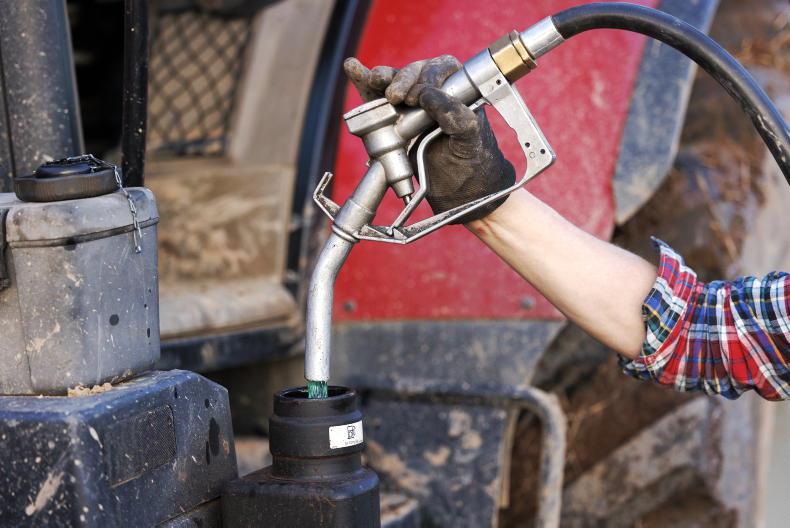
An average silage outfit can burn 2,000 litres of diesel each day and in many cases fuel has to be paid for on delivery.
Many contractors claim that their customers are being told by various bodies not to pay the contractor until last as the contractor won’t be needed again until next year. This will result in contractors closing their businesses.

Smaller Windows
The next big problem is the tightening window for getting work done. Everyone wants the work done at the one time. This leads to machinery increasing in size to get through a larger volume of work in a shorter time frame. But this comes at a huge financial cost to contractors.
Planning
Some contractors said that farmers don’t plan with them any more. At silage time, the contractor is trying to plan two to three days ahead and will have 200-plus acres mowed up in advance. Then a farmer mows his own grass without talking to the contractor and rings asking for it to be picked up immediately. The contractor has to try to accommodate the extra work, which leads to working 24 to 48 hours without any sleep – a huge safety concern.
Loyalty
Loyalty is a thing of the past according to many contractors. One said: “The farmer rings up and says: ‘I want my work done today at 3 o’clock – if you cannot do it, I will get someone else.’”
Other contractors pointed to the abuse they have to endure.
“When I started I was respected, I offered a good service to my customers and they appreciated it,” said one.
“Now my son is running the business and I have seen firsthand the abuse he has to take; I wouldn’t do it to a dog.”
Labour shortages
Ten years ago, people were queuing up to work for contractors – not so today.
“Young people don’t want to drive machinery any more, don’t want to do the long hours and they can get easier jobs with shorter hours and more money,” said one contractor.
“I have two sons who are getting €1,000 each week for half the hours I do. I don’t blame them for not wanting to come home contracting.”
Lack of cashflow means contractors cannot carry staff over the quiet winter period.
“We are quite literally closed down for eight weeks after the slurry ban. No business could hold on to staff without any work for that period of time.”
Huge Investment
For anyone who wants to start up contracting, the initial investment is huge. For example, a decent secondhand 150hp tractor will cost about €60,000. Add to that a secondhand machine such as a baler at €30,000 and a mower at €10,000 and very quickly you spend €100,000 – but are offering only one service to farmers. Banks are slow to give funding without some form of security.
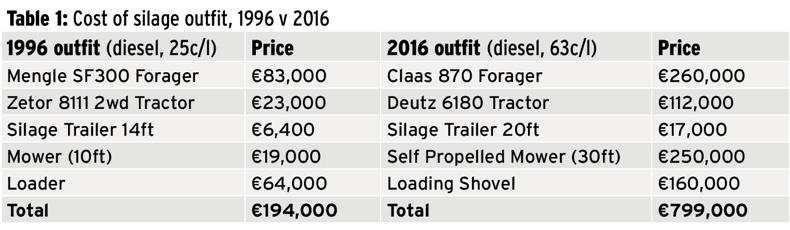
The cost of machinery and diesel has increased dramatically in the past 30 years and is making it a tough business to be in.




SHARING OPTIONS