In the last number of weeks, we have seen a few herd incidences of stillbirth and weak calves. Now this of course can be due to a number of factors including time spent calving, parity, infections, genetics and nutrition.
Stillbirths to me are calves that die in the first 48 hours before calving or 48 hours after calving. If getting an increased incidence of stillbirths above 5%, it is highly recommended that any calves be submitted to the lab to rule out infections such as neospora, leptosporosis or any other infectious agents.
On a number of farms, however, we had, by the description of what was happening at calving, a much bigger hunch to the cause.
The farmers were describing calves being alive to begin with and coming out and living for a few minutes, or when they hit the ground dead. All of these cases were given long enough to calve (it wasn’t early intervention) and it wasn’t big calves (dystocia). Iodine deficiency was my number one suspicion in these cases.
Essential before birth
Iodine in the cow is essential before birth as it is converted into thyroxine which is the thyroid hormone responsible for metabolism in the calf.
What complicates things a little more is that selenium is also needed in this process of iodine to thyroxine production. So, when dealing with these cases, we will often check selenium levels also.
Although not always 100% accurate, I really like to have trace element analysis done in silage early in the winter to potentially forewarn of possible deficiencies. In fact, what we have done in a number of herds is blood-tested six to eight cows in the dry period for trace elements and in conjunction with forage analysis make more strategic advice on supplementation, if needed.
In these cases, the first thing we did was post-mortem calves and examine thyroids. Goitre (thyroid enlargement) can be a good indicator of an iodine deficiency.
To confirm, I take some bloods from cows/heifers due to calve and examine iodine and selenium blood levels. In most of our cases, iodine was low so we knew that we needed to supplement the remaining dry cows.
Unfortunately, it is difficult to supplement the affected calves so the best course of action is to give iodine or selenium to the cows left to calve.
Iodine supplementation
It is important to point out that no supplementation should be given without talking to your vet as deficiencies vary throughout the country.
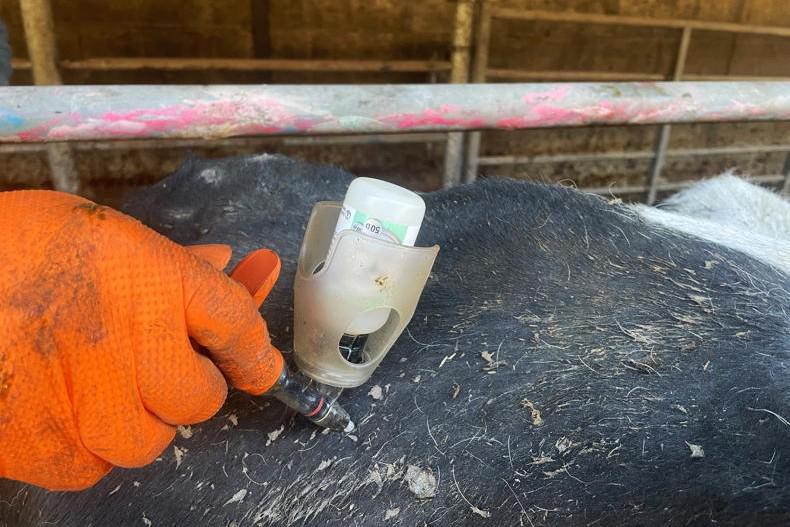
With iodine supplementation, there are a number of routes to administer. Oral doses, boluses, water, and flank or pour-on preparations can be used.
In the cases we saw we used iodine pour-on in close up cows and also added foradyne liquid iodine to the close-up diet. The choice of supplementation route depends on the farm. When a deficiency arises, ensure that high iodine levels are supplemented when needed, especially in the last two to three weeks pre-calving.
It is very good to be proactive in these situations. Careful attention should be paid the following year to forage analysis. Also, some cow mineral bloods should be done as a screen.
Read more
Vet’s corner: The dreaded calf scour
Vet’s corner: sometimes we all need a win
In the last number of weeks, we have seen a few herd incidences of stillbirth and weak calves. Now this of course can be due to a number of factors including time spent calving, parity, infections, genetics and nutrition.
Stillbirths to me are calves that die in the first 48 hours before calving or 48 hours after calving. If getting an increased incidence of stillbirths above 5%, it is highly recommended that any calves be submitted to the lab to rule out infections such as neospora, leptosporosis or any other infectious agents.
On a number of farms, however, we had, by the description of what was happening at calving, a much bigger hunch to the cause.
The farmers were describing calves being alive to begin with and coming out and living for a few minutes, or when they hit the ground dead. All of these cases were given long enough to calve (it wasn’t early intervention) and it wasn’t big calves (dystocia). Iodine deficiency was my number one suspicion in these cases.
Essential before birth
Iodine in the cow is essential before birth as it is converted into thyroxine which is the thyroid hormone responsible for metabolism in the calf.
What complicates things a little more is that selenium is also needed in this process of iodine to thyroxine production. So, when dealing with these cases, we will often check selenium levels also.
Although not always 100% accurate, I really like to have trace element analysis done in silage early in the winter to potentially forewarn of possible deficiencies. In fact, what we have done in a number of herds is blood-tested six to eight cows in the dry period for trace elements and in conjunction with forage analysis make more strategic advice on supplementation, if needed.
In these cases, the first thing we did was post-mortem calves and examine thyroids. Goitre (thyroid enlargement) can be a good indicator of an iodine deficiency.
To confirm, I take some bloods from cows/heifers due to calve and examine iodine and selenium blood levels. In most of our cases, iodine was low so we knew that we needed to supplement the remaining dry cows.
Unfortunately, it is difficult to supplement the affected calves so the best course of action is to give iodine or selenium to the cows left to calve.
Iodine supplementation
It is important to point out that no supplementation should be given without talking to your vet as deficiencies vary throughout the country.
With iodine supplementation, there are a number of routes to administer. Oral doses, boluses, water, and flank or pour-on preparations can be used.
In the cases we saw we used iodine pour-on in close up cows and also added foradyne liquid iodine to the close-up diet. The choice of supplementation route depends on the farm. When a deficiency arises, ensure that high iodine levels are supplemented when needed, especially in the last two to three weeks pre-calving.
It is very good to be proactive in these situations. Careful attention should be paid the following year to forage analysis. Also, some cow mineral bloods should be done as a screen.
Read more
Vet’s corner: The dreaded calf scour
Vet’s corner: sometimes we all need a win






SHARING OPTIONS