Traditionally, dairy cows in Ireland get minerals in two ways: either through meal eaten during lactation, or through the minerals and vitamins given during the dry period. Because the amount of meal being fed on most farms is variable and largely dependent on grass supply, the amount of minerals supplied in this form is fairly unreliable. As a result, herds can become deficient in some minerals, placing greater emphasis on the dry period to correct the imbalances.
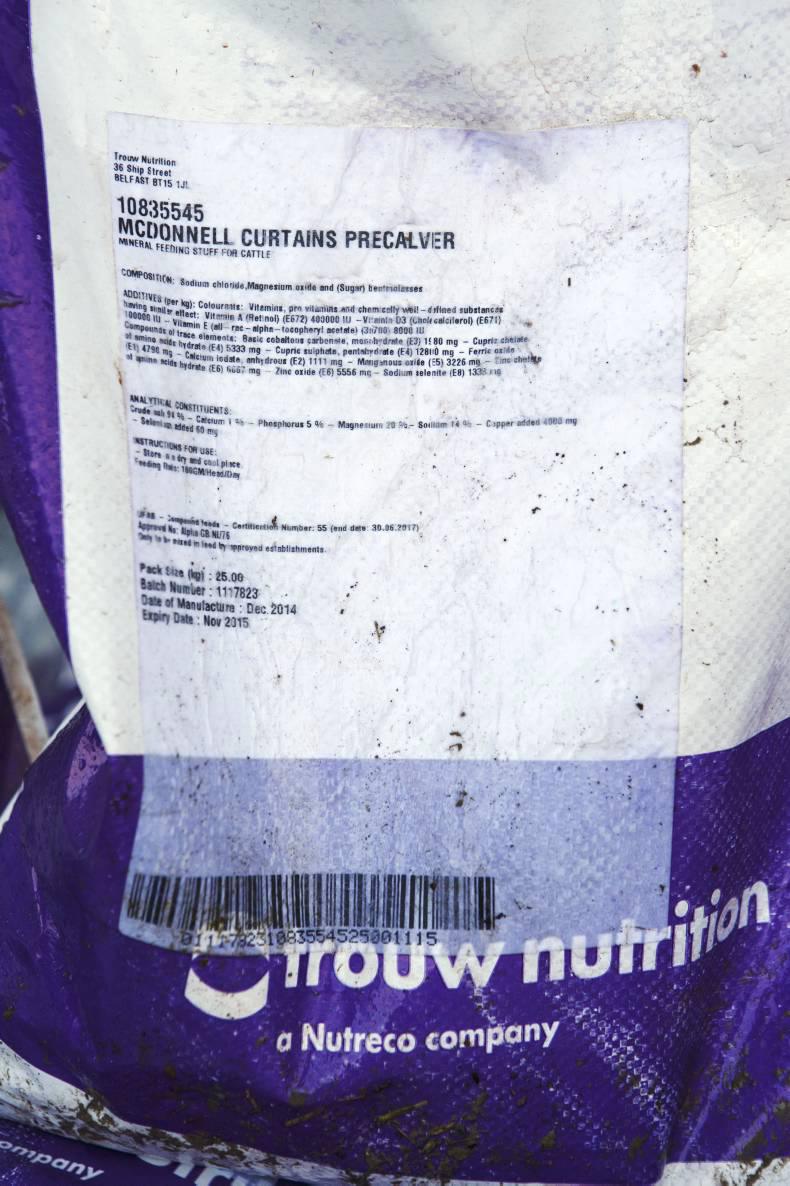
So what are the important minerals to look out for in a dry cow mineral mix? In terms of the major elements, magnesium is critical. The dry cow requires between 20g and 25g of magnesium per day before calving. If the label says there is 20% magnesium in the mineral mix and you are feeding 120g per day, then the cows are getting 24g of magnesium per day.
Phosphorus is also important, particularly as many soils are now deficient in it. The levels in silage tend to be low and this feeds back to deficiency in the cows. Not all dry cow minerals include phosphorus, so check the label before purchase. The inclusion rates vary from 0% to 4% and because phosphorus tends to be an expensive mineral, the amount of phosphorus in the mix will have a big bearing on the price. At 4% phosphorus and with 120g per day being fed, each cow will be getting 4.8g per day. The target phosphorus intake is between 3g and 4g per day pre-calving.
There should be no calcium in the pre-calving mineral as feeding calcium before calving can reduce the cow’s ability to mobilise calcium after calving and could result in more cases of milk fever or sub-clinical milk fever, such as retained cleanings. Cows require between 15g and 18g of sodium per day.
On the trace element side, selenium and iodine are the two minerals with probably the biggest impact on the pre-calving cow in cases of deficiency. Both are linked with calving difficulties and weak or dead calves. The important thing to remember with these two minerals is that they can cause toxicity if fed in too high quantities, and toxicity of any mineral is as bad as deficiency.
For iodine, cows require about 60mg to 70mg per day. Where it says on the label that iodine is included at 500mg, this means the cow will get 60mg if fed 120g of minerals per day.
For selenium, the target is for 5mg or 6mg per day pre-calving. If it says there is 50mg on the label and if 120g per day is fed, then the cows will be consuming 6mg per day.
Other trace elements that should be present in the dry cow diet include copper, cobalt, manganese and zinc.
Vitamins are also important. Most dry cow mineral mixes include vitamins A, D and E. As vitamins A and D don’t cross the placenta into the calf, the newborn calf is relying on adequate amounts of colostrum soon after birth to get its intake of vitamins.
Feeding
Most dry cow minerals now require a feeding rate of 120g per day. If feed space is tight, it may be necessary to feed minerals twice a day so as to ensure every cow gets her daily allowance. The normal recommendation is to feed dry cow minerals for six to eight weeks before calving. However, where major deficiencies are present, it may take longer to build up reserves so mineral feeding may have to start earlier.
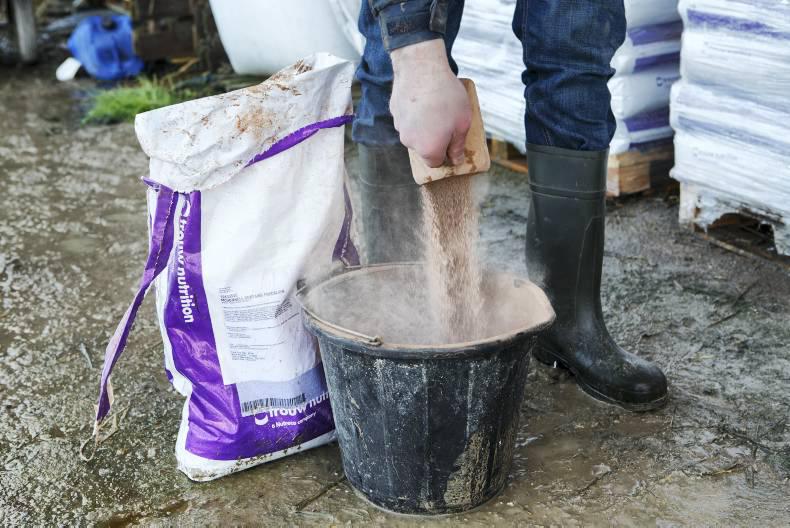
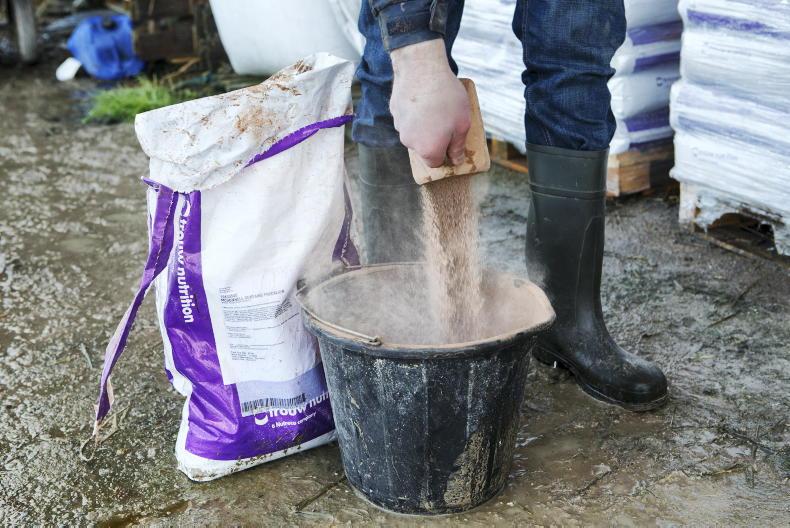
When it comes to methods, the most reliable method is through dusting minerals over silage or through the water supply.
Other methods such as mineral licks can be used successfully, but question marks hang over individual cow intakes. Mineral boluses can be used, but these don’t supply all minerals, so some other form of supplementation is required for minerals such as magnesium that are not supplied in the mineral bolus.
Read more
Dairy managment: silage quality
Traditionally, dairy cows in Ireland get minerals in two ways: either through meal eaten during lactation, or through the minerals and vitamins given during the dry period. Because the amount of meal being fed on most farms is variable and largely dependent on grass supply, the amount of minerals supplied in this form is fairly unreliable. As a result, herds can become deficient in some minerals, placing greater emphasis on the dry period to correct the imbalances.
So what are the important minerals to look out for in a dry cow mineral mix? In terms of the major elements, magnesium is critical. The dry cow requires between 20g and 25g of magnesium per day before calving. If the label says there is 20% magnesium in the mineral mix and you are feeding 120g per day, then the cows are getting 24g of magnesium per day.
Phosphorus is also important, particularly as many soils are now deficient in it. The levels in silage tend to be low and this feeds back to deficiency in the cows. Not all dry cow minerals include phosphorus, so check the label before purchase. The inclusion rates vary from 0% to 4% and because phosphorus tends to be an expensive mineral, the amount of phosphorus in the mix will have a big bearing on the price. At 4% phosphorus and with 120g per day being fed, each cow will be getting 4.8g per day. The target phosphorus intake is between 3g and 4g per day pre-calving.
There should be no calcium in the pre-calving mineral as feeding calcium before calving can reduce the cow’s ability to mobilise calcium after calving and could result in more cases of milk fever or sub-clinical milk fever, such as retained cleanings. Cows require between 15g and 18g of sodium per day.
On the trace element side, selenium and iodine are the two minerals with probably the biggest impact on the pre-calving cow in cases of deficiency. Both are linked with calving difficulties and weak or dead calves. The important thing to remember with these two minerals is that they can cause toxicity if fed in too high quantities, and toxicity of any mineral is as bad as deficiency.
For iodine, cows require about 60mg to 70mg per day. Where it says on the label that iodine is included at 500mg, this means the cow will get 60mg if fed 120g of minerals per day.
For selenium, the target is for 5mg or 6mg per day pre-calving. If it says there is 50mg on the label and if 120g per day is fed, then the cows will be consuming 6mg per day.
Other trace elements that should be present in the dry cow diet include copper, cobalt, manganese and zinc.
Vitamins are also important. Most dry cow mineral mixes include vitamins A, D and E. As vitamins A and D don’t cross the placenta into the calf, the newborn calf is relying on adequate amounts of colostrum soon after birth to get its intake of vitamins.
Feeding
Most dry cow minerals now require a feeding rate of 120g per day. If feed space is tight, it may be necessary to feed minerals twice a day so as to ensure every cow gets her daily allowance. The normal recommendation is to feed dry cow minerals for six to eight weeks before calving. However, where major deficiencies are present, it may take longer to build up reserves so mineral feeding may have to start earlier.
When it comes to methods, the most reliable method is through dusting minerals over silage or through the water supply.
Other methods such as mineral licks can be used successfully, but question marks hang over individual cow intakes. Mineral boluses can be used, but these don’t supply all minerals, so some other form of supplementation is required for minerals such as magnesium that are not supplied in the mineral bolus.
Read more
Dairy managment: silage quality







SHARING OPTIONS