


The Irish Times reported on Thursday 7 April that the China-Ireland beef deal is at risk over a vote at the UN. According to the paper’s report, Minister for Agriculture Simon Coveney told the Cabinet on Wednesday that his department had been contacted by the Chinese government expressing concern about a vote by Ireland at the United Nations Human Rights Council.
However, in a statement issued to the Irish Farmers Journal, the Department of Agriculture maintained that there is no block on the road to finalising the trade deal between the two countries.
“The Department has been working closely with the Chinese authorities to finalise the remaining technical steps to allow trade of Irish beef to China to commence,” the statement read.
“A Chinese inspection team visited Ireland for 10 days in January and we are currently awaiting their report which will determine the next steps,” it concluded.
Charlie Flanagan, Minister of for Foreign Affairs and Trade also issued a statement, elaborating on the vote taken by Ireland at the UN and reassuring the public that Ireland-China relations were "warm and positive" and that the beef deal was still on track.
The statement said that on 10 March, in response to a report on China by the UN Commissioner for Human Rights, Ireland along with the UK, Germany, Denmark, Sweden, Finland, the Netherlands, Norway, Iceland, Australia and Japan joined a US statement at the UN Human Rights Council in Geneva in support of the UN Commissioner’s report.
“The position taken by Ireland was wholly consistent with EU policy in relation to China as set out in a letter by EU Ambassadors in China to the State Counsellor Guo Shengkun on 24th February 2016", the statement read. "It is consistent also with our national position on global human rights issues articulated repeatedly at the UN."
The statement added that "no explicit linkage" has been drawn by the Chinese authorities between this motion and the progress of Ireland’s application for beef access.
"The Government remains wholly committed to further building on our strong bilateral relationship with China,” it said.
Irish beef in China
The Chinese market lifted the ban to Irish beef in 2015, 15 years after it was closed due to the European BSE crisis.
The lifting of the ban followed years of careful negotiation by the Irish Government, including a trade visit by Minister for Agriculture Simon Coveney and a number of Irish beef processors to the country in 2014.
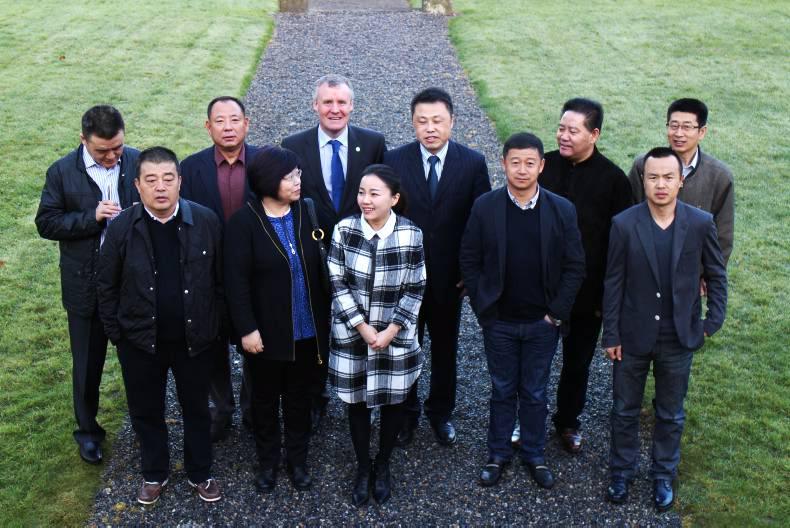
Following the lifting of the ban, a group representing China’s top buying companies visited Ireland to see beef and sheep meat export plants. They also participated in Bord Bia’s Marketplace International event on 26 March in Dublin. This was followed by a visit by Li Keqiang, the Chinese premier, and Han Changfu, the Chinese agricultural minister, to Ireland in May. Although the process of getting Irish beef into China has been a little slower than anticipated, there have been further positive movements towards a final deal this year, as noted by the Department’s statement.
Demand for imported beef
An emerging middle class in China is leading the demand for imported beef. Imports are expected to rise to over 750,000t by 2023, only accounting for approximately 3% of China’s meat consumption.
’2,000 to 3,000 cows is a good size for a farm’ – Chinese dairy consultant



SHARING OPTIONS