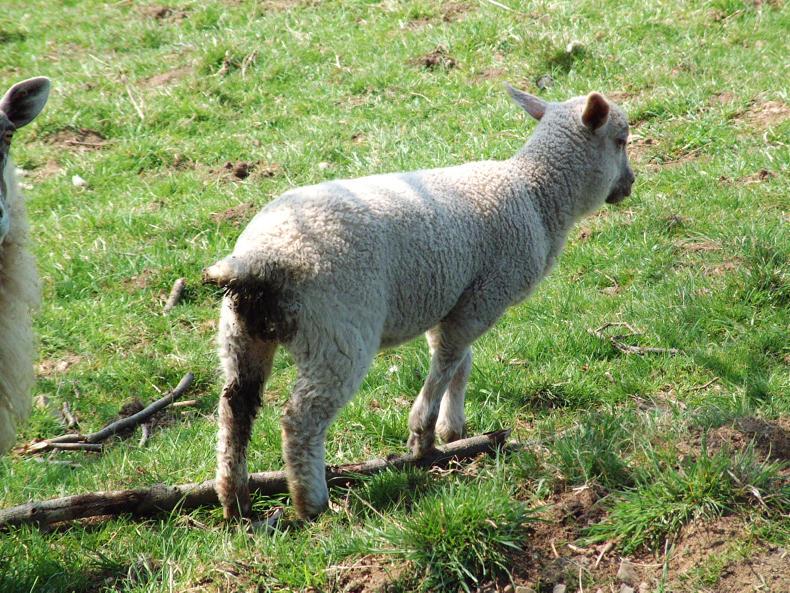
Nematodirus affects lambs between six and 12 weeks of age.
ADVERTISEMENT
Maximum hatching of nematodirus larvae may could occur up to two weeks earlier this year with peak hatching predicted by the Department during the last week of March, along the south coast of Ireland and the first week of April across the rest of the country.
Nematodirus affects lambs between six and 12 weeks of age causing diarrhoea, dehydration and weight loss, as well as mortality in untreated lambs.
It takes half a year before nematodirus eggs hatch and release infected larvae. This takes place in spring as soil temperatures increase, meaning the disease typically occurs in April, May and June as clinical signs seen two to three weeks after peak hatching. Lamb deaths can occur in some cases before clinical signs are seen, but ewes are not affected.
ADVERTISEMENT
Treatment
Dosing with a suitable anthelmintic by the second week of April is recommended by the Department for flocks around the south coast of the country. Lambs across the rest of the country should be dosed from mid-April.
Nematodirus outbreaks are best prevented by keeping the current year’s lambs off pasture that was grazed by lambs or young calves in the previous year, but dosing will also help to decrease the risk of clinical disease and reduce pasture contamination for the next year.
Benzimidazoles (white drenches) remain the treatment of choice and are effective against both larval and adult stages of this worm. Repeat dosing may be needed in two- to three-week intervals as drenches do not cover lambs for re-infections.
This content is available to digital subscribers and loyalty code users only. Sign in to your account, use the code or subscribe to get unlimited access.
The reader loyalty code gives you full access to the site from when you enter it until the following Wednesday at 9pm. Find your unique code on the back page of Irish Country Living every week.
CODE ACCEPTED
You have full access to the site until next Wednesday at 9pm.
CODE NOT VALID
Please try again or contact support.
Maximum hatching of nematodirus larvae may could occur up to two weeks earlier this year with peak hatching predicted by the Department during the last week of March, along the south coast of Ireland and the first week of April across the rest of the country.
Nematodirus affects lambs between six and 12 weeks of age causing diarrhoea, dehydration and weight loss, as well as mortality in untreated lambs.
It takes half a year before nematodirus eggs hatch and release infected larvae. This takes place in spring as soil temperatures increase, meaning the disease typically occurs in April, May and June as clinical signs seen two to three weeks after peak hatching. Lamb deaths can occur in some cases before clinical signs are seen, but ewes are not affected.
Treatment
Dosing with a suitable anthelmintic by the second week of April is recommended by the Department for flocks around the south coast of the country. Lambs across the rest of the country should be dosed from mid-April.
Nematodirus outbreaks are best prevented by keeping the current year’s lambs off pasture that was grazed by lambs or young calves in the previous year, but dosing will also help to decrease the risk of clinical disease and reduce pasture contamination for the next year.
Benzimidazoles (white drenches) remain the treatment of choice and are effective against both larval and adult stages of this worm. Repeat dosing may be needed in two- to three-week intervals as drenches do not cover lambs for re-infections.
If you would like to speak to a member of our team, please call us on 01-4199525.
Link sent to your email address
We have sent an email to your address. Please click on the link in this email to reset your password. If you can't find it in your inbox, please check your spam folder. If you can't find the email, please call us on 01-4199525.
ENTER YOUR LOYALTY CODE:
The reader loyalty code gives you full access to the site from when you enter it until the following Wednesday at 9pm. Find your unique code on the back page of Irish Country Living every week.







SHARING OPTIONS