Never have clichés fitted a month so well: March in like a lamb, out like a lion, or in like a lion and out like a lion. Definitely March of many weathers has fitted like a glove this year. Even as I type we are having four seasons in the one hour, let alone the one day.
We got some fertiliser out, 22-2.2-10 plus sulphur was used at a bag to the acre over 90 acres so far. We are not massive users of fertiliser; in the past we let our Ps and Ks drop and it cost a lot of money to get them right so now we are adopting a policy of using an N-P-K product to feed the soil and keep our indices close to correct.
A very learned man told me recently that the reason all fertilisers now have sulphur in them is because there is no more sulphur in petrol, and hence no more sulphur falling in the rain. I’ll leave it up to yourselves as to whether to believe him or not.
This year, especially with the price of store heifers, we have chosen to spread a bit less. Where fertiliser was applied on the recent reseeds (in the last 10 years), grass has responded well.
Grouping of ewes and lambs
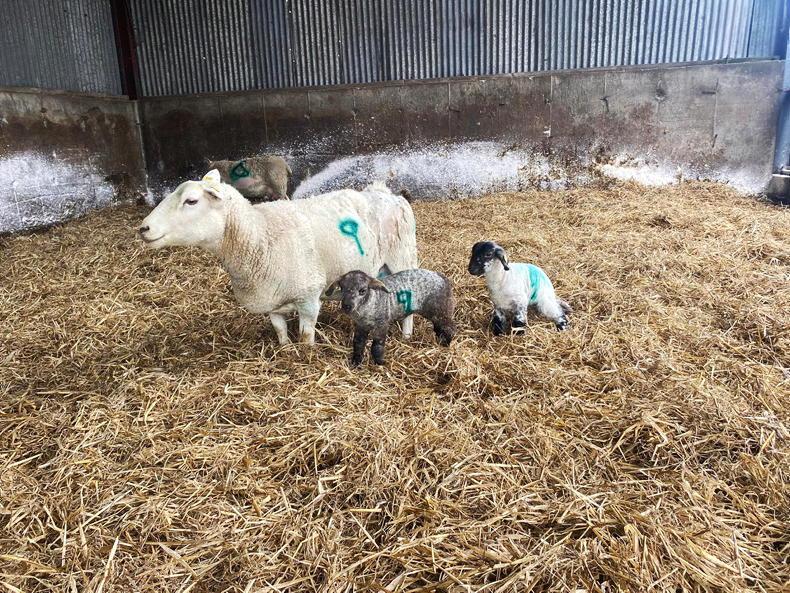
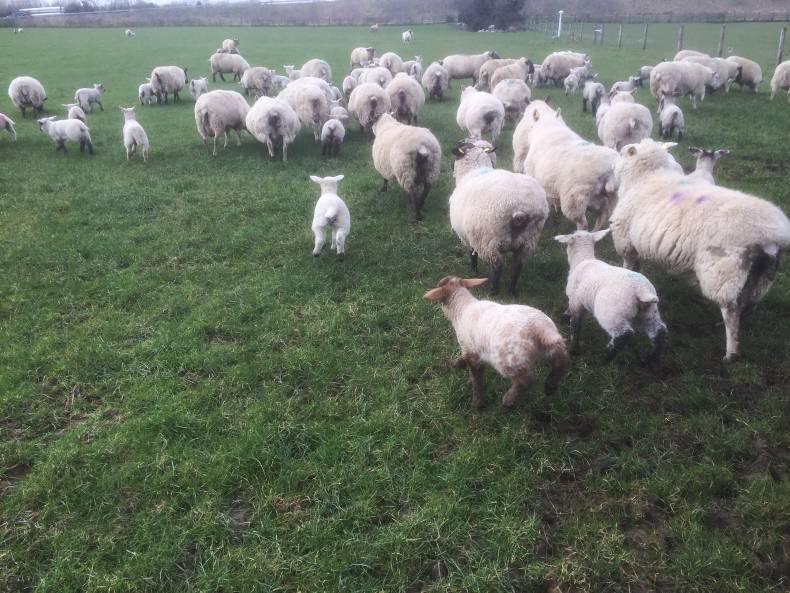
Ewes and lambs are grouped in batches of close to 100 and they are moving around paddocks every three to four days.
Weather is making the decision for us on when to move or not; if it’s dry we are leaving them for an extra day to graze out tight and on the days it has poured rain we are moving them quicker. Sheep are very responsive to the weather and they don’t leave it long before telling you if they are happy or not.
Overall on the sheep front this lambing season has been good: all mature ewes are finished lambing and our replacement ewe lambs just started on Thursday last.
TB test and varying weights
Monday and Thursday last saw our annual TB test, which was passed, thankfully, and it all went smoothly; it can be a stressful two days on man and beast, especially when a lot of heifers are being released off slats after three to four months on them – things can get excited.
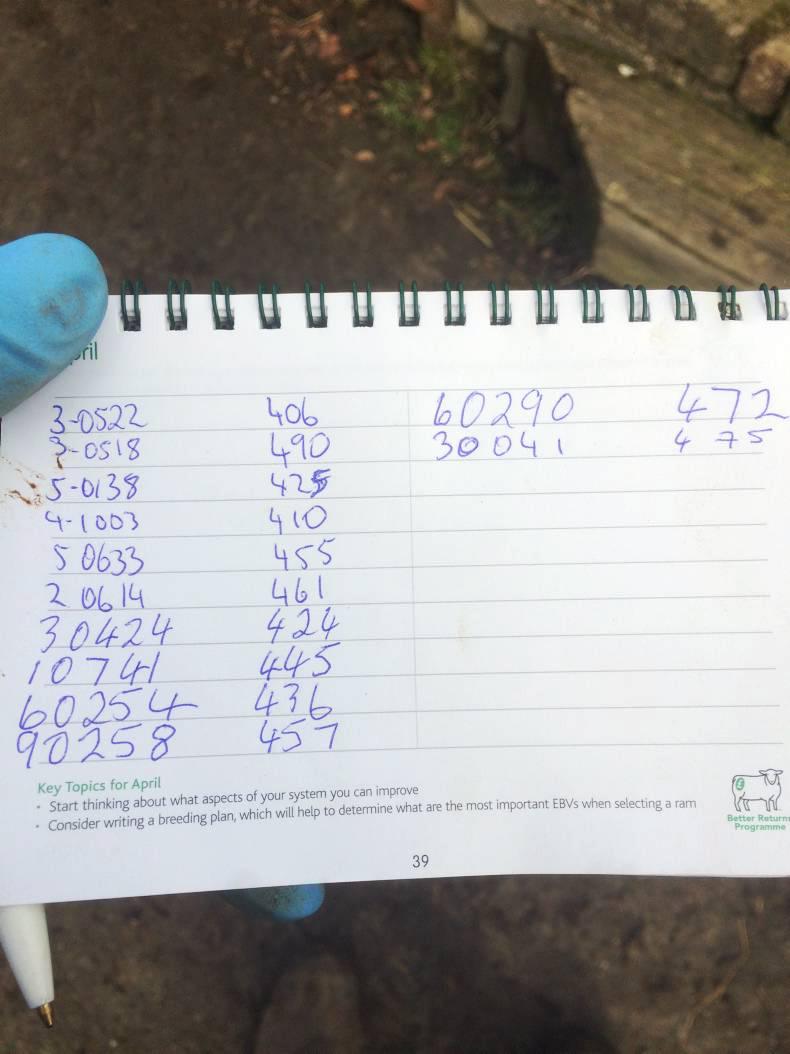
After the clear test, we weighed all the autumn-born purchases.
While I like to weigh cattle regularly, with bought-in cattle you have to take results with a pinch of salt.
It’s not like weighing cattle or sheep that you bred yourself. You never know the history of bought-in cattle and weighing results show that some heifers put on 100kg and some only put on 10kg.
They were last weighed on 16 November and they were all treated the same and fed on the same silage – thankfully there was only one who put on just 10kg.
I could write a thesis on the variables and reasons as to why she only put on 10kg but we won’t dwell on it too much – the real day of reckoning will be when she is hanging on the hook and then we will judge her true performance.
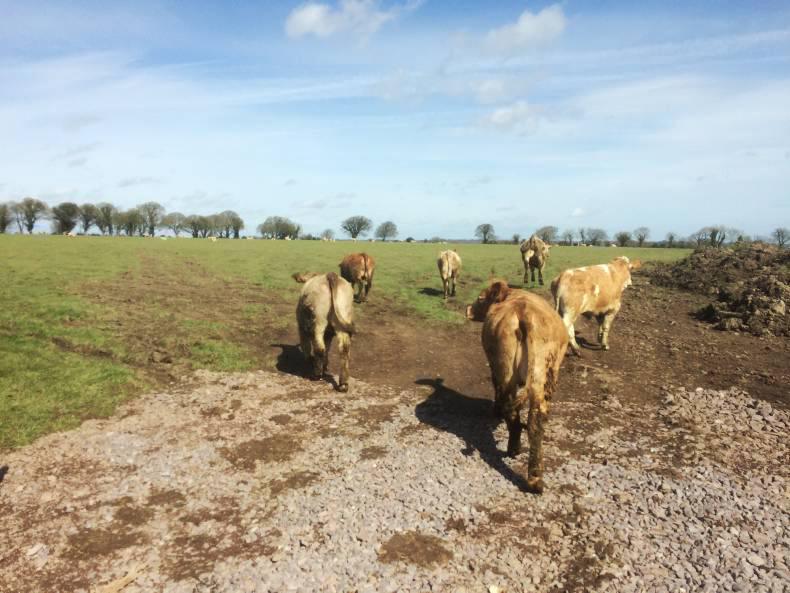
All heifers over 470kg were grouped together and released to grass. Will 100 days at grass see them out? I will keep you posted on their performance.

Read more
The lambing season verdict so far
Never have clichés fitted a month so well: March in like a lamb, out like a lion, or in like a lion and out like a lion. Definitely March of many weathers has fitted like a glove this year. Even as I type we are having four seasons in the one hour, let alone the one day.
We got some fertiliser out, 22-2.2-10 plus sulphur was used at a bag to the acre over 90 acres so far. We are not massive users of fertiliser; in the past we let our Ps and Ks drop and it cost a lot of money to get them right so now we are adopting a policy of using an N-P-K product to feed the soil and keep our indices close to correct.
A very learned man told me recently that the reason all fertilisers now have sulphur in them is because there is no more sulphur in petrol, and hence no more sulphur falling in the rain. I’ll leave it up to yourselves as to whether to believe him or not.
This year, especially with the price of store heifers, we have chosen to spread a bit less. Where fertiliser was applied on the recent reseeds (in the last 10 years), grass has responded well.
Grouping of ewes and lambs
Ewes and lambs are grouped in batches of close to 100 and they are moving around paddocks every three to four days.
Weather is making the decision for us on when to move or not; if it’s dry we are leaving them for an extra day to graze out tight and on the days it has poured rain we are moving them quicker. Sheep are very responsive to the weather and they don’t leave it long before telling you if they are happy or not.
Overall on the sheep front this lambing season has been good: all mature ewes are finished lambing and our replacement ewe lambs just started on Thursday last.
TB test and varying weights
Monday and Thursday last saw our annual TB test, which was passed, thankfully, and it all went smoothly; it can be a stressful two days on man and beast, especially when a lot of heifers are being released off slats after three to four months on them – things can get excited.
After the clear test, we weighed all the autumn-born purchases.
While I like to weigh cattle regularly, with bought-in cattle you have to take results with a pinch of salt.
It’s not like weighing cattle or sheep that you bred yourself. You never know the history of bought-in cattle and weighing results show that some heifers put on 100kg and some only put on 10kg.
They were last weighed on 16 November and they were all treated the same and fed on the same silage – thankfully there was only one who put on just 10kg.
I could write a thesis on the variables and reasons as to why she only put on 10kg but we won’t dwell on it too much – the real day of reckoning will be when she is hanging on the hook and then we will judge her true performance.
All heifers over 470kg were grouped together and released to grass. Will 100 days at grass see them out? I will keep you posted on their performance.
Read more
The lambing season verdict so far
SHARING OPTIONS