


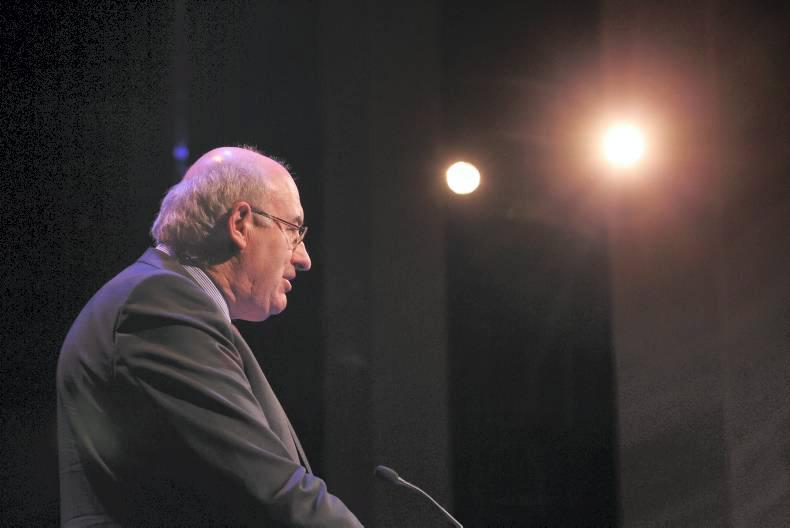
Speaking this morning at the EXPO Milan 2015 on the theme of "Agriculture to feed the planet", Commissioner Hogan spoke about the ways in which agriculture and all who are involved in it can rise to the challenge of feeding the world over the coming decades.
Producing some stark statistics, such as the fact that some 795 million people worldwide still suffer from chronic hunger, Hogan said that with the global population growth continuing rapidly, the world will have to produce 60% more food by 2050.
The challenge therefore, he added, for the agriculture industry, will be how to produce more, using less.
Some of the ways in which this could be made possible is by supporting a knowledge-based agriculture, strengthening research and innovation, and bridging the communication gap between farmers, researchers and agribusiness.
He also said the industry must harness the current "agri-tech revolution" to address major global issues such as water shortages and the reduction in arable land. "We need to innovate more, and innovate faster, if we are to achieve our ambitions," the Commissioner said.
Freak weather conditions are currently causing challenges for farming across the globe, from the severe droughts in New Zealand, Brazil and California, to the El Nino effect, which is predicted to hit the globe later this year.
The Commissioner said the EU is "putting its money where its mouth is" and is "serious about promoting and funding research and innovation, in our own territories and beyond, in order to allow the farm sector to adapt to new trends and become more resource efficient."
On this note he referred to funding synergies between agriculture and research, via the Horizon 2020 Research Programme, and the European Innovation Partnership for "Agricultural Productivity and Sustainability". He added that concrete innovation projects can also be funded under the Rural Development Programmes.
Returning to world hunger, the Commissioner said the EU's commitment to the developing world is longstanding and multifaceted.
"As well as having a dedicated development infrastructure throughout the globe, we are the biggest importer of produce from developing countries. From a development point of view, it is therefore our firmly held belief that the principles I have mentioned - enhanced innovation and collaboration to make agri-food a driver of economic growth and job creation - are equally valid in our neighbouring regions and beyond."
He added this has to be assisted by sustainable and strategic investment – notably from the private sector. "This will be a crucial step in transforming agriculture in developing countries, encouraging local entrepreneurship and incentivising investors."



SHARING OPTIONS