Looking at the latest weekly kill data from the Department of Agriculture, Food and the Marine (DAFM) can give the wrong impression on the number of 2016-born lambs processed, if looking at total slaughterings. The most recent data available when writing this article is for the week ending 29 November 2016.
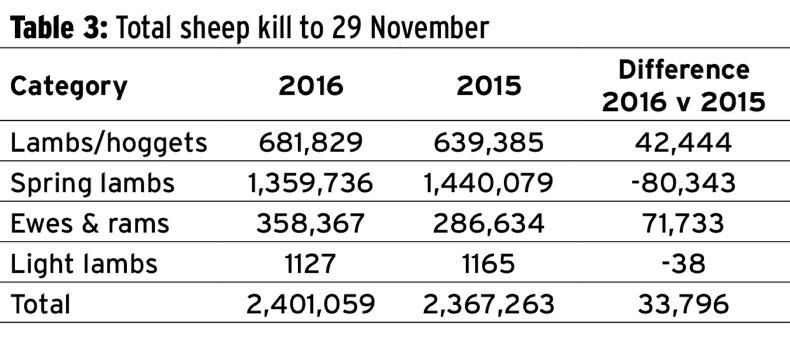
Cumulative figures to this stage of the year, at 2,401,059 head, show 33,796 extra sheep slaughtered compared with the same period in 2015.
However, when you look at DAFM’s analysis of the kill, a more accurate picture starts to emerge – that the higher kill in 2016 is being driven by higher hogget throughput and more ewes and rams being killed.
Early year sheep kill
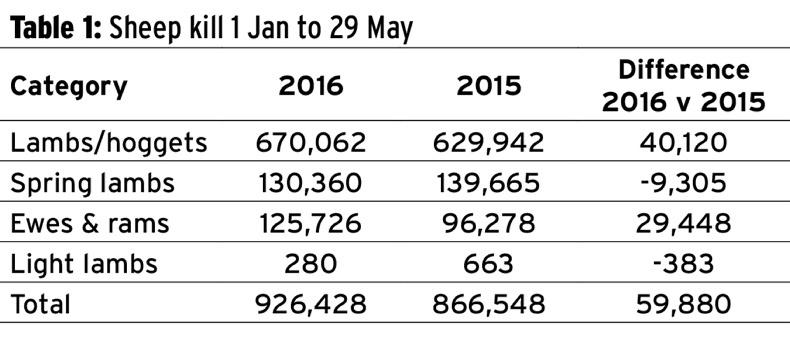
Table 1 looks at the DAFM sheep kill figures for the period 1 January to 29 June. As can be quickly seen, there were 40,120 more hoggets killed in the first five months of the year. While there is no exact reason, it is likely a combination of factors gave rise to a higher carryover of hoggets into 2016.
The positive breeding and lambing conditions of 2014/2015 left more live lambs on the ground and also slowed performance on some farms that had a significantly higher percentage of multiple births.
There were also anecdotal reports of more ewe lambs bred and lambing down as yearling hoggets.
The ewe and ram kill also increased 29,448 head. Again, it is likely that a number of factors are contributing to this. Favourable grazing conditions in autumn/winter 2015 and higher store lamb prices saw some farmers take their chances with grazing cull ewes.
However, the biggest contributor is likely to have been poor weather conditions (flooding/heavy rainfall leading to difficult ground conditions) and tight grass supplies leading to any non-productive ewes being moved off farms faster.

NI imports
Another element that is also not reflected in the annual kill figures is the number of sheep being imported from the North for direct slaughter.
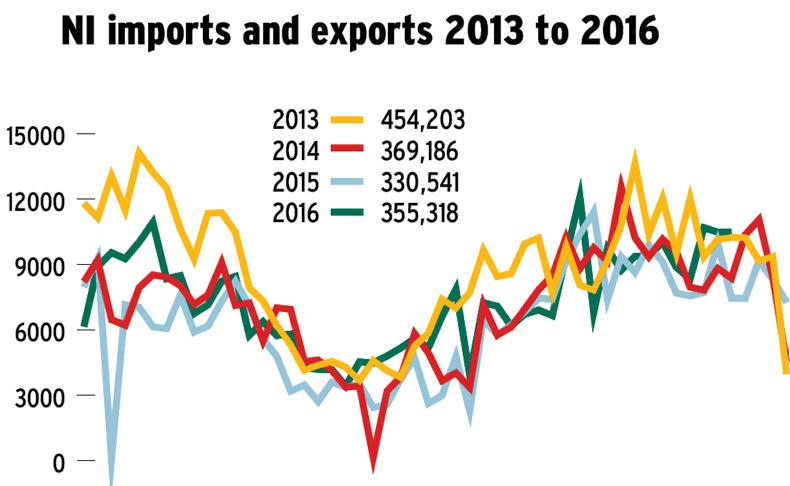
For the first five months of the year, DAERA analysis shows there were 32,234 extra sheep imported compared with the same period in 2015. This is slightly ahead of 2014 levels, but in the region of 40,000 behind peak numbers imported in 2013.
This trend has continued into processing of the 2016 mid-season crop of lambs. From 1 June to 26 November 2016, there has been 24,737 more sheep imported from Northern Ireland for direct slaughter, as reflected in the import and export graph above.
DARD analysis does not split this figure into lambs and ewes/rams, but it is likely a high percentage of these imports are lambs. This is evident from changes to the northern kill, with the number of lambs and hoggets processed in 2016 running 48,575 head behind 2015 levels, while there were 7,607 fewer ewes and rams processed.

Main season kill
Table 2 shows throughput in southern plants from 1 June to 29 November. While throughput of lambs in recent weeks has been running 3,000 to 4,000 head above 2015 levels, the yearly kill of 2016-born lambs is running over 70,000 head behind last year. When you take into account the higher imports of sheep from Northern Ireland, there are even fewer sheep slaughtered.
The question arising in many sheep meetings and mart events taking place at the moment is if these sheep are still in the system and are yet to come out or if the number of lambs born in spring 2016 was actually lower than anticipated. There is likely to be an element of truth in both.
The tough weather conditions last winter and very difficult conditions post-lambing are likely to have affected lamb numbers. But it is unlikely that this would account for the large difference in throughput, with reports showing drafting rates running two to three weeks and even longer behind on a significant number of farms.
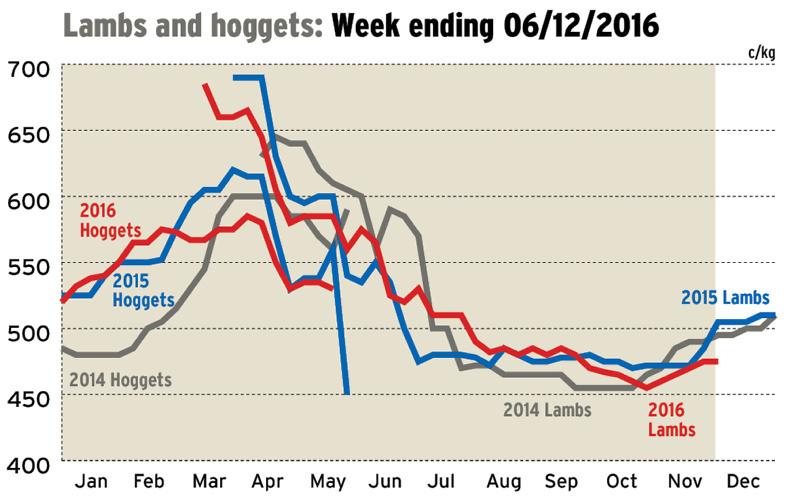
This means that there is likely to be a higher carryover of lambs into the new year. It could also leave higher supplies in the system between now and year-end. The lamb price graph above shows the impact of this scenario occurring in spring 2015, with prices not reaching the highs of previous years from mid-February to mid-April. It is also contributing at present to prices being slower to rise, while, at this stage in 2015, demand was outstripping supply, with prices this week well on their way to €5/kg.

The other notable aspect of the kill from June to the end of November is the continuation of a higher ewe and ram kill. During this period, there were 42,285 extra ewes and rams killed in southern plants.
Tighter grass supplies are again a factor, with farmers keen to move animals identified for culling faster. Some farmers also point to the availability of lower-cost hoggets enticing them to replace aged ewes or sheep that failed to recover after a hard year at a lower cost, while the last factor is likely to be some farmers possibly scaling slightly back in light of a difficult year after seeing numbers gradually rise in recent years.


Read more
Highest NI sheep numbers since 2007
Welsh sheep flock continues to expand
Looking at the latest weekly kill data from the Department of Agriculture, Food and the Marine (DAFM) can give the wrong impression on the number of 2016-born lambs processed, if looking at total slaughterings. The most recent data available when writing this article is for the week ending 29 November 2016.
Cumulative figures to this stage of the year, at 2,401,059 head, show 33,796 extra sheep slaughtered compared with the same period in 2015.
However, when you look at DAFM’s analysis of the kill, a more accurate picture starts to emerge – that the higher kill in 2016 is being driven by higher hogget throughput and more ewes and rams being killed.
Early year sheep kill
Table 1 looks at the DAFM sheep kill figures for the period 1 January to 29 June. As can be quickly seen, there were 40,120 more hoggets killed in the first five months of the year. While there is no exact reason, it is likely a combination of factors gave rise to a higher carryover of hoggets into 2016.
The positive breeding and lambing conditions of 2014/2015 left more live lambs on the ground and also slowed performance on some farms that had a significantly higher percentage of multiple births.
There were also anecdotal reports of more ewe lambs bred and lambing down as yearling hoggets.
The ewe and ram kill also increased 29,448 head. Again, it is likely that a number of factors are contributing to this. Favourable grazing conditions in autumn/winter 2015 and higher store lamb prices saw some farmers take their chances with grazing cull ewes.
However, the biggest contributor is likely to have been poor weather conditions (flooding/heavy rainfall leading to difficult ground conditions) and tight grass supplies leading to any non-productive ewes being moved off farms faster.
NI imports
Another element that is also not reflected in the annual kill figures is the number of sheep being imported from the North for direct slaughter.
For the first five months of the year, DAERA analysis shows there were 32,234 extra sheep imported compared with the same period in 2015. This is slightly ahead of 2014 levels, but in the region of 40,000 behind peak numbers imported in 2013.
This trend has continued into processing of the 2016 mid-season crop of lambs. From 1 June to 26 November 2016, there has been 24,737 more sheep imported from Northern Ireland for direct slaughter, as reflected in the import and export graph above.
DARD analysis does not split this figure into lambs and ewes/rams, but it is likely a high percentage of these imports are lambs. This is evident from changes to the northern kill, with the number of lambs and hoggets processed in 2016 running 48,575 head behind 2015 levels, while there were 7,607 fewer ewes and rams processed.
Main season kill
Table 2 shows throughput in southern plants from 1 June to 29 November. While throughput of lambs in recent weeks has been running 3,000 to 4,000 head above 2015 levels, the yearly kill of 2016-born lambs is running over 70,000 head behind last year. When you take into account the higher imports of sheep from Northern Ireland, there are even fewer sheep slaughtered.
The question arising in many sheep meetings and mart events taking place at the moment is if these sheep are still in the system and are yet to come out or if the number of lambs born in spring 2016 was actually lower than anticipated. There is likely to be an element of truth in both.
The tough weather conditions last winter and very difficult conditions post-lambing are likely to have affected lamb numbers. But it is unlikely that this would account for the large difference in throughput, with reports showing drafting rates running two to three weeks and even longer behind on a significant number of farms.
This means that there is likely to be a higher carryover of lambs into the new year. It could also leave higher supplies in the system between now and year-end. The lamb price graph above shows the impact of this scenario occurring in spring 2015, with prices not reaching the highs of previous years from mid-February to mid-April. It is also contributing at present to prices being slower to rise, while, at this stage in 2015, demand was outstripping supply, with prices this week well on their way to €5/kg.
The other notable aspect of the kill from June to the end of November is the continuation of a higher ewe and ram kill. During this period, there were 42,285 extra ewes and rams killed in southern plants.
Tighter grass supplies are again a factor, with farmers keen to move animals identified for culling faster. Some farmers also point to the availability of lower-cost hoggets enticing them to replace aged ewes or sheep that failed to recover after a hard year at a lower cost, while the last factor is likely to be some farmers possibly scaling slightly back in light of a difficult year after seeing numbers gradually rise in recent years.
Read more
Highest NI sheep numbers since 2007
Welsh sheep flock continues to expand






SHARING OPTIONS