With the exception of some pig and poultry farmers, all farmers in Ireland farm soils. Whether you are growing grass as animal feed or arable crops for sale, you need healthy soils for good crop yields. When it comes to soil health, soil structure and drainage characteristics are very important but so too is the nutrient status of the soil.
Over time, nutrients become depleted due to offtakes from the land, either from animals grazing, in silage or arable crops being harvested. Soils also become depleted due to rainfall, with some nutrients leaching while others get washed away with soil particles.
When it comes to managing soils, it’s all about trying to create a balance. On the one hand, insufficient nutrients will lead to stunted crop growth and poor yields while on the other hand, excessive nutrient levels are a waste of money and will lead to environmental damage and can damage crop health.
Creating a balance
Skilled farmers create a balance between what the crop needs, what the soil can provide and what is right for the environment. The law of diminishing returns definitely applies when it comes to spreading fertilisers, so to create the balance, we need to know what the soil can provide.
Therefore, we need to sample our soils. In Ireland, only a tiny proportion of soils are sampled annually. Of those that are sampled, at least nine out of ten are deficient in one or more crucial element. Most soils are tested for phosphorus (P), potassium (K) and lime (pH). Some tests go further, testing for trace elements and organic matter, but in the most part, it’s P, K and pH that are of primary importance.
Considering that the majority of soils are deficient in these essential nutrients would suggest that this is where the focus should be. The traditional advice was to soil-sample every couple of years but that advice is now changing and many of the top farmers and all the Teagasc dairy research and demonstration farms now sample every paddock annually.
Taking a sample
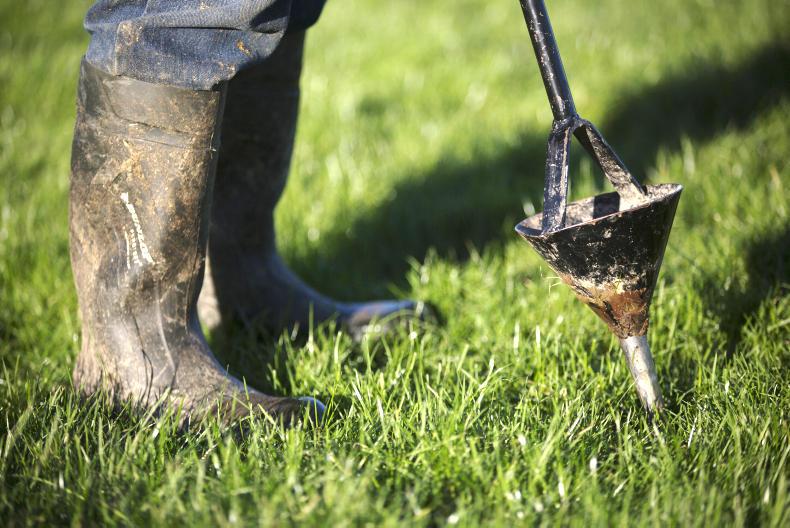
Soils should be sampled with a soil core. Most grassland soil corers have a funnel above the core to collect the sample. Soil cores are available to use from most merchants and Teagasc advisers or they can be purchased for about €80 plus VAT. When used correctly, the soil core takes a representative sample of soil down to 100mm. If no soil core is available, samples could be taken using stainless steel trowels.
To comply with the nitrates directive, one soil sample can be taken for every 5ha (12.36 acres). But how much area to include in a sample depends on the soil type and previous management and cropping history.
Generally, one sample per paddock is advised. Sampling is a tiny proportion of fertiliser costs so it should not be skimped on as even a small saving in fertiliser requirement will more than pay for the sampling costs.
Fields should be sampled in a W formation, taking a minimum of 20 cores per area. Avoid dung and urine patches, or where hedges or ditches have been removed. You should wait about three months after spreading P and K before taking a soil sample.
Table 1 outlines the main sampling labs in Ireland and what they charge for testing soil samples.
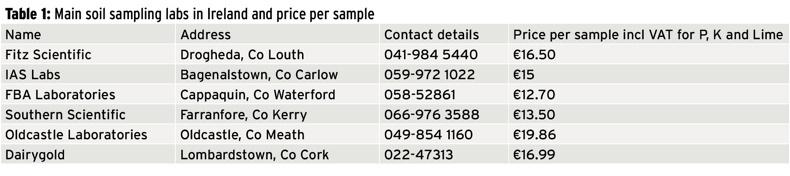
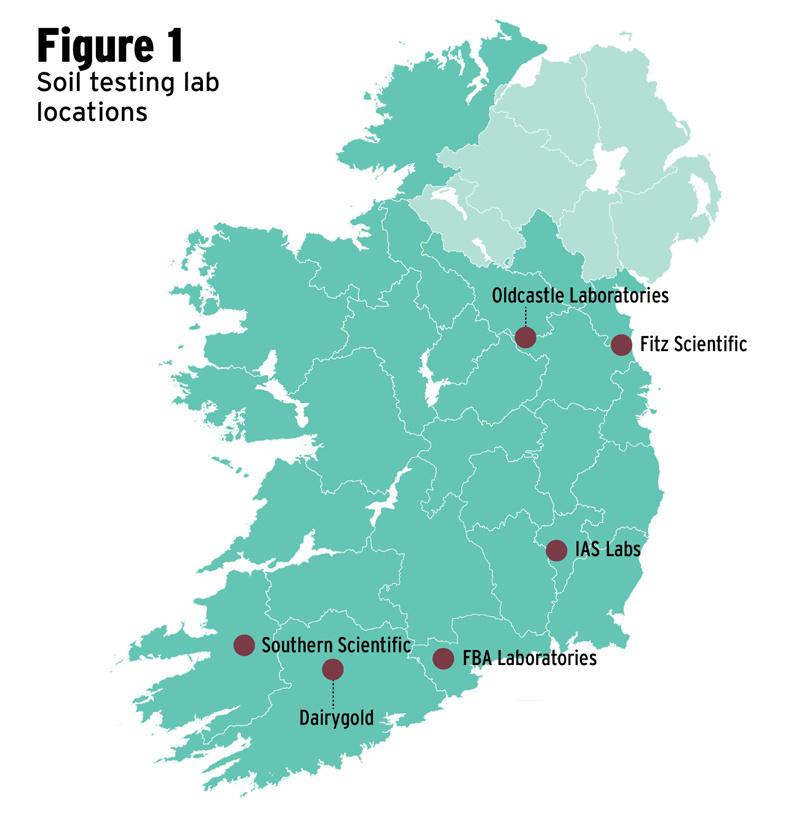
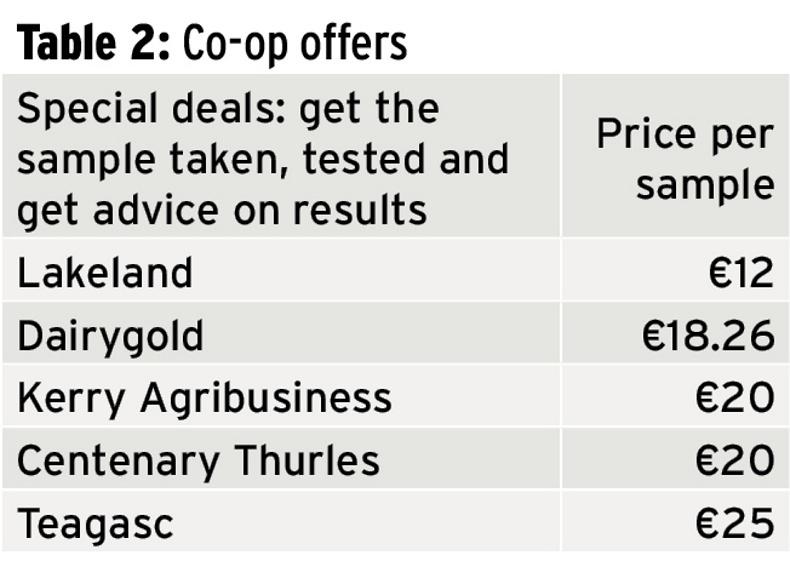
Figure 1 shows the location of these labs. Some co-ops are doing special deals on soil sampling, effectively subsiding the costs to encourage more farmers to do it. Some of the co-ops with current offers are outlined in Table 2. The offers include someone taking the sample, testing it and giving advice on the results.
Read more
Special focus: spring planning and soil fertility
With the exception of some pig and poultry farmers, all farmers in Ireland farm soils. Whether you are growing grass as animal feed or arable crops for sale, you need healthy soils for good crop yields. When it comes to soil health, soil structure and drainage characteristics are very important but so too is the nutrient status of the soil.
Over time, nutrients become depleted due to offtakes from the land, either from animals grazing, in silage or arable crops being harvested. Soils also become depleted due to rainfall, with some nutrients leaching while others get washed away with soil particles.
When it comes to managing soils, it’s all about trying to create a balance. On the one hand, insufficient nutrients will lead to stunted crop growth and poor yields while on the other hand, excessive nutrient levels are a waste of money and will lead to environmental damage and can damage crop health.
Creating a balance
Skilled farmers create a balance between what the crop needs, what the soil can provide and what is right for the environment. The law of diminishing returns definitely applies when it comes to spreading fertilisers, so to create the balance, we need to know what the soil can provide.
Therefore, we need to sample our soils. In Ireland, only a tiny proportion of soils are sampled annually. Of those that are sampled, at least nine out of ten are deficient in one or more crucial element. Most soils are tested for phosphorus (P), potassium (K) and lime (pH). Some tests go further, testing for trace elements and organic matter, but in the most part, it’s P, K and pH that are of primary importance.
Considering that the majority of soils are deficient in these essential nutrients would suggest that this is where the focus should be. The traditional advice was to soil-sample every couple of years but that advice is now changing and many of the top farmers and all the Teagasc dairy research and demonstration farms now sample every paddock annually.
Taking a sample
Soils should be sampled with a soil core. Most grassland soil corers have a funnel above the core to collect the sample. Soil cores are available to use from most merchants and Teagasc advisers or they can be purchased for about €80 plus VAT. When used correctly, the soil core takes a representative sample of soil down to 100mm. If no soil core is available, samples could be taken using stainless steel trowels.
To comply with the nitrates directive, one soil sample can be taken for every 5ha (12.36 acres). But how much area to include in a sample depends on the soil type and previous management and cropping history.
Generally, one sample per paddock is advised. Sampling is a tiny proportion of fertiliser costs so it should not be skimped on as even a small saving in fertiliser requirement will more than pay for the sampling costs.
Fields should be sampled in a W formation, taking a minimum of 20 cores per area. Avoid dung and urine patches, or where hedges or ditches have been removed. You should wait about three months after spreading P and K before taking a soil sample.
Table 1 outlines the main sampling labs in Ireland and what they charge for testing soil samples.
Figure 1 shows the location of these labs. Some co-ops are doing special deals on soil sampling, effectively subsiding the costs to encourage more farmers to do it. Some of the co-ops with current offers are outlined in Table 2. The offers include someone taking the sample, testing it and giving advice on the results.
Read more
Special focus: spring planning and soil fertility








SHARING OPTIONS