The number of lambs reared per ewe is the main factor that influences profitability on sheep farms, Dr Tim Keady from Teagasc told farmers at AFBI Hillsborough on Monday evening.
Speaking at an event organised by the National Sheep Association, Keady said that a range of factors that affect margins were examined by Teagasc during a review of various research studies.
“Terminal sire breed was flagged as the least important factor for profitability. But that is probably the one that sheep farmers like to talk about most,” he suggested.
Keady maintained that the average weaning rate on Irish farms hasn’t changed in 30 years and stands at 1.3 lambs per ewe put to the ram.
“The top 5% of farmers are doing over 1.7 and the very top two or three farmers in the country are achieving 2.2 to 2.3, so it can be done,” he said.
Although terminal breed of lambs did not have a significant effect on margins, the review did find that ewe genetics was important as it was the main factor that influenced weaning rate.
Keady said that the predominance of ewes with terminal breed genetics was influencing low weaning rates on Irish farms, and he questioned why more maternal breeds are not used to improve prolificacy.
A Teagasc study found that an extra 0.34 lambs weaned per ewe came from changing ewe genetics, with Belclare-Suffolk crosses rearing 1.69 lambs, compared with 1.35 for pure Suffolks.
“Ewe genotype had little impact on drafting weights of lambs,” Keady said.
Triplets
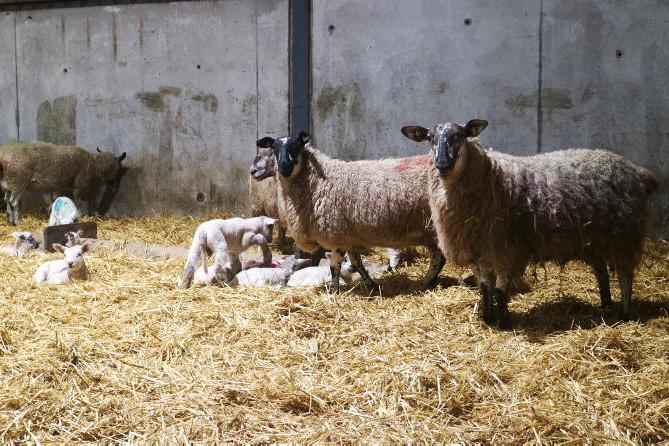
Increasing lamb numbers for most farmers means bigger litter sizes and Keady estimated that weaning two lambs per ewe requires 15% of ewes to have triplets. He acknowledged that cross-fostering is time consuming, pet lambs make low prices and artificially rearing lambs is costly.
Instead, he suggested that keeping all lambs on triplet ewes and feeding extra concentrates (to the ewe and lambs) can be the best option.
Research conducted at Teagasc Athenry found that triplet-rearing ewes and their lambs consumed an additional 86kg of concentrate/ewe/year compared with twin-rearing ewes, but lamb weaning weights were similar – at 31kg.
“The additional concentrates equate to around €25, but remember you are getting an extra lamb for that,” he said.
Grazing
Keady maintained that another key factor affecting margins is grassland management, as this influences lamb performance and stocking rate.
He said that farmers should work to target sward heights and graze tight to maintain quality, especially in spring. At Teagasc Athenry, average pre- and post-grazing sward heights are 5.4cm and 3.5cm in April, 7.4cm and 4.6cm in May and 7.9cm and 5.1cm in June, respectively.
Keady also advised farmers to get silage analysed so that late-pregnancy nutrition is managed correctly for ewe condition and lamb birth weight.
He said that every 5% change in silage D-value increases birth weights by 0.25kg. The optimum birth weight for singles is 6kg, twins 5.6kg and triplets is 4.7kg.
Farmers should group ewes according to litter size, body condition and, if possible, lambing date. Concentrate feed should be from good-quality ingredients that can be digested by ewes.
“Silage made on most sheep farms is low in protein, so you might need a 19% crude protein concentrate, but you will only know if you analyse your silage,” he said.
Read more
NI agri businesses lobby hard for backstop
BETTER Farm NI: grazing season draws to a close in Co Down
The number of lambs reared per ewe is the main factor that influences profitability on sheep farms, Dr Tim Keady from Teagasc told farmers at AFBI Hillsborough on Monday evening.
Speaking at an event organised by the National Sheep Association, Keady said that a range of factors that affect margins were examined by Teagasc during a review of various research studies.
“Terminal sire breed was flagged as the least important factor for profitability. But that is probably the one that sheep farmers like to talk about most,” he suggested.
Keady maintained that the average weaning rate on Irish farms hasn’t changed in 30 years and stands at 1.3 lambs per ewe put to the ram.
“The top 5% of farmers are doing over 1.7 and the very top two or three farmers in the country are achieving 2.2 to 2.3, so it can be done,” he said.
Although terminal breed of lambs did not have a significant effect on margins, the review did find that ewe genetics was important as it was the main factor that influenced weaning rate.
Keady said that the predominance of ewes with terminal breed genetics was influencing low weaning rates on Irish farms, and he questioned why more maternal breeds are not used to improve prolificacy.
A Teagasc study found that an extra 0.34 lambs weaned per ewe came from changing ewe genetics, with Belclare-Suffolk crosses rearing 1.69 lambs, compared with 1.35 for pure Suffolks.
“Ewe genotype had little impact on drafting weights of lambs,” Keady said.
Triplets
Increasing lamb numbers for most farmers means bigger litter sizes and Keady estimated that weaning two lambs per ewe requires 15% of ewes to have triplets. He acknowledged that cross-fostering is time consuming, pet lambs make low prices and artificially rearing lambs is costly.
Instead, he suggested that keeping all lambs on triplet ewes and feeding extra concentrates (to the ewe and lambs) can be the best option.
Research conducted at Teagasc Athenry found that triplet-rearing ewes and their lambs consumed an additional 86kg of concentrate/ewe/year compared with twin-rearing ewes, but lamb weaning weights were similar – at 31kg.
“The additional concentrates equate to around €25, but remember you are getting an extra lamb for that,” he said.
Grazing
Keady maintained that another key factor affecting margins is grassland management, as this influences lamb performance and stocking rate.
He said that farmers should work to target sward heights and graze tight to maintain quality, especially in spring. At Teagasc Athenry, average pre- and post-grazing sward heights are 5.4cm and 3.5cm in April, 7.4cm and 4.6cm in May and 7.9cm and 5.1cm in June, respectively.
Keady also advised farmers to get silage analysed so that late-pregnancy nutrition is managed correctly for ewe condition and lamb birth weight.
He said that every 5% change in silage D-value increases birth weights by 0.25kg. The optimum birth weight for singles is 6kg, twins 5.6kg and triplets is 4.7kg.
Farmers should group ewes according to litter size, body condition and, if possible, lambing date. Concentrate feed should be from good-quality ingredients that can be digested by ewes.
“Silage made on most sheep farms is low in protein, so you might need a 19% crude protein concentrate, but you will only know if you analyse your silage,” he said.
Read more
NI agri businesses lobby hard for backstop
BETTER Farm NI: grazing season draws to a close in Co Down









SHARING OPTIONS