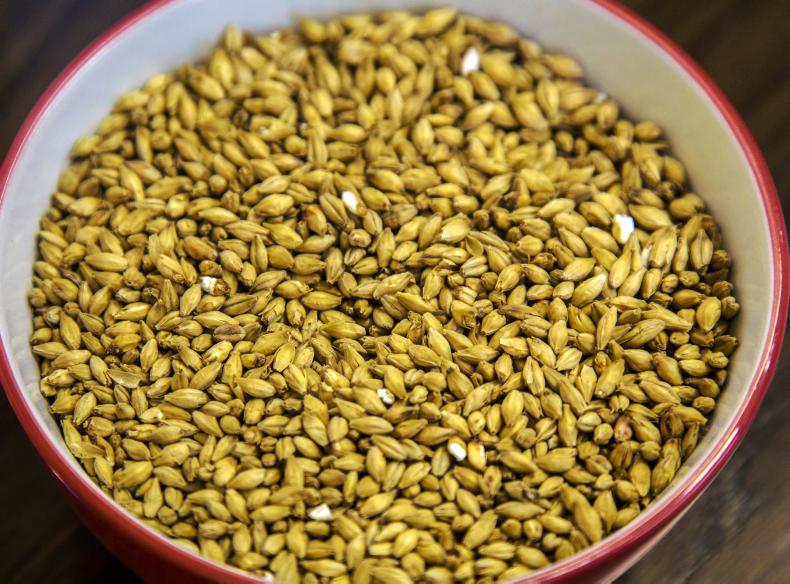
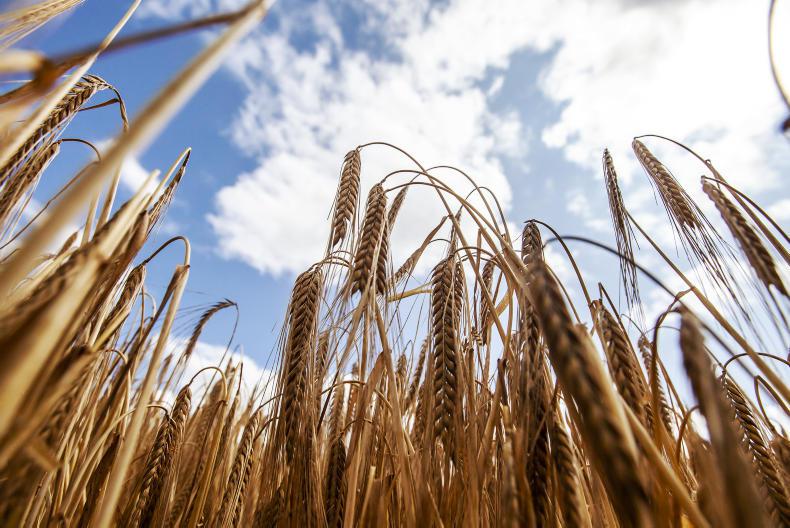
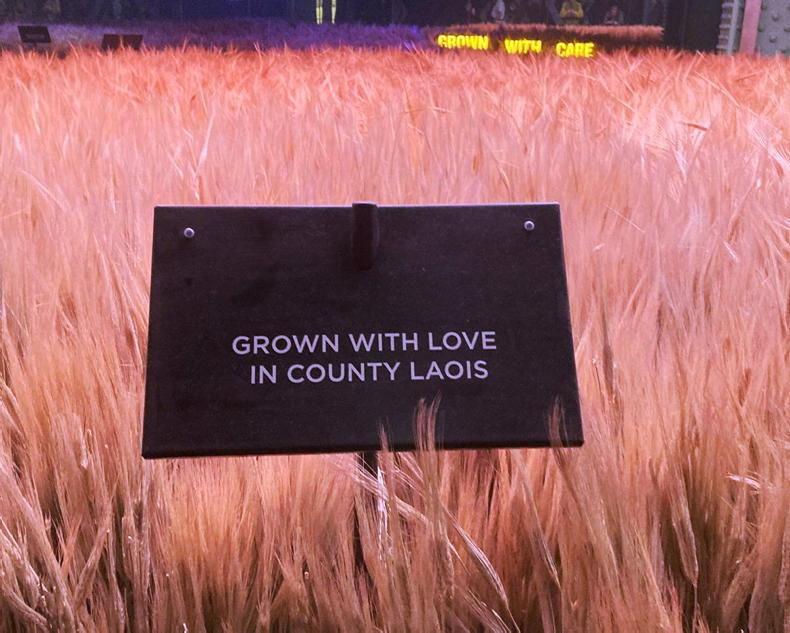
Around 34,000ha of malting barley are gown each year, with the vast majority contracted to Ireland’s largest maltster, Boortmalt. Ireland’s alcoholic drinks industry has enjoyed a boom in recent years, with exports totalling €1.25bn in 2018.
It is anticipated that the area of malting barley grown on this island will increase in an attempt to satisfy a growing demand for raw materials.
Despite growers’ frustration with some players in the industry, malting barley still represents the largest value-added market for Irish grains.
Getting accurate figures on the area and tonnages of Irish grain used in the drinks industry is difficult. It is also difficult to ascertain how much imported barley or other grains are used for malting in the industry. Ireland’s drinks industry has made substantial marketing gains under the guise of being a fully Irish product.
However, we can access figures on import and export data for malt products, including malted barley, malted wheat, malt in flour form and roasted malt.
These figures are freely available from the Central Statistics Office (CSO) and shed some light on the make-up of raw material usage.
However, this data only shows malt product imports and exports and does not include tonnages of grains for malting entering the country.
Total malt exports are at 15,275t for 2019 so far.
This article looks at some of the CSO data to distil those figures. The data is divided into calendar years (January-December), with the exception of 2019 which looks at data from January to September only.
Today, Ireland is importing an amount of malt products. However, it is equally important to note that we have also exported a sizeable amount of malt in the past.
Increase in malt imports
Malted material imports, including barley and rye (excluding roasted malt, wheat and flour), increased by 375% between 2014 and 2019 (to September), from 7,550t to 35,900t.
During the same period, malt exports decreased by 50% to 9,790t. During this period, we saw malt imports peak in 2019. We also saw exports peak at 25,000t in 2015 (see centre graph).
By 2018, a trade deficit of €2.3m had developed and this increased to €9.3m in 2019
To put this in context, in 2015 Ireland had a trade surplus of these malt products to the value of around €6.5m (see first graph).
By 2018, a trade deficit of €2.3m had developed and this increased to €9.3m in 2019. This could partially be explained by the challenging year due to the drought in 2018 and a temporary reduction in native malting capacity.
Wheat malt
An average of 870t of wheat malt in flour form was imported each year. An average of 500t of roasted malt was also imported each year.
An interesting figure, however, is the quantity of wheat malt imported each year.
Imports had been growing steady until 2018
We are heavily reliant on imports because the crop isn’t produced here commercially, unlike the situation with malting barley.
Imports had been growing steady until 2018. In 2014, wheat malt imports totalled 5,000t. By 2017 these imports had increased to 20,500t (valued €3.7m -- see third graph). So far this year, however, imports total just 1,280t.
Comment
In terms of the total volumes of malt used in the Irish drinks industry, these import figures are relatively small.
A portion of these figures are likely to be speciality malt products for niche markets. While our import-export trade deficit has been growing since 2017, this could represent and overall increase in native demand for Irish malt.
However, it may also be due to some malting barley supply issues in 2018 and 2019.
While these figures are of interest, knowing the volumes of barley imported for malting here would help paint a more complete picture.
We expect that these numbers could be substantially higher. Next week we look at key import sources and export markets for our malt.
Read more
Grain markets: December WASDE report fails to inspire
IFA potato market report: remainder of crops may not be lifted before Christmas
Tillage Management: there are still jobs to be done this December
Around 34,000ha of malting barley are gown each year, with the vast majority contracted to Ireland’s largest maltster, Boortmalt. Ireland’s alcoholic drinks industry has enjoyed a boom in recent years, with exports totalling €1.25bn in 2018.
It is anticipated that the area of malting barley grown on this island will increase in an attempt to satisfy a growing demand for raw materials.
Despite growers’ frustration with some players in the industry, malting barley still represents the largest value-added market for Irish grains.
Getting accurate figures on the area and tonnages of Irish grain used in the drinks industry is difficult. It is also difficult to ascertain how much imported barley or other grains are used for malting in the industry. Ireland’s drinks industry has made substantial marketing gains under the guise of being a fully Irish product.
However, we can access figures on import and export data for malt products, including malted barley, malted wheat, malt in flour form and roasted malt.
These figures are freely available from the Central Statistics Office (CSO) and shed some light on the make-up of raw material usage.
However, this data only shows malt product imports and exports and does not include tonnages of grains for malting entering the country.
Total malt exports are at 15,275t for 2019 so far.
This article looks at some of the CSO data to distil those figures. The data is divided into calendar years (January-December), with the exception of 2019 which looks at data from January to September only.
Today, Ireland is importing an amount of malt products. However, it is equally important to note that we have also exported a sizeable amount of malt in the past.
Increase in malt imports
Malted material imports, including barley and rye (excluding roasted malt, wheat and flour), increased by 375% between 2014 and 2019 (to September), from 7,550t to 35,900t.
During the same period, malt exports decreased by 50% to 9,790t. During this period, we saw malt imports peak in 2019. We also saw exports peak at 25,000t in 2015 (see centre graph).
By 2018, a trade deficit of €2.3m had developed and this increased to €9.3m in 2019
To put this in context, in 2015 Ireland had a trade surplus of these malt products to the value of around €6.5m (see first graph).
By 2018, a trade deficit of €2.3m had developed and this increased to €9.3m in 2019. This could partially be explained by the challenging year due to the drought in 2018 and a temporary reduction in native malting capacity.
Wheat malt
An average of 870t of wheat malt in flour form was imported each year. An average of 500t of roasted malt was also imported each year.
An interesting figure, however, is the quantity of wheat malt imported each year.
Imports had been growing steady until 2018
We are heavily reliant on imports because the crop isn’t produced here commercially, unlike the situation with malting barley.
Imports had been growing steady until 2018. In 2014, wheat malt imports totalled 5,000t. By 2017 these imports had increased to 20,500t (valued €3.7m -- see third graph). So far this year, however, imports total just 1,280t.
Comment
In terms of the total volumes of malt used in the Irish drinks industry, these import figures are relatively small.
A portion of these figures are likely to be speciality malt products for niche markets. While our import-export trade deficit has been growing since 2017, this could represent and overall increase in native demand for Irish malt.
However, it may also be due to some malting barley supply issues in 2018 and 2019.
While these figures are of interest, knowing the volumes of barley imported for malting here would help paint a more complete picture.
We expect that these numbers could be substantially higher. Next week we look at key import sources and export markets for our malt.
Read more
Grain markets: December WASDE report fails to inspire
IFA potato market report: remainder of crops may not be lifted before Christmas
Tillage Management: there are still jobs to be done this December







SHARING OPTIONS