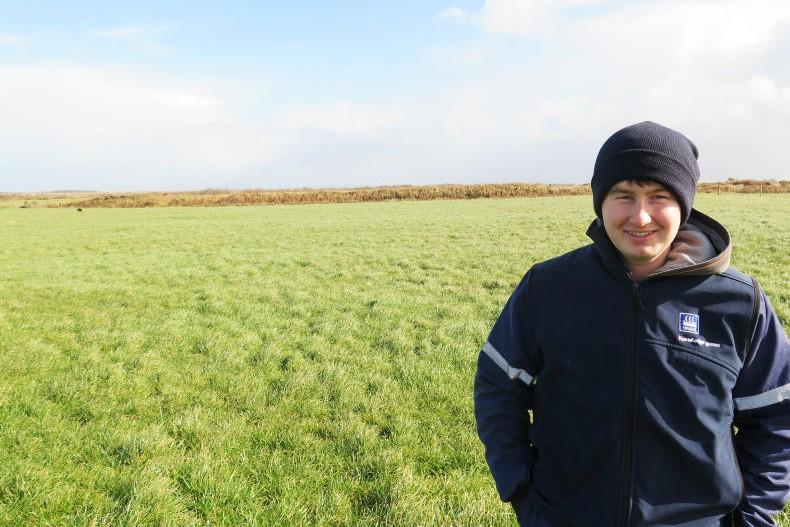
The weather needs to change drastically to allow cows to be out by the end of March, according to Liam Hanrahan. The 2019 Young Farmer Of The Year is milking 180 cows with his parents Catherine and Willie in Doonbeg, Co Clare.
Milk produced to-date has been off concrete, with the 55ha milking block off limits for grazing. We walked a few fields around the house and sure enough, the fields were sodden.
There was no grazing done this February and we’ll be lucky to be out at all in March. But we’re used to it and we plan for that
Liam wasn’t too bothered, saying early spring grazing is the exception, not the rule in this part of the country: “A good year for us is to be grazing from 20 March until 1 November. We normally do get out for a bit in February and then have to house for a few weeks in March, but there was no grazing done this February and we’ll be lucky to be out at all in March. But we’re used to it and we plan for that,” Liam said.
On our type of land, good cows are not a luxury, they’re a necessity
Part of this planning took place last May, when 76% DMD first-cut pit silage was made. This silage is being fed to the cows, along with 6kg of 18% protein meal. On Monday, there were 123 cows or 68% of the herd calved and the milkers were producing 25l/day at 4.5% fat and 3.54% protein. The 2019 co-op performance report shows the herd produced a whopping 512kg MS/cow from 900kg of meal. The herd is mostly Holstein Frieisan, but 40% of the cows have some degree of Jersey breeding in them.
“On our type of land, good cows are not a luxury, they’re a necessity. We wouldn’t survive on national average performance,” Liam said.

The best of the land is peaty soils across the road that dries out quickly.
The EBI of the herd is €145. Good performance extends to fertility, with an empty rate of 8% after 12 weeks of breeding recorded in the past few years. Liam does his own AI and used a lot more beef AI last season, in response to market demands for higher quality calves. A range of beef breeds were used, with some bulls performing better than others: “We really like the beef Shorthorns. They calve easily, have good frames and show lots of vigour getting up to suck straight away. We used five straws of a Belgian Blue bull and didn’t get on as well, with all hard calvings even though he was used on the big mature cows.”
We really like the beef Shorthorns. They calve easily, have good frames and show lots of vigour getting up to suck straight away
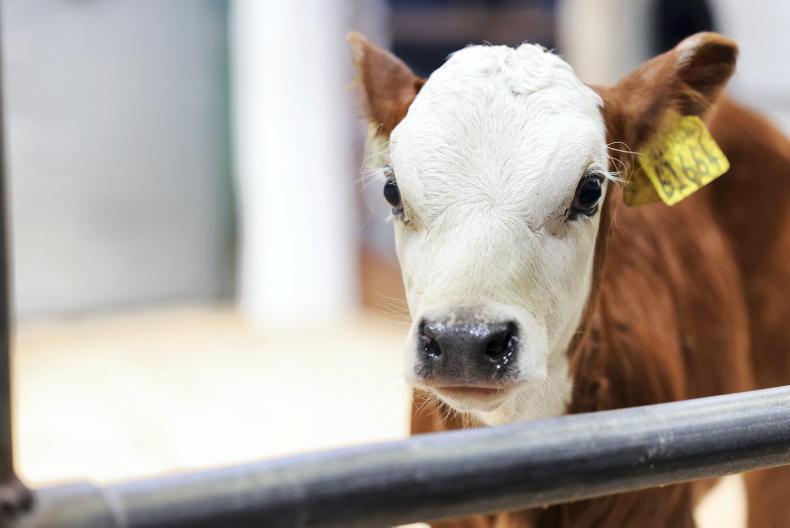
None of the beef calves have been sold yet, but Friesian bull calves are being sold for shipping at €45/head.
Calving has been going well, with no major issues bar four cases of mastitis and two cases of milk fever. Three of the calves were stillborn (all out of heifers) but all calves born alive remain so. Cows got a high trace element bolus for the first time this January, which Liam thinks has been a help. They will get a second bolus before the breeding season.
Grass
Last year, the farm grew 14.5tDM/ha in what Liam said was a very good grass growing year up to October. Grass was measured 40 times. The first measurement for 2020 was done last week and Liam recorded an average farm cover of 950kgDM/ha.
The Hanrahan farm is split by a minor road, with 60% of the area at the yard side. The road also divides soil type on the farm, with peaty soils across the road and high clay soils on the yard side. The fields across the road are the go-to fields on this farm. The peat dries out a lot faster than the muddy clay soils.
We usually never get to finish the first rotation because we’ll have too much grass on the farm in early April
Liam said he needs to ration the area grazed across the road, so as not to be out of the go-to fields in April or early May. Cows only ever graze across the road by day and are either grazing at the yard side by night or are housed or on-off grazed if it’s too wet. Liam always makes sure he has some dry fields to graze, so he can keep some grass in the diet.
“We don’t bother with the spring rotation planner here. When it’s dry enough, we graze as much as we can in spring because we can pretty much guarantee that it will turn wet at some point. We usually never get to finish the first rotation because we’ll have too much grass on the farm in early April, so we have to skip over paddocks for silage. That’s the hardest time of the year to manage grass and I need to measure every few days to avoid going from a big surplus to a big deficit too fast,” Liam said.
We don’t bother with the spring rotation planner here. When it’s dry enough, we graze as much as we can
For this reason, Liam doesn’t carry over a high cover into the winter. Closing the farm in early November with a cover of 300kg/ha is plenty, he said, and is better than closing with a high cover to avoid having high covers deteriorating in spring.
There has been no slurry or fertiliser spread to-date, but as soon as conditions improve, they will be ready to go. With a couple of different outfarms to manage, Liam said they could get very busy very fast when weather improves. When cows go out, he’ll drop the level of meal by 2kg/cow/day, but cows will still be on around 3kg of meal up to the breeding season.

Milkers are getting 6kg of meal in the parlour and silage ad-lib.
The stocking rate on the milking block is 3.2 cows/ha and Liam said it’s high enough. They have no plans to increase the stocking rate further, as he reckons it’ll be a case of the law of diminishing returns: “If the extra milk is going to come from silage and meal, I think it’s a waste of time. Pushing the stocking rate further will mean we’ll be dealing more with silage and slurry than cows and grass. At the moment, we spend enough time dealing with silage – feeding it out for six months and then spending the next six months making it again.”
For now, Liam is firmly in the winter regime and cows will continue to go back to the shed after milking for the next few weeks. But as soon as conditions change, he’ll be ready to get cows out to grass.
Read more
Watch: stop-start grazing in north Offaly
FBD Young Farmer of the Year 2019 revealed
The weather needs to change drastically to allow cows to be out by the end of March, according to Liam Hanrahan. The 2019 Young Farmer Of The Year is milking 180 cows with his parents Catherine and Willie in Doonbeg, Co Clare.
Milk produced to-date has been off concrete, with the 55ha milking block off limits for grazing. We walked a few fields around the house and sure enough, the fields were sodden.
There was no grazing done this February and we’ll be lucky to be out at all in March. But we’re used to it and we plan for that
Liam wasn’t too bothered, saying early spring grazing is the exception, not the rule in this part of the country: “A good year for us is to be grazing from 20 March until 1 November. We normally do get out for a bit in February and then have to house for a few weeks in March, but there was no grazing done this February and we’ll be lucky to be out at all in March. But we’re used to it and we plan for that,” Liam said.
On our type of land, good cows are not a luxury, they’re a necessity
Part of this planning took place last May, when 76% DMD first-cut pit silage was made. This silage is being fed to the cows, along with 6kg of 18% protein meal. On Monday, there were 123 cows or 68% of the herd calved and the milkers were producing 25l/day at 4.5% fat and 3.54% protein. The 2019 co-op performance report shows the herd produced a whopping 512kg MS/cow from 900kg of meal. The herd is mostly Holstein Frieisan, but 40% of the cows have some degree of Jersey breeding in them.
“On our type of land, good cows are not a luxury, they’re a necessity. We wouldn’t survive on national average performance,” Liam said.
The best of the land is peaty soils across the road that dries out quickly.
The EBI of the herd is €145. Good performance extends to fertility, with an empty rate of 8% after 12 weeks of breeding recorded in the past few years. Liam does his own AI and used a lot more beef AI last season, in response to market demands for higher quality calves. A range of beef breeds were used, with some bulls performing better than others: “We really like the beef Shorthorns. They calve easily, have good frames and show lots of vigour getting up to suck straight away. We used five straws of a Belgian Blue bull and didn’t get on as well, with all hard calvings even though he was used on the big mature cows.”
We really like the beef Shorthorns. They calve easily, have good frames and show lots of vigour getting up to suck straight away
None of the beef calves have been sold yet, but Friesian bull calves are being sold for shipping at €45/head.
Calving has been going well, with no major issues bar four cases of mastitis and two cases of milk fever. Three of the calves were stillborn (all out of heifers) but all calves born alive remain so. Cows got a high trace element bolus for the first time this January, which Liam thinks has been a help. They will get a second bolus before the breeding season.
Grass
Last year, the farm grew 14.5tDM/ha in what Liam said was a very good grass growing year up to October. Grass was measured 40 times. The first measurement for 2020 was done last week and Liam recorded an average farm cover of 950kgDM/ha.
The Hanrahan farm is split by a minor road, with 60% of the area at the yard side. The road also divides soil type on the farm, with peaty soils across the road and high clay soils on the yard side. The fields across the road are the go-to fields on this farm. The peat dries out a lot faster than the muddy clay soils.
We usually never get to finish the first rotation because we’ll have too much grass on the farm in early April
Liam said he needs to ration the area grazed across the road, so as not to be out of the go-to fields in April or early May. Cows only ever graze across the road by day and are either grazing at the yard side by night or are housed or on-off grazed if it’s too wet. Liam always makes sure he has some dry fields to graze, so he can keep some grass in the diet.
“We don’t bother with the spring rotation planner here. When it’s dry enough, we graze as much as we can in spring because we can pretty much guarantee that it will turn wet at some point. We usually never get to finish the first rotation because we’ll have too much grass on the farm in early April, so we have to skip over paddocks for silage. That’s the hardest time of the year to manage grass and I need to measure every few days to avoid going from a big surplus to a big deficit too fast,” Liam said.
We don’t bother with the spring rotation planner here. When it’s dry enough, we graze as much as we can
For this reason, Liam doesn’t carry over a high cover into the winter. Closing the farm in early November with a cover of 300kg/ha is plenty, he said, and is better than closing with a high cover to avoid having high covers deteriorating in spring.
There has been no slurry or fertiliser spread to-date, but as soon as conditions improve, they will be ready to go. With a couple of different outfarms to manage, Liam said they could get very busy very fast when weather improves. When cows go out, he’ll drop the level of meal by 2kg/cow/day, but cows will still be on around 3kg of meal up to the breeding season.
Milkers are getting 6kg of meal in the parlour and silage ad-lib.
The stocking rate on the milking block is 3.2 cows/ha and Liam said it’s high enough. They have no plans to increase the stocking rate further, as he reckons it’ll be a case of the law of diminishing returns: “If the extra milk is going to come from silage and meal, I think it’s a waste of time. Pushing the stocking rate further will mean we’ll be dealing more with silage and slurry than cows and grass. At the moment, we spend enough time dealing with silage – feeding it out for six months and then spending the next six months making it again.”
For now, Liam is firmly in the winter regime and cows will continue to go back to the shed after milking for the next few weeks. But as soon as conditions change, he’ll be ready to get cows out to grass.
Read more
Watch: stop-start grazing in north Offaly
FBD Young Farmer of the Year 2019 revealed






SHARING OPTIONS