The last six weeks have been as wet as most people can remember. For those that are used to getting 60% of the farm grazed by St Patrick’s Day, it’s been a difficult spring. Many will struggle to have even 30% grazed by then. For those on heavier soils, achieving calendar targets in terms of area grazed is always somewhat academic, as the challenge on these farms is to be able to graze, not how much to graze by when.
Given that everyone is in the same boat this spring (no pun intended), what can farmers do to get back on track? The first thing to highlight is the positives. It’s still mid-March and the weather forecast for next week is much improved. Secondly, the weather has been mild and grass growth has been good, so there is plenty of grass on most farms. Furthermore, there is plenty of silage available, so the bad weather is not causing a fodder shortage as in previous years.
Body condition score
From travelling around the country, I would say that cows in most herds are under more pressure than normal. The category of cow under pressure is more often than not an early calving, first-lactation cow. There might only be 3-4% of cows in herds under pressure, but they still need minding.
The thing to remember is that ordinarily, these cows would have consumed about 400kg DM of really high-quality spring grass, along with 150kg of meal since calving. Whereas this spring, they have consumed less of a lower-quality feed – silage. They’ve eaten less because silage is less digestible than grass. Cows will always eat more when the quality of the feed is higher. Where cows were fed only average-quality silage (dry cow silage), the rate of body condition score loss will be greater.
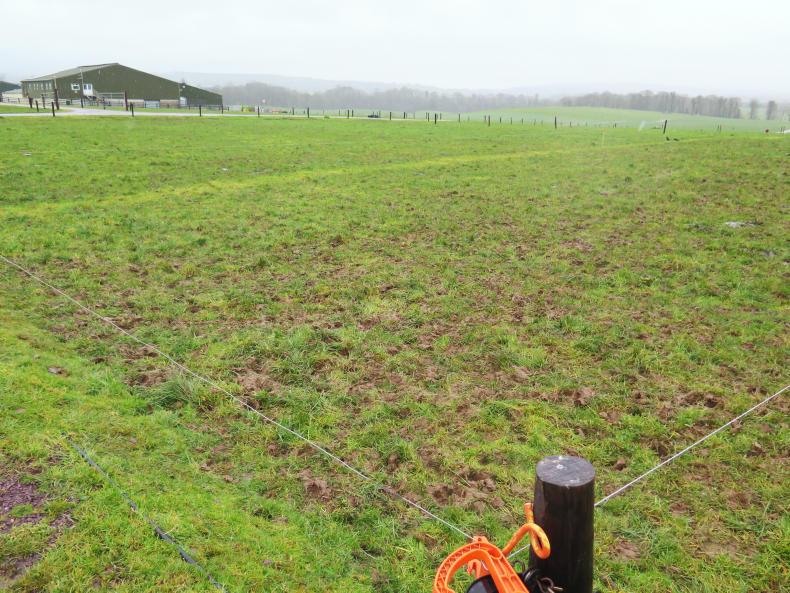
Damaged sections will need time and 18:6:12 or other compound fertilisers to fix themselves.
Getting cows out to grass will improve the energy balance, as they will be consuming better-quality feed and more of it. This should reduce the rate of body condition score loss, but it will take a while for these at-risk cows to start putting condition back on. They are in danger of not going back in-calf. The only real option is to put these cows on once-a-day milking. A good few farmers have started doing this in the past week to try and arrest the decline in body condition score.
The once-a-day cows can be kept in the main herd, but not milked in the evening. They can be identified through tape on the tail or using whatever method you prefer. Keep the cows on once-a-day milking for at least the next six weeks in order to see an improvement.
Older cows that are milking well but are still losing body condition should also be put on once-a-day milking. Feeding more concentrates to this group of stock will only deliver milk that is more expensive to produce and will not achieve the desired effect of increasing body condition score.
At a discussion group meeting last week, the range of meal feeding rates went from 2kg to 6kg/cow/day. How much to feed depends on the proportion of grass in the diet. In my opinion, where grass is making up most of the diet, 2kg is adequate. Where no grass is being fed on middling silage, 6kg/cow is not outrageous.
Soils
Of course, just having cows at grass doesn’t guarantee grass intake. There were definitely a few days last week where a high proportion of the grass being offered was walked into the ground. On some farms, cows were out when they might have been better off housed. But if farmers don’t try to graze, then they will never know the limits of either the cow or the soil.

Grazed fields to the left and flooded fields to the right at Moorepark .
Fields or sections of fields that have been poached will recover, but recovery will be slower than normal. These fields cannot be damaged again this spring. If they are, subsequent grass growth rates will be severely affected.
Avoid the temptation to roll or do anything mechanical with these damaged sections. The best healers are time and fertiliser to feed the crop. Compounds like 18:6:12 provide a good blend of nutrients for damaged grass tillers, to repair, regrow and fill the gaps left from hoof prints. Slurry will have a similar effect, but travelling with heavy machines on damaged ground should be avoided.
Advice in previous years was to have 70 units/ac of nitrogen spread by 1 April. If no nitrogen was spread in January or February, then this target should be delayed to the middle or end of April. Even though there may be lots of grass on farms, grass will still need nitrogen to ensure fast regrowth on grazed paddocks.
Grass
Those with less than 50% of their farm grazed by now – which is the majority of farmers – are unlikely to ever finish their first rotation. I’m told that this was standard practice before extended grazing was introduced in the 1990s. Cows were turned out to grass in mid-March and by early April, a chunk of the farm had too much grass on it, so it was skipped and stopped for silage.
This will be a difficult time to manage grass. On the one hand, the next paddock to be grazed will have too much grass and on the other hand, the first paddock to be grazed in the second rotation won’t have enough grass. This is because there may not have been enough time left between grazings for there to be sufficient re-growth. The following points will help to manage grass and avoid running into problems with grass quality. Lower grass quality will result in a lower milk price received.
Avoid grazing heavy covers (anything over 1,500kg/ha).Start grazing fields in the 800kg- 1,200kg/ha cover range first and then graze covers in the 1,200kg -1,500kg/ha range. By early April, you can decide whether to graze lighter covers or heavier covers or a combination of both, such as day and night grazings. You need to measure grass very regularly over this period, in order to monitor average farm cover and growth rates. Failure to act quickly will exacerbate the problem. You need to get as much of the farm grazed as soon as possible. When conditions allow (hopefully next week), meal should be reduced to 2kg or 3kg/day and silage should be removed from the diet. Read more
Soggy fields in west Clare
Tackling retained cleanings and displaced abomasum
The last six weeks have been as wet as most people can remember. For those that are used to getting 60% of the farm grazed by St Patrick’s Day, it’s been a difficult spring. Many will struggle to have even 30% grazed by then. For those on heavier soils, achieving calendar targets in terms of area grazed is always somewhat academic, as the challenge on these farms is to be able to graze, not how much to graze by when.
Given that everyone is in the same boat this spring (no pun intended), what can farmers do to get back on track? The first thing to highlight is the positives. It’s still mid-March and the weather forecast for next week is much improved. Secondly, the weather has been mild and grass growth has been good, so there is plenty of grass on most farms. Furthermore, there is plenty of silage available, so the bad weather is not causing a fodder shortage as in previous years.
Body condition score
From travelling around the country, I would say that cows in most herds are under more pressure than normal. The category of cow under pressure is more often than not an early calving, first-lactation cow. There might only be 3-4% of cows in herds under pressure, but they still need minding.
The thing to remember is that ordinarily, these cows would have consumed about 400kg DM of really high-quality spring grass, along with 150kg of meal since calving. Whereas this spring, they have consumed less of a lower-quality feed – silage. They’ve eaten less because silage is less digestible than grass. Cows will always eat more when the quality of the feed is higher. Where cows were fed only average-quality silage (dry cow silage), the rate of body condition score loss will be greater.
Damaged sections will need time and 18:6:12 or other compound fertilisers to fix themselves.
Getting cows out to grass will improve the energy balance, as they will be consuming better-quality feed and more of it. This should reduce the rate of body condition score loss, but it will take a while for these at-risk cows to start putting condition back on. They are in danger of not going back in-calf. The only real option is to put these cows on once-a-day milking. A good few farmers have started doing this in the past week to try and arrest the decline in body condition score.
The once-a-day cows can be kept in the main herd, but not milked in the evening. They can be identified through tape on the tail or using whatever method you prefer. Keep the cows on once-a-day milking for at least the next six weeks in order to see an improvement.
Older cows that are milking well but are still losing body condition should also be put on once-a-day milking. Feeding more concentrates to this group of stock will only deliver milk that is more expensive to produce and will not achieve the desired effect of increasing body condition score.
At a discussion group meeting last week, the range of meal feeding rates went from 2kg to 6kg/cow/day. How much to feed depends on the proportion of grass in the diet. In my opinion, where grass is making up most of the diet, 2kg is adequate. Where no grass is being fed on middling silage, 6kg/cow is not outrageous.
Soils
Of course, just having cows at grass doesn’t guarantee grass intake. There were definitely a few days last week where a high proportion of the grass being offered was walked into the ground. On some farms, cows were out when they might have been better off housed. But if farmers don’t try to graze, then they will never know the limits of either the cow or the soil.
Grazed fields to the left and flooded fields to the right at Moorepark .
Fields or sections of fields that have been poached will recover, but recovery will be slower than normal. These fields cannot be damaged again this spring. If they are, subsequent grass growth rates will be severely affected.
Avoid the temptation to roll or do anything mechanical with these damaged sections. The best healers are time and fertiliser to feed the crop. Compounds like 18:6:12 provide a good blend of nutrients for damaged grass tillers, to repair, regrow and fill the gaps left from hoof prints. Slurry will have a similar effect, but travelling with heavy machines on damaged ground should be avoided.
Advice in previous years was to have 70 units/ac of nitrogen spread by 1 April. If no nitrogen was spread in January or February, then this target should be delayed to the middle or end of April. Even though there may be lots of grass on farms, grass will still need nitrogen to ensure fast regrowth on grazed paddocks.
Grass
Those with less than 50% of their farm grazed by now – which is the majority of farmers – are unlikely to ever finish their first rotation. I’m told that this was standard practice before extended grazing was introduced in the 1990s. Cows were turned out to grass in mid-March and by early April, a chunk of the farm had too much grass on it, so it was skipped and stopped for silage.
This will be a difficult time to manage grass. On the one hand, the next paddock to be grazed will have too much grass and on the other hand, the first paddock to be grazed in the second rotation won’t have enough grass. This is because there may not have been enough time left between grazings for there to be sufficient re-growth. The following points will help to manage grass and avoid running into problems with grass quality. Lower grass quality will result in a lower milk price received.
Avoid grazing heavy covers (anything over 1,500kg/ha).Start grazing fields in the 800kg- 1,200kg/ha cover range first and then graze covers in the 1,200kg -1,500kg/ha range. By early April, you can decide whether to graze lighter covers or heavier covers or a combination of both, such as day and night grazings. You need to measure grass very regularly over this period, in order to monitor average farm cover and growth rates. Failure to act quickly will exacerbate the problem. You need to get as much of the farm grazed as soon as possible. When conditions allow (hopefully next week), meal should be reduced to 2kg or 3kg/day and silage should be removed from the diet. Read more
Soggy fields in west Clare
Tackling retained cleanings and displaced abomasum







SHARING OPTIONS