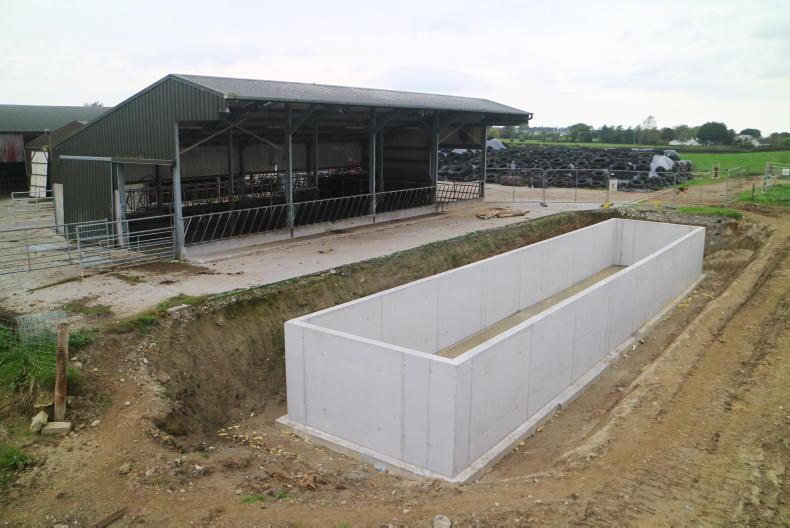
A clear trend has emerged in 2021 that, in the future, farm buildings will be an integral part of farmers being required to deliver a greater environmental good.
The review of Ireland’s nitrates action plan earlier this year has set stringent targets in areas such as minimising ammonia loss from slurry stores in the years ahead and outlined significant changes to the manner in which soiled water must be collected and stored.
There is also a much greater focus on ammonia emissions in Northern Ireland, particularly in indoor dairy systems, and changes will also be required in regard to curbing ammonia levels. In addition, the level of slurry storage facilities and the application of slurry in autumn and spring is an area that is almost certain to continue to attract greater scrutiny.
ADVERTISEMENT
Farmers should be mindful of these factors when carrying out any building works and build in a sufficient capacity to ensure that farms remain compliant with nitrates regulations in the future.
The proposals for the new On-Farm Capital Investment Scheme, clearly shows the direction of travel for Irish agriculture, with higher grant aid available for investments that underpin an environmental good rather than promoting productivity on farms. One such area being heavily pushed is organic farming, with five times the level of funding being allocated to increasing the area farmed under organics from 2% to 7.5% of the utilisable agricultural area by 2027. The housing requirements for organic farming are outlined here.
Register for free to read this story and our free stories.
This content is available to digital subscribers and loyalty code users only. Sign in to your account, use the code or subscribe to get unlimited access.
The reader loyalty code gives you full access to the site from when you enter it until the following Wednesday at 9pm. Find your unique code on the back page of Irish Country Living every week.
CODE ACCEPTED
You have full access to the site until next Wednesday at 9pm.
CODE NOT VALID
Please try again or contact support.
A clear trend has emerged in 2021 that, in the future, farm buildings will be an integral part of farmers being required to deliver a greater environmental good.
The review of Ireland’s nitrates action plan earlier this year has set stringent targets in areas such as minimising ammonia loss from slurry stores in the years ahead and outlined significant changes to the manner in which soiled water must be collected and stored.
There is also a much greater focus on ammonia emissions in Northern Ireland, particularly in indoor dairy systems, and changes will also be required in regard to curbing ammonia levels. In addition, the level of slurry storage facilities and the application of slurry in autumn and spring is an area that is almost certain to continue to attract greater scrutiny.
Farmers should be mindful of these factors when carrying out any building works and build in a sufficient capacity to ensure that farms remain compliant with nitrates regulations in the future.
The proposals for the new On-Farm Capital Investment Scheme, clearly shows the direction of travel for Irish agriculture, with higher grant aid available for investments that underpin an environmental good rather than promoting productivity on farms. One such area being heavily pushed is organic farming, with five times the level of funding being allocated to increasing the area farmed under organics from 2% to 7.5% of the utilisable agricultural area by 2027. The housing requirements for organic farming are outlined here.
If you would like to speak to a member of our team, please call us on 01-4199525.
Link sent to your email address
We have sent an email to your address. Please click on the link in this email to reset your password. If you can't find it in your inbox, please check your spam folder. If you can't find the email, please call us on 01-4199525.
ENTER YOUR LOYALTY CODE:
The reader loyalty code gives you full access to the site from when you enter it until the following Wednesday at 9pm. Find your unique code on the back page of Irish Country Living every week.






SHARING OPTIONS