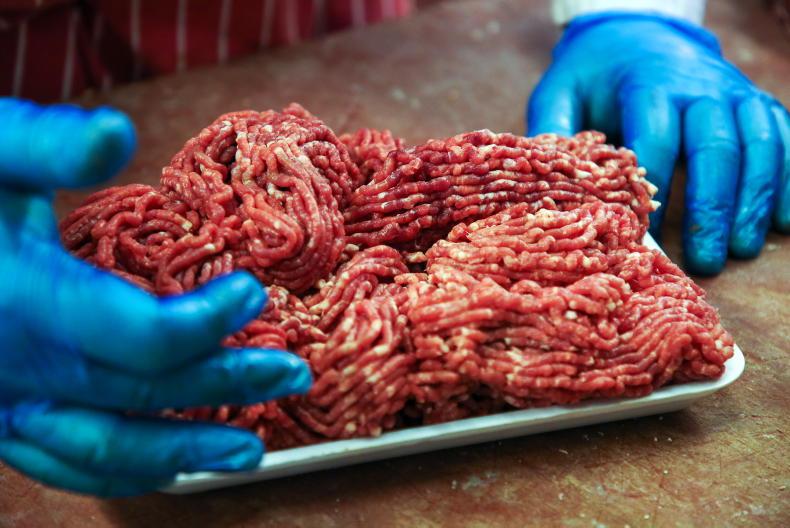
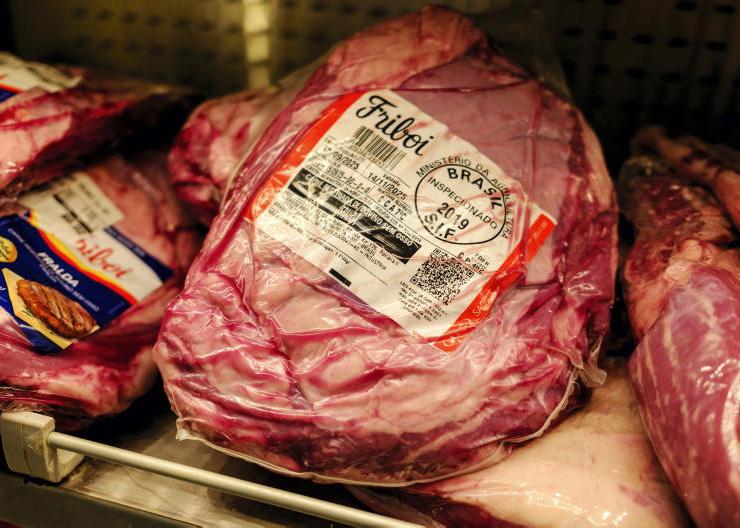
The European Commission has issued a recall notice for frozen beef imported from Brazil into the EU due to banned hormones being found in the imported product.
The European Commission has launched an investigation into the import of frozen Brazilian beef into Europe containing banned hormones. The hormone in question is oestradiol 17ß and was found in frozen beef imported from Brazil in November.
The Irish Farmers Journal understands that the meat in question was found as part of an audit of Brazilian meat imports but that some of the meat had already found its way into the European market. Countries listed by the EU as being affected include Austria, Belgium, Cyprus, Czech Republic, Germany, Greece, Italy, Netherlands, Slovakia and the United Kingdom including Northern Ireland.
The meat has been withdrawn from the market in the Netherlands and meat has also been recalled in Spain. On 27 November the investigation was updated to include that: “The Canary Island authorities reported that the Spanish recipient was unaware of the recall of the affected beef.
"The company is proceeding to withdraw the product from its warehouses in Gran Canaria, Fuerteventura and Lanzarote and to contact its customers to return the affected product. The recovered goods will be destroyed by a waste management company."
The hormone oestradiol 17ß was banned for use in animals in Europe in 1981.
The then Scientific Committee on Veterinary Measures relating to Public Health (SCVPH) concluded that “there is a substantial body of evidence suggesting that oestradiol 17ß has to be considered as a complete carcinogen (exerts both tumour initiating and tumour promoting effects) and that the data available would not allow a quantitative estimate of the risk".
Having examined additional scientific data the SCVPH confirmed its opinion in 2000 and 2002.
Commenting on the revelations IFA president Francie Gorman said: “These recalls are underway as a report on the findings of the Irish Farmers Association/ Irish Farmers Journal investigation on the production standards for beef in Brazil is launched.
"The recall and findings have to be a serious wake up call for the bureaucrats and cheerleaders attempting to usher through a Mercosur trade deal for the benefit of big industry at the expense of European farmers and the health and wellbeing of EU citizens," Gorman said.
Hormones
Earlier this month the Irish Farmers Journal/Irish Farmers Association undertook an investigation into Brazilian beef production standards. As part of this investigation, it was found that critically important antibiotics were sold without prescription across the counter in 13 agricultural supply stores. Hormones like prostaglandin and oestradiol could also be freely purchased over the counter in agricultural supply stores all across Brazil. In as recently as 2024 an audit by the European Commission found that a guarantee cannot be given that Brazilian beef imports to the EU are from hormone-free animals.
Ban on growth promoters
Since 1981, the EU has prohibited the use of substances having a hormonal action for growth promotion in farm animals. On the Commission’s website, oestradiol 17ß is included in examples of these kinds of growth promoters.
The 2024 audit showed that Brazil could not prove its beef supplied to the EU market is not treated with oestradiol 17ß. Cattle treated with oestradiol 17ß cannot be slaughtered for the EU market.
The report said while national legislation on this is broadly similar between the EU and Brazil: “The current arrangements in place to guarantee that cattle, meat from which is destined for the EU market, have never been treated with oestradiol 17ß for zootechnical or therapeutic purposes, are ineffective,” the report found.
It added that as a result Brazilian authorities cannot attest to the “reliability of operators’ sworn statements on non-use of oestradiol 17ß in cattle."
The 2024 report continued that the Brazilian Ministry of Agriculture “is not in a position to reliably attest to operator compliance” with this section of the EU health certificate for bovine meat exports to the bloc. The report in question is based on an audit of Brazil carried out from 27 May to 14 June 2024 as part of the European Commission's Directorate-General for Health and Food Safety’s planned work programme.
Read more
Watch: Brazil investigation highlights tagging and traceability issues
EU to audit beef production in Brazil and Uruguay in 2026
EU 'cannot dictate' how antibiotics are sold outside the EU
The European Commission has issued a recall notice for frozen beef imported from Brazil into the EU due to banned hormones being found in the imported product.
The European Commission has launched an investigation into the import of frozen Brazilian beef into Europe containing banned hormones. The hormone in question is oestradiol 17ß and was found in frozen beef imported from Brazil in November.
The Irish Farmers Journal understands that the meat in question was found as part of an audit of Brazilian meat imports but that some of the meat had already found its way into the European market. Countries listed by the EU as being affected include Austria, Belgium, Cyprus, Czech Republic, Germany, Greece, Italy, Netherlands, Slovakia and the United Kingdom including Northern Ireland.
The meat has been withdrawn from the market in the Netherlands and meat has also been recalled in Spain. On 27 November the investigation was updated to include that: “The Canary Island authorities reported that the Spanish recipient was unaware of the recall of the affected beef.
"The company is proceeding to withdraw the product from its warehouses in Gran Canaria, Fuerteventura and Lanzarote and to contact its customers to return the affected product. The recovered goods will be destroyed by a waste management company."
The hormone oestradiol 17ß was banned for use in animals in Europe in 1981.
The then Scientific Committee on Veterinary Measures relating to Public Health (SCVPH) concluded that “there is a substantial body of evidence suggesting that oestradiol 17ß has to be considered as a complete carcinogen (exerts both tumour initiating and tumour promoting effects) and that the data available would not allow a quantitative estimate of the risk".
Having examined additional scientific data the SCVPH confirmed its opinion in 2000 and 2002.
Commenting on the revelations IFA president Francie Gorman said: “These recalls are underway as a report on the findings of the Irish Farmers Association/ Irish Farmers Journal investigation on the production standards for beef in Brazil is launched.
"The recall and findings have to be a serious wake up call for the bureaucrats and cheerleaders attempting to usher through a Mercosur trade deal for the benefit of big industry at the expense of European farmers and the health and wellbeing of EU citizens," Gorman said.
Hormones
Earlier this month the Irish Farmers Journal/Irish Farmers Association undertook an investigation into Brazilian beef production standards. As part of this investigation, it was found that critically important antibiotics were sold without prescription across the counter in 13 agricultural supply stores. Hormones like prostaglandin and oestradiol could also be freely purchased over the counter in agricultural supply stores all across Brazil. In as recently as 2024 an audit by the European Commission found that a guarantee cannot be given that Brazilian beef imports to the EU are from hormone-free animals.
Ban on growth promoters
Since 1981, the EU has prohibited the use of substances having a hormonal action for growth promotion in farm animals. On the Commission’s website, oestradiol 17ß is included in examples of these kinds of growth promoters.
The 2024 audit showed that Brazil could not prove its beef supplied to the EU market is not treated with oestradiol 17ß. Cattle treated with oestradiol 17ß cannot be slaughtered for the EU market.
The report said while national legislation on this is broadly similar between the EU and Brazil: “The current arrangements in place to guarantee that cattle, meat from which is destined for the EU market, have never been treated with oestradiol 17ß for zootechnical or therapeutic purposes, are ineffective,” the report found.
It added that as a result Brazilian authorities cannot attest to the “reliability of operators’ sworn statements on non-use of oestradiol 17ß in cattle."
The 2024 report continued that the Brazilian Ministry of Agriculture “is not in a position to reliably attest to operator compliance” with this section of the EU health certificate for bovine meat exports to the bloc. The report in question is based on an audit of Brazil carried out from 27 May to 14 June 2024 as part of the European Commission's Directorate-General for Health and Food Safety’s planned work programme.
Read more
Watch: Brazil investigation highlights tagging and traceability issues
EU to audit beef production in Brazil and Uruguay in 2026
EU 'cannot dictate' how antibiotics are sold outside the EU
SHARING OPTIONS