After all the dry weather in December and January, the presumptive start date for grazing on many grass-focused southern dairy farms has been delayed by heavy rain and storm-force winds.
While the forecast for Monday and Tuesday is bad, the rest of the week will be drier.
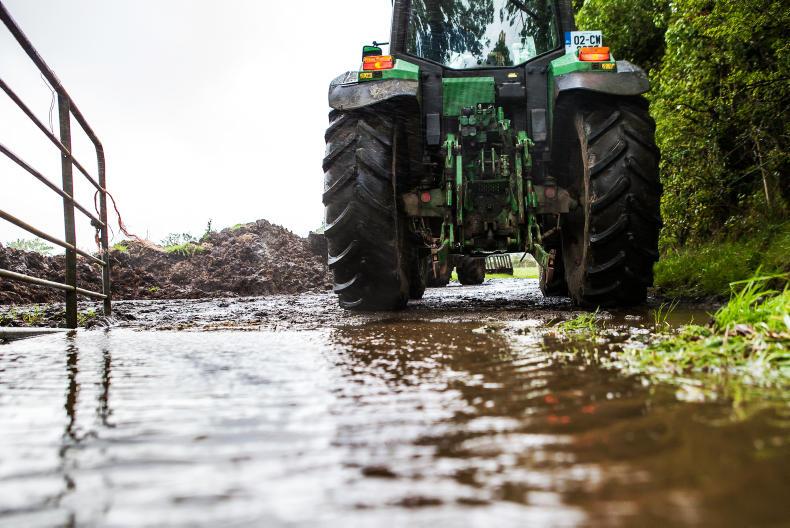
However, land will be wet and it will take a while to dry out, so any opportunities for grazing will be on a grab-and-go basis.
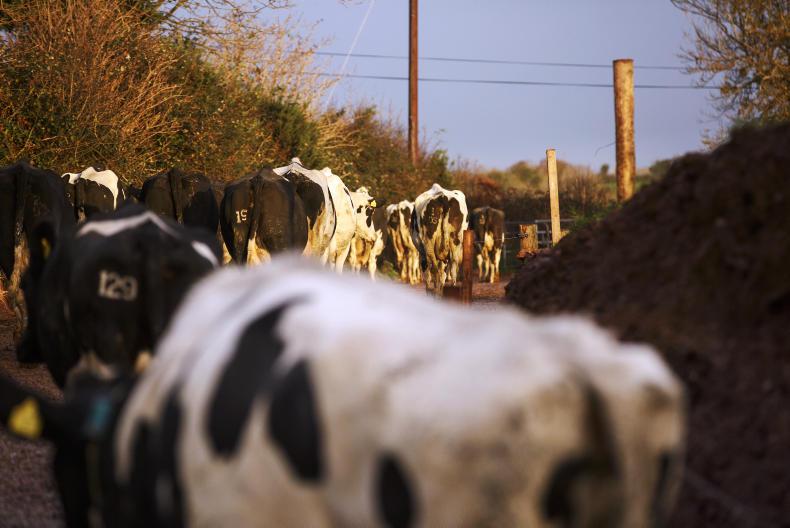
You should not let cows out when it is raining, but cows can be let out for two or at most three hours during a dry break in the weather. After two or three hours, or as soon as it starts raining again, the cows should be brought back in.
There are two things critical to the success of on-off grazing.
The first and most important is making sure that cows have an appetite for grass when they go out. The biggest mistake is to let cows out that are full of silage.
Allocation
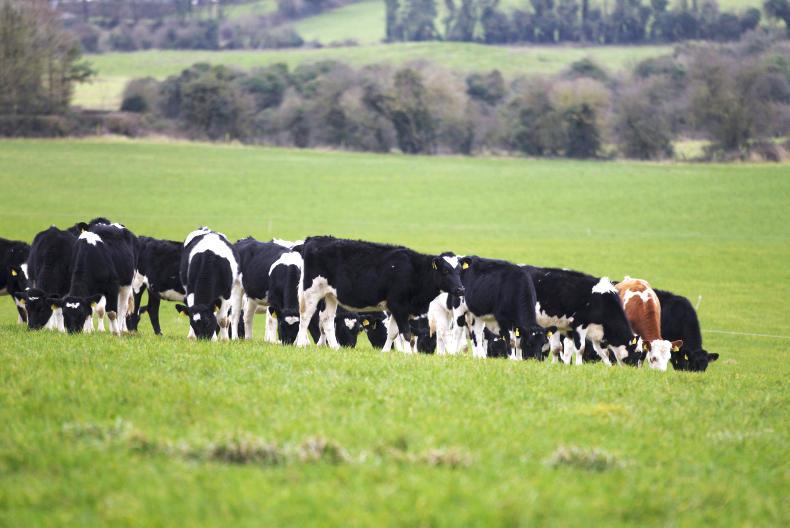
The next thing is to make sure that the allocation is right. This encompasses the paddock and the area. For any hope of a half-decent cleanout in this inclement weather, you must graze the driest fields on the farm.
This might mean grazing some of the furthest-away paddocks, but so be it.
On the area to be grazed, work out how many cows you have to go out, guess how much grass they will eat, gauge the cover and allocate accordingly.
Example
50 cows eating 10kg grass/day.50 x 5kg (12-hour break) = 250kg dry matter.Grass cover = 1300kg/ha.How many square metres to get a kilo dry matter? Divide the cover into 10,000 (10,000sq metres in a hectare).10,000/1,300 = 7.69sq metres to get 1kg of dry matter.Multiply by what you need (250kg) = 1,922 sq metres.Divide by width of paddock (eg 140m).Therefore, give the cows 14m of a break.However, you must evaluate the residuals as there are a number of presumptions made when using this formula such as the cover, how much grass the cows are eating and measuring meters.
Read more
No shortage of grass on the west coast
Grass+ dairy: super winter growth means farms well set up
After all the dry weather in December and January, the presumptive start date for grazing on many grass-focused southern dairy farms has been delayed by heavy rain and storm-force winds.
While the forecast for Monday and Tuesday is bad, the rest of the week will be drier.
However, land will be wet and it will take a while to dry out, so any opportunities for grazing will be on a grab-and-go basis.
You should not let cows out when it is raining, but cows can be let out for two or at most three hours during a dry break in the weather. After two or three hours, or as soon as it starts raining again, the cows should be brought back in.
There are two things critical to the success of on-off grazing.
The first and most important is making sure that cows have an appetite for grass when they go out. The biggest mistake is to let cows out that are full of silage.
Allocation
The next thing is to make sure that the allocation is right. This encompasses the paddock and the area. For any hope of a half-decent cleanout in this inclement weather, you must graze the driest fields on the farm.
This might mean grazing some of the furthest-away paddocks, but so be it.
On the area to be grazed, work out how many cows you have to go out, guess how much grass they will eat, gauge the cover and allocate accordingly.
Example
50 cows eating 10kg grass/day.50 x 5kg (12-hour break) = 250kg dry matter.Grass cover = 1300kg/ha.How many square metres to get a kilo dry matter? Divide the cover into 10,000 (10,000sq metres in a hectare).10,000/1,300 = 7.69sq metres to get 1kg of dry matter.Multiply by what you need (250kg) = 1,922 sq metres.Divide by width of paddock (eg 140m).Therefore, give the cows 14m of a break.However, you must evaluate the residuals as there are a number of presumptions made when using this formula such as the cover, how much grass the cows are eating and measuring meters.
Read more
No shortage of grass on the west coast
Grass+ dairy: super winter growth means farms well set up






SHARING OPTIONS