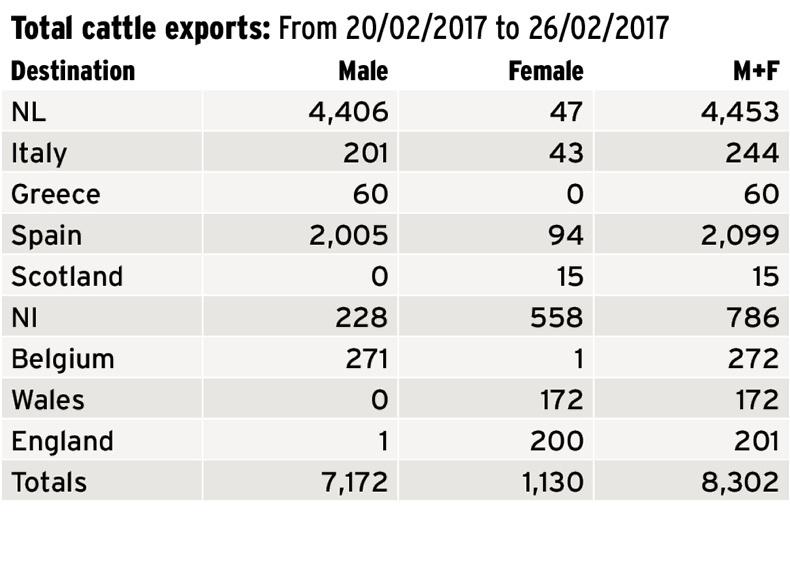
The latest live export figures collated by the Department of Agriculture, Food and the Marine show a total of 8,302 cattle exported live for the week ending 26 February. This is an increase of 3,302 head on the previous week and is dominated by increased calf exports.
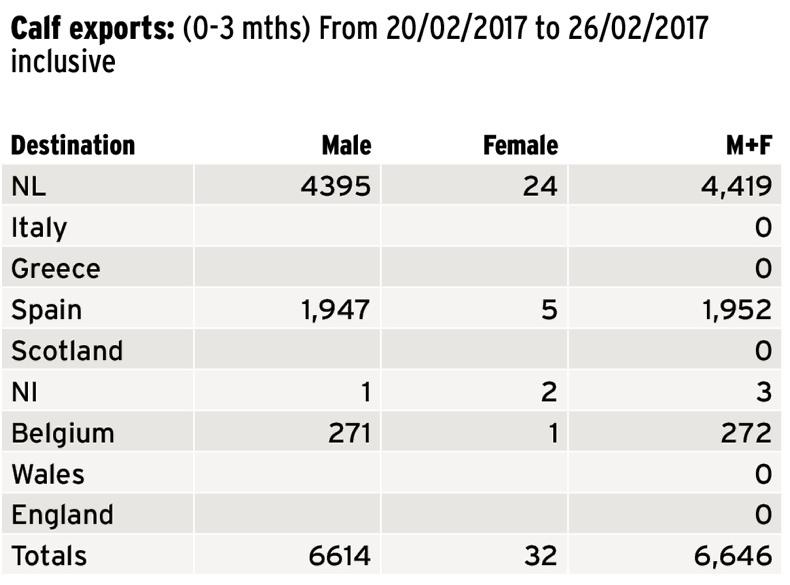
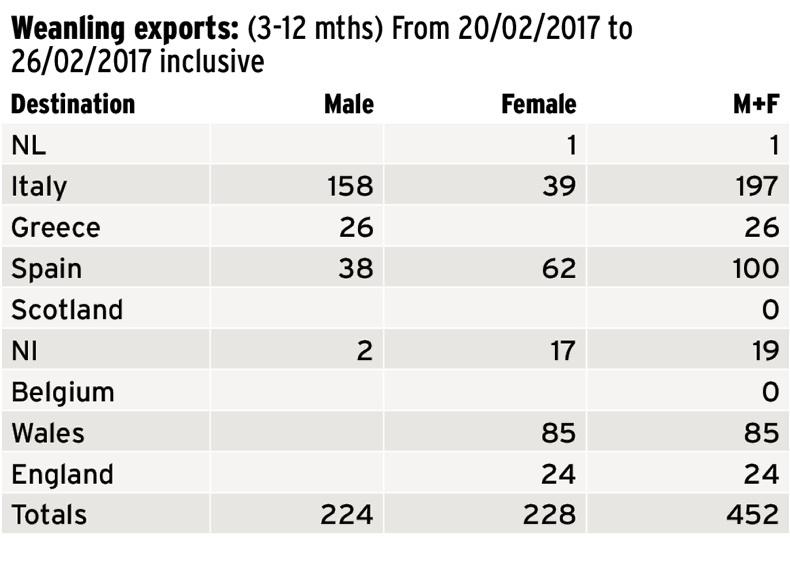
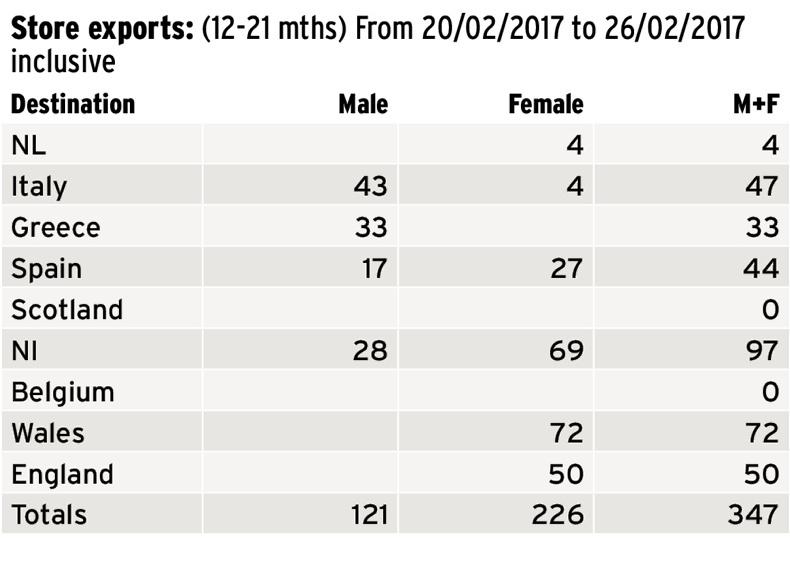
In total, there were 6,646 calves exported live, which can be broken down mainly into 4,395 bull calves to the Netherlands, 1,947 bull calves to Spain and 271 bull calves to Belgium. The volume of weanlings exported remains steady at 452 head, with 197 exported to Italy, 100 to Spain and 85 heifers to Wales. Wales also imported 72 heifers in the 12- to 21-month age category and it is likely that these are part of a continued steady trade of dairy replacement heifers to the UK.
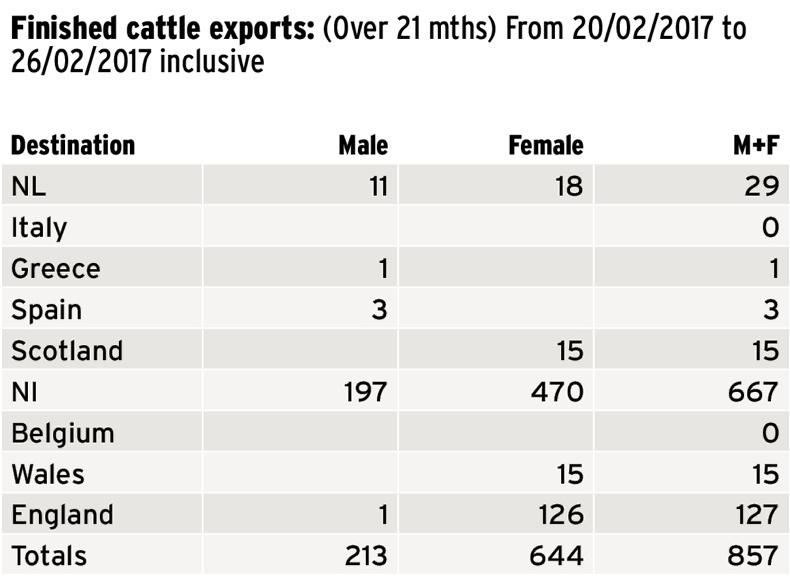
Northern Ireland imported a total of 786 head, broken down into 3 calves, 19 weanlings, 97 12- to 21-month-old stock and 667 over 12 months of age. Analysis by the Department of Agriculture, Environment and Rural Affairs (DAERA) in Northern Ireland show over 300 head of these animals destined for direct slaughter. There has been some slight recovery in this category in recent weeks, with wholesale demand driving this trade. Northern buyers have also been active in marts and, while at a lower activity to previous weeks, it is a welcome addition in competition. The full breakdown of destinations across all categories can be viewed in the tables.
Static beef prices
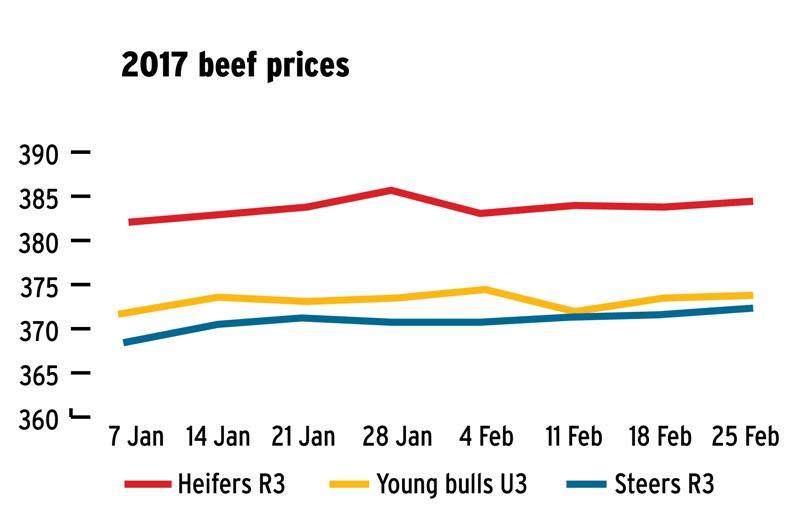
Figure 1 shows steer, heifer and young bull prices as reported by Bord Bia since the turn of the year. Prices are quoted excluding VAT, but even so it is a good representation to show the static nature of prices this spring with very marginal upward or downward movement.
The situation is no different this week with most steers trading on a base of €3.80/kg, with small numbers trading at a base of €3.75/kg and likewise small numbers at the top of the market trading at a base of €3.85/kg. The majority of heifers are selling on a base of €3.90/kg with very few numbers moving outside this range.
As shown in Figure 1, bull prices have shown more fluctuation, but remain at the same price they hit the second week of January. R grade bulls are selling from €3.75/kg to €3.80/kg with U grades from €3.85/kg to €3.90/kg. The same cuts of 5c/kg to 10c/kg exist for carcases deemed too heavy – exceeding 430kg to 450kg carcase weight depending on the plant in question.
The Northern trade is also unchanged with U-3 steer and heifer base quotes ranging from £3.40/kg to £3.46/kg at the higher end of the market. Sterling has crept back up to 87p to the euro giving the equivalent price of €4.12/kg to €4.19/kg. Regular sellers continue to secure 4p/kg to 6p/kg higher.
Read more
Ireland falls down world beef price league
Bullocks make €1,000 with the weight at Balla Mart
The latest live export figures collated by the Department of Agriculture, Food and the Marine show a total of 8,302 cattle exported live for the week ending 26 February. This is an increase of 3,302 head on the previous week and is dominated by increased calf exports.
In total, there were 6,646 calves exported live, which can be broken down mainly into 4,395 bull calves to the Netherlands, 1,947 bull calves to Spain and 271 bull calves to Belgium. The volume of weanlings exported remains steady at 452 head, with 197 exported to Italy, 100 to Spain and 85 heifers to Wales. Wales also imported 72 heifers in the 12- to 21-month age category and it is likely that these are part of a continued steady trade of dairy replacement heifers to the UK.
Northern Ireland imported a total of 786 head, broken down into 3 calves, 19 weanlings, 97 12- to 21-month-old stock and 667 over 12 months of age. Analysis by the Department of Agriculture, Environment and Rural Affairs (DAERA) in Northern Ireland show over 300 head of these animals destined for direct slaughter. There has been some slight recovery in this category in recent weeks, with wholesale demand driving this trade. Northern buyers have also been active in marts and, while at a lower activity to previous weeks, it is a welcome addition in competition. The full breakdown of destinations across all categories can be viewed in the tables.
Static beef prices
Figure 1 shows steer, heifer and young bull prices as reported by Bord Bia since the turn of the year. Prices are quoted excluding VAT, but even so it is a good representation to show the static nature of prices this spring with very marginal upward or downward movement.
The situation is no different this week with most steers trading on a base of €3.80/kg, with small numbers trading at a base of €3.75/kg and likewise small numbers at the top of the market trading at a base of €3.85/kg. The majority of heifers are selling on a base of €3.90/kg with very few numbers moving outside this range.
As shown in Figure 1, bull prices have shown more fluctuation, but remain at the same price they hit the second week of January. R grade bulls are selling from €3.75/kg to €3.80/kg with U grades from €3.85/kg to €3.90/kg. The same cuts of 5c/kg to 10c/kg exist for carcases deemed too heavy – exceeding 430kg to 450kg carcase weight depending on the plant in question.
The Northern trade is also unchanged with U-3 steer and heifer base quotes ranging from £3.40/kg to £3.46/kg at the higher end of the market. Sterling has crept back up to 87p to the euro giving the equivalent price of €4.12/kg to €4.19/kg. Regular sellers continue to secure 4p/kg to 6p/kg higher.
Read more
Ireland falls down world beef price league
Bullocks make €1,000 with the weight at Balla Mart








SHARING OPTIONS