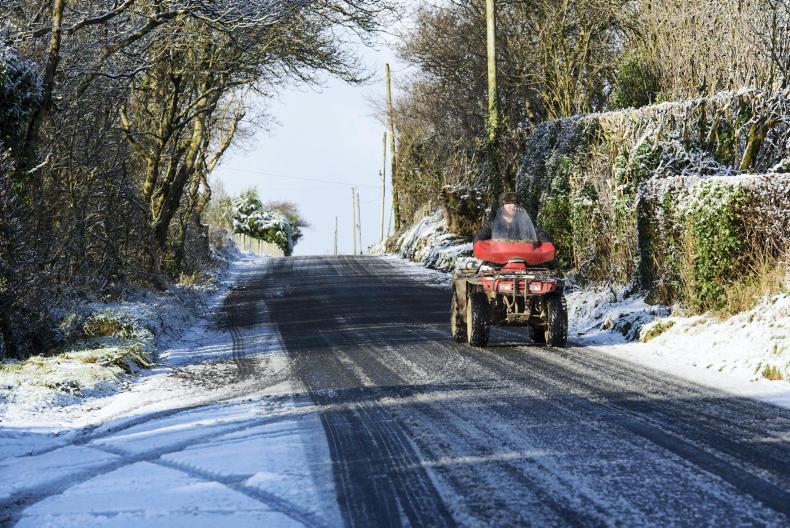
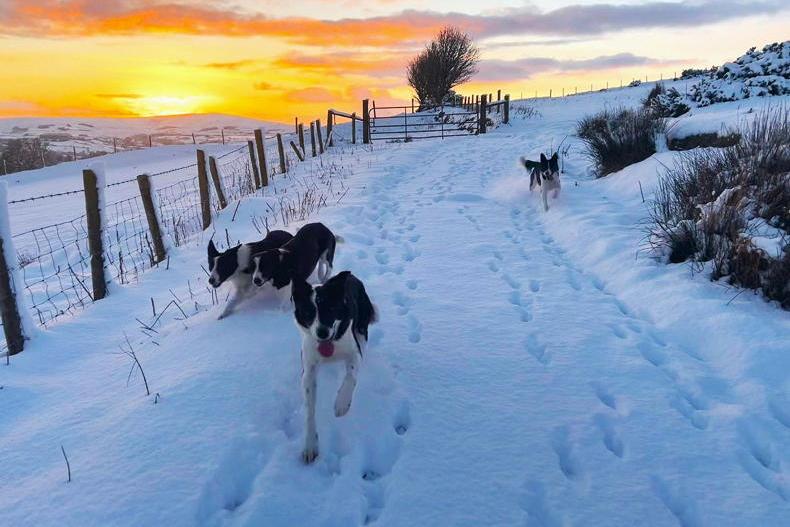
With a white blanket covering parts of the country this morning, it is important to take time to prepare for clearing snow and driving in wintry conditions.
An orange weather warning is in place over northern counties.
ADVERTISEMENT
In may be springtime but winter is still hanging on, with snow falling around the country overnight and icy conditions on the roads. But what are the most important things to remember when driving?
We look at the AA’s best tips for dealing with snow:
When clearing snow in the yard, it is best to do it as early as possible as its easiest to move snow when it is fresh and loose. It is important not to cover drains up when clearing snow.
Also, ask yourself could you be causing danger by allowing it to refreeze on paths. Applying salt and grit after snow is cleared will stop it from refreezing, or spreading sand or ash will at least provide a better grip.
When getting into a vehicle, clear snow from the roof as well as the windscreen as it can move down while you are driving. Make sure that the windscreen is clean, both inside and out, to improve visibility. Clear snow from headlights and use your dipped lights at all times with fog lights used in freezing fog only.
When driving, remember that stopping distances can be up to 10 times longer in snow and ice, so don’t drive faster than the conditions allow and manage driving so that sharp breaking is not required.
Make sure that batteries are in good condition as lights, heaters and wipers used in snowy conditions all put a high demand on batteries. A 50-50 mix of anti-freeze and water in the cooling system is essential in winter as this gives maximum protection down to -34°C.
Check all tyres for condition, pressure and tread depth. No less than 2mm of tread is required for winter driving and at least 3mm is recommended. Drivers should not reduce tyre pressure to get more grip as it does not work and reduces stability.
A sign that the water pump or cylinder block has frozen is when the fan belt squeals continually as soon as the engine is started. Most commonly, it is just the radiator that freezes, meaning coolant is unable to circulate. If either occur, stop the engine immediately and allow it to thaw out.
This content is available to digital subscribers and loyalty code users only. Sign in to your account, use the code or subscribe to get unlimited access.
However, if you would like to share the information in this article, you may use the headline, summary and link below:
Title: Tips for driving in the snow
With a white blanket covering parts of the country this morning, it is important to take time to prepare for clearing snow and driving in wintry conditions.
The reader loyalty code gives you full access to the site from when you enter it until the following Wednesday at 9pm. Find your unique code on the back page of Irish Country Living every week.
CODE ACCEPTED
You have full access to the site until next Wednesday at 9pm.
CODE NOT VALID
Please try again or contact support.
In may be springtime but winter is still hanging on, with snow falling around the country overnight and icy conditions on the roads. But what are the most important things to remember when driving?
We look at the AA’s best tips for dealing with snow:
When clearing snow in the yard, it is best to do it as early as possible as its easiest to move snow when it is fresh and loose. It is important not to cover drains up when clearing snow.
Also, ask yourself could you be causing danger by allowing it to refreeze on paths. Applying salt and grit after snow is cleared will stop it from refreezing, or spreading sand or ash will at least provide a better grip.
When getting into a vehicle, clear snow from the roof as well as the windscreen as it can move down while you are driving. Make sure that the windscreen is clean, both inside and out, to improve visibility. Clear snow from headlights and use your dipped lights at all times with fog lights used in freezing fog only.
When driving, remember that stopping distances can be up to 10 times longer in snow and ice, so don’t drive faster than the conditions allow and manage driving so that sharp breaking is not required.
Make sure that batteries are in good condition as lights, heaters and wipers used in snowy conditions all put a high demand on batteries. A 50-50 mix of anti-freeze and water in the cooling system is essential in winter as this gives maximum protection down to -34°C.
Check all tyres for condition, pressure and tread depth. No less than 2mm of tread is required for winter driving and at least 3mm is recommended. Drivers should not reduce tyre pressure to get more grip as it does not work and reduces stability.
A sign that the water pump or cylinder block has frozen is when the fan belt squeals continually as soon as the engine is started. Most commonly, it is just the radiator that freezes, meaning coolant is unable to circulate. If either occur, stop the engine immediately and allow it to thaw out.
If you would like to speak to a member of our team, please call us on 01-4199525.
Link sent to your email address
We have sent an email to your address. Please click on the link in this email to reset your password. If you can't find it in your inbox, please check your spam folder. If you can't find the email, please call us on 01-4199525.
ENTER YOUR LOYALTY CODE:
The reader loyalty code gives you full access to the site from when you enter it until the following Wednesday at 9pm. Find your unique code on the back page of Irish Country Living every week.
SHARING OPTIONS