The results of a European wide study on the needs of young farmers has revealed that access to land is the most significant barrier for young farmers entering the agricultural sector. This stems from national legislation in member states and regulatory framework including taxation.
Access to land is linked to high prices and many young farmers are short of collateral to guarantee loans and that problem extends to other high start-up costs such as machinery and livestock. Interestingly, young farmers in more intensified, specialised sectors, like olive orchards, consider land to be less important than knowledge compared with farmers in the extensive sectors like dairy and tillage.
The report, published by the European Commission, also found that young farmers do not consider knowledge acquisition as a crucial element for successful farming. A survey of young farmers shows that they believe knowledge can be easily available and so the need to acquire it is less pressing than other needs. The report identifies the main information sources for young farmers:
People.Internet and exchange.The report states the need to strengthen the existing knowledge and skills as well as offering tailor-made solutions that are adapted to the specific needs of young farmers in each member state.
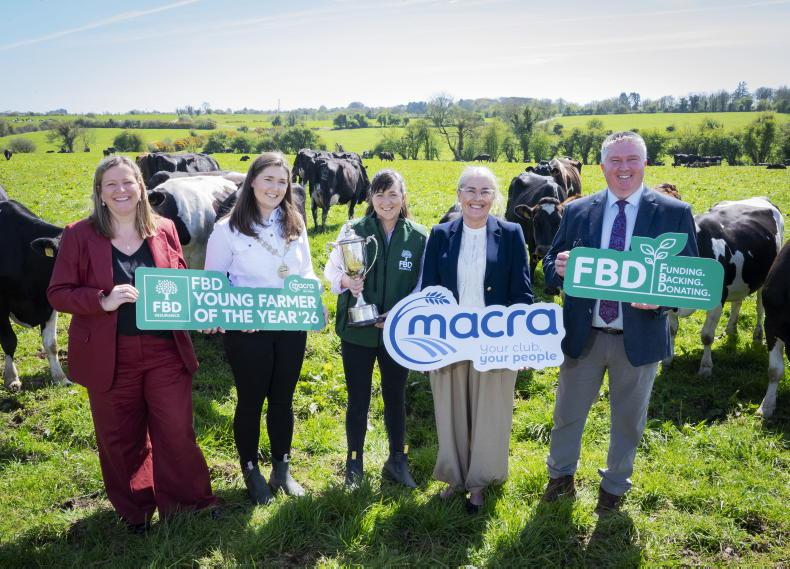
Macra na Feirme is addressing these problems for young Irish farmers through its land mobility service and Skillnet programme.
General needs
The general needs of young farmers vary depending on region, sector, education level and relation to the farm owner. The study shows that they are not always aware that it would be beneficial to improve skills such as marketing, networking and communication.
It is also clear that young farmers managing a farm on their own are more confident of themselves but are less inclined to develop their skills.
Exchange
According to the report, exchange schemes play an important role in filling the gap between the theory and the reality of farming in another country. One hundred and eighty-five exchange schemes for young farmers have been identified throughout EU-28 and some selected OECD countries, namely Australia, Brazil, Canada, Chile, Israel, Mexico, New Zealand, Switzerland, turkey and the USA.
Young farmers in new member states are more likely to be interested in obtaining knowledge from different sources including the participation in an exchange, according to the report. It also makes a number of recommendations on improving exchanges in Europe.
Read the full report here.
Read more
Hogan blasts banks approach to young farmers
Deadline extension announced for Stephen Cullinan scholarship
The results of a European wide study on the needs of young farmers has revealed that access to land is the most significant barrier for young farmers entering the agricultural sector. This stems from national legislation in member states and regulatory framework including taxation.
Access to land is linked to high prices and many young farmers are short of collateral to guarantee loans and that problem extends to other high start-up costs such as machinery and livestock. Interestingly, young farmers in more intensified, specialised sectors, like olive orchards, consider land to be less important than knowledge compared with farmers in the extensive sectors like dairy and tillage.
The report, published by the European Commission, also found that young farmers do not consider knowledge acquisition as a crucial element for successful farming. A survey of young farmers shows that they believe knowledge can be easily available and so the need to acquire it is less pressing than other needs. The report identifies the main information sources for young farmers:
People.Internet and exchange.The report states the need to strengthen the existing knowledge and skills as well as offering tailor-made solutions that are adapted to the specific needs of young farmers in each member state.
Macra na Feirme is addressing these problems for young Irish farmers through its land mobility service and Skillnet programme.
General needs
The general needs of young farmers vary depending on region, sector, education level and relation to the farm owner. The study shows that they are not always aware that it would be beneficial to improve skills such as marketing, networking and communication.
It is also clear that young farmers managing a farm on their own are more confident of themselves but are less inclined to develop their skills.
Exchange
According to the report, exchange schemes play an important role in filling the gap between the theory and the reality of farming in another country. One hundred and eighty-five exchange schemes for young farmers have been identified throughout EU-28 and some selected OECD countries, namely Australia, Brazil, Canada, Chile, Israel, Mexico, New Zealand, Switzerland, turkey and the USA.
Young farmers in new member states are more likely to be interested in obtaining knowledge from different sources including the participation in an exchange, according to the report. It also makes a number of recommendations on improving exchanges in Europe.
Read the full report here.
Read more
Hogan blasts banks approach to young farmers
Deadline extension announced for Stephen Cullinan scholarship






SHARING OPTIONS