Negotiations between the Irish Cattle breeding Federation (ICBF) and breed societies continue to linger on regarding the uptake of the breeding federation’s newest whole-herd performance recording (WHPR) programme launched late last year.
While the Irish Limousin Cattle Society was first to jump on board, with the intention to make the programme mandatory for all exhibitors at the society’s premier sales come May 2017, others remain hesitant with regard some of the programme’s finer details.
Last month, the Irish Farmers Journal got some pedigree breeders’ opinions following the programme’s launch. While many were in favour of improving the data accuracy, they also pointed out some concerns with the new programme which they would like to see addressed.
This week, we put questions to each of the individual breed societies to see where they stand with regard to the programme and see what direction they want it to go.
Pat Donnellan of the ICBF answers some frequently asked questions regarding the basis of the programme, benefits to the industry and costs involved.
What is WHPR and what does it mean for me?
Pat Donnellan of the ICBF looks at some of the most frequently asked questions with regard the new Whole Herd Performance Recording (WHPR) programme
What is WHPR?
WHPR is a programme for beef pedigree breeders to record accurate data on all of their pedigree cattle, thus resulting in them having the most accurate possible €uro-Star figures.
Why is ICBF launching such a programme?
There are three main reasons:
What are the benefits to the Irish beef industry and pedigree breeders participating in WHPR?
There are six main benefits:
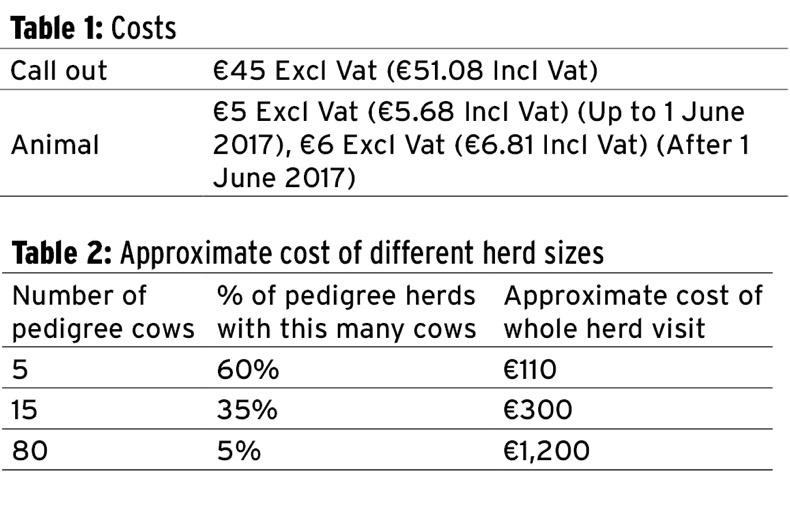
How much does it cost?
What will a pedigree breeder who signs up to the programme have to do?
On-farm
Online/paper
– Calving survey
– Birth weight data; ie, weight of a calf within seven days of birth (measuring tapes are also available from the ICBF – the resulting measurements can then be converted into birth weights by the ICBF).
– Dam insemination data and/or scanning data if a stock bull is being used.
– Caesarean sections.
What happens to a pedigree breeder who does not record the required data?
Will ICBF be making a profit out of WHPR?
Absolutely not. After the various costs of the programme are looked after, the ICBF is at a loss. However, the performance recording of pedigree animals is too important not to invest in, in terms of having young bulls for commercial farmers to purchase that have accurate €uro-Star indices.
What the societies think
What are your views on the current Whole Herd Performance Recording (WHPR) programme introduced by ICBF?
Irish Shorthorn (IS): Any initiative which will improve the accuracy of data recorded and the volume recorded has to be welcomed, but I would have concerns with only one annual visit per herd.
Irish Hereford (IH): Waste of time, expensive, troublesome to breeders and unlikely to achieve much.
Irish Angus (IA): It was brought in without consulting the breed societies. It is going to create a lot of difficulties for elderly farmers and those with fragmented holdings, especially in the west. Weighing cows that are heavy in calf is not practical nor advisable. Having said all that, there is merit in the scheme, but it needs a lot of tweaking. There should not be any penalty on any farmer who does not participate in the scheme.
Irish Limousin (IL): In light of where we now stand regarding the BDGP, the €uro-Star system and genomics, I believe the proposed WHPR in principle has merit and is certainly needed. A lack of relevant data has resulted in indices with low reliability, too much fluctuation and consequently reduced breeder and buyer confidence. This must be addressed and, as a breed society, we have taken steps to proactively embrace the scheme. But we are adamant the scheme must be workable. It needs to be fit for purpose, cost-effective, deliver relevant, accurate data and provide dividends for both participants and purchasers.
Irish Simmental (ISim): Any scheme that will increase the quality and hopefully quantity of data being collected has to be welcomed. Our society is currently working through the scheme to see where additional changes or improvements can be made.
Will it help restore confidence in pedigree breeding?
IS: Yes, over time. A lot of commercial beef farmers and dairy farmers have concerns with data accuracy, especially regarding calving difficulty figures. Their confidence needs to be won back.
IH: No. This society currently requires all bull calves to be sire-verified, all first-calving heifers to be sire-verified on joining the breeding herd and herds inspected at regular intervals with spot weighings by a society representative.
IA: We don’t think we need to restore confidence in pedigree breeding because the vast majority of farmers source their pedigree bulls from known reliable genetics. The idea that farmers are being defrauded by pedigree breeders is a total red herring. The success of the scheme will depend on good communication between the ICBF, breed societies, breeders and the Department of Agriculture.
IL: I don’t believe it has been damaged to the extent we are led to believe by articles published in this paper. I would go so far as to say I think those articles were sensationalist and unhelpful, particularly as, at the time, the pedigree breed societies, together with the ICBF, were working to devise a performance recording programme to enhance data collection and the accuracy of the €uro-Star system. The vast majority of our breeders are very decent, honourable people, who have produced honest information and animals over the years. Recent articles suggest that there is a major problem with the information being inputted by pedigree breeders. However, I don’t see this, and neither do I hear it from commercial buyers. What’s more, the Irish Limousin Cattle Society has always been proactive to police the integrity of the herd book.
ISim: Like in any profession or activity, there are a small percentage that will step outside the boundaries. Such actions are in no way condoned by the Simmental society and, in fact, the society is carrying out inspections and will continue to do even when the WHPR gets moving. However, it is regrettable that an entire industry (pedigree breeding) has in some way been tarnished by recent developments and it is up to all working within the industry to redress this.
Will you encourage breeders to participate in the scheme?
IS: Yes, as a breed we will encourage our members to participate.
IH: We will recommend they participate, but ultimately participation will be up to each individual.
IA: We will neither encourage nor discourage our members’ participation at the moment because, to date, farmers’ dealings with the ICBF have been very one-sided, with the ICBF dictating what is and what is not acceptable without any consideration for the breed. However, if the scheme is well designed, farmers will participate.
IL: As breed secretary I acknowledge fully the huge commitment we are asking of our breeders in encouraging them to participate in this scheme. However, we must look to the long-term benefits of well-run performance recording which will enhance the accuracy of genomics and deliver indices with improved accuracy and reliability. For this reason, to encourage widespread breeder uptake, the ILCS will provide incentives, one being to make participation in the scheme mandatory for entry to our premier sales from May 2017. With the support of both the ICBF and the Irish Farmers Journal, I believe we must convince our breeders of the benefits of whole-herd recording. But, equally important, we must recognise and promote those who participate and ensure they are adequately rewarded for their commitment.
ISim: The Simmental society has always encouraged performance recording and will continue to do so.
Are you happy with the performance of the ICBF and is your breed committed to working with it long-term?
IS: Over the last 12 to 18 months, with the introduction of genomics and the BDGP, there has definitely been a reduction in the response times due to the increased workload. As a breed, we are committed to working with the ICBF in the future. We have a world-class database, the envy of a lot of countries, and we need to keep moving forward and become world leaders.
IH: No. Currently the society is exploring details and merits of Breedplan, currently being used without major difficulty seven miles north of Cavan town in NI and also in the UK, the US, Canada, Uruguay, Argentina, Australia and New Zealand – countries which produce the major portion of the world’s beef.
IA: Irish Angus Cattle Society will celebrate its 50th anniversary in 2017 and intends to be there for at least another 50, during which time we will work with all relevant bodies for the advancement of our breed.
IL: Being honest, at times, relations have been strained due to a number of issues: an apparent lack of empathy towards the role of beef breed societies on the part of the ICBF, poor communication by the ICBF, the many teething issues around the implementation of genomics, and slow responses by the ICBF in the resolution of issues with services. However, I do acknowledge and have enormous respect for the role of the ICBF and its substantial achievements. As an industry, we are the envy of most countries around the world such is the resource that is the ICBF.
ISim: Like in most organisations, communication could be better, but in view of all the projects ongoing, certain issues are understandable.