Gabriel Hoey and his brother, Michael, farm 3000 acres of land in Lusk, north Co Dublin, where they produce 500t-600t of potatoes a week, 150t-200t of onions and produce a number of chilled convenience meals for the Irish retail sector.
The brothers are fourth generation farmers and established the Country Crest brand in 1993, where they began to prepack the potatoes grown and harvested on site.
In 2005 they added Irish onions to the mix, “revising an industry that was effectively dead,” according to Commercial Manager, Tony Doyle.
“We work with three growers around Ireland, producing a crop that is complicated to grow and harvest. These onions are then cured, dried, graded and packed on our premises here in North County Dublin,” Tony adds.
Their chilled ready meals division was established in 2008, and it operates under the name Ballymaguire Foods.
From their beef farm of over 450 heifers, they produce meat which they use in their meals, offering full traceability from farm to fork. This beef is Bord Bia approved and is also sold in their Farm Shop in Lusk and some high-end restaurants, like Neven Maguire’s MacNean House.
“We earn our living from the land, and it’s important to Michael and myself that we don’t just take from the land, but that we give back in whatever way we can, and focus on operating a sustainable business. Our green ethos is what drives our company in the way we farm and produce our food,” says Gabriel Hoey.
At Country Crest, the Hoey brothers certainly give back when it comes to sustainable energy, having installed a wind turbine which takes care of 55% of the electrical needs of the company. The brothers’ initiatives won them the 2011 Bord Bia Food and Drink Sustainability Award.
We help people in these countries who come from a subsistence level of food growing into a system where they can actually sustain themselves and develop markets
Currently they are developing an Anaerobic Digestion system and looking at solar energy that will take care of the other 45% of the company’s energy.
What Gabriel says about giving back particularly rings true when you take a look at the different projects the business is involved with in the developing world.
“We partnered with a couple of charities and NGOs in Ireland to develop community-based food growing project. We help people in these countries who come from a subsistence level of food growing into a system where they can actually sustain themselves and develop markets,” says Tony, who is very much to the forefront of these projects.
Country Crest is involved in projects in Haiti, Ethiopia and Lesotho.
Christine Farm Haiti
In Haiti, along with Haven Partnership, an Irish NGO which focuses on helping the people of the country, the company has been involved in operations on Christine Farm.
Country Crest has donated machinery to the farm: where before the farmers used ox and plough they now have tractors and have been taught how to use the machinery through the initiative.
“In co-operation with Haven Partnership there is now an educational facility in Haiti where farmers are shown how to improve their methodology of growing food, increasing quality and yield,” Tony explains. 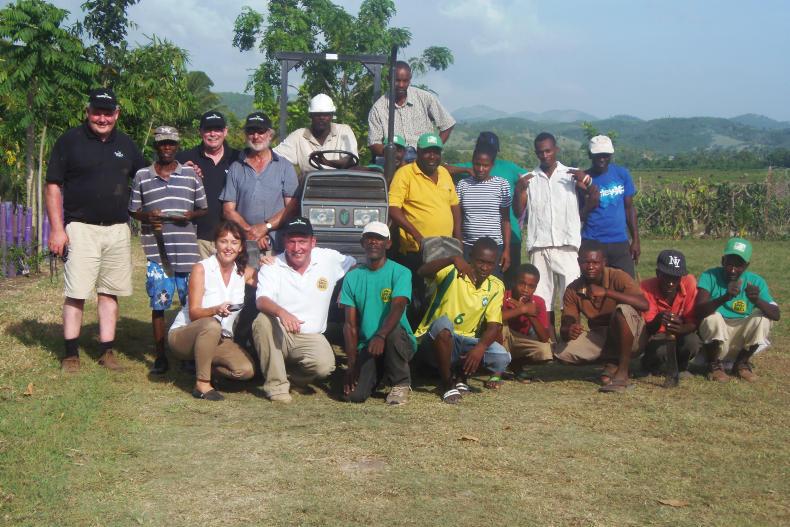
Despite the project suffering a setback with Hurricane Mathew in October, where the land became flooded and all the crops including maize and pepper were lost, the project will continue.
“I was talking to the coordinator yesterday and he said they are able to plough at the moment, so they have replanted banana and papaya trees. Progress will be slow in getting back to where it was before Hurricane Mathew.”
Ethopia
In the mountains of Ethiopia, Country Crest is part of a coalition of NGOs, research institutes and commercial bodies that shows farmers how to grow seed potatoes and develop good, disease-free varieties of potato suitable for Ethiopia.
The aim of all those involved is to develop the potato in Ethiopia to a stage where the crop will be able to sustain food production, seed production, and be sold at market.
This project is co-ordinated by VITA, an Irish-based NGO who is working in Ethiopia and Eritrea. VITA is supported by Teagasc and The Irish Potato Federation and other Irish potato growers and packers in helping support this project.
VITA employs local soil and plant specialists to help small farmers grow seeds, which multiply and in turn are passed on to other farmers.
This results in the whole area benefiting, and co-operatives play a huge role in this.
According to Tony, the benefits of this project are already visible with people upgrading their homes and investing in education.
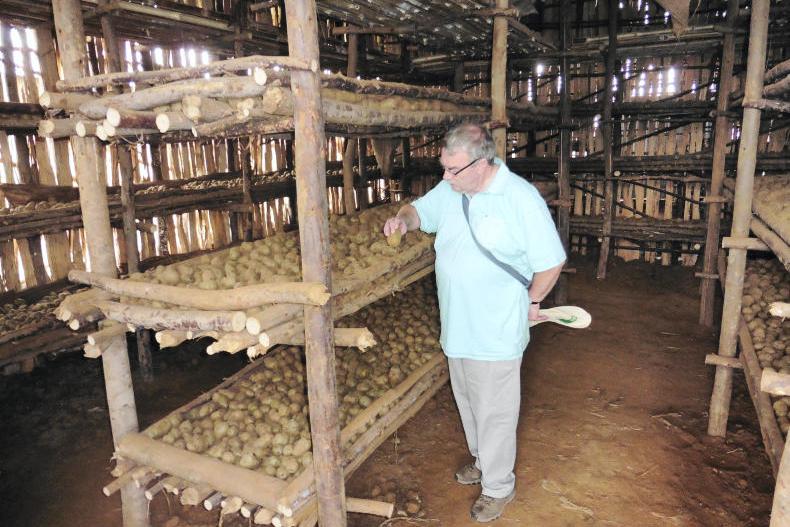
Tony Doyle, commercial manager of Country Crest, inside a potato store in the Arba Minch area of Ethiopia.
Lesotho
Lesotho is a landlocked country near South Africa, where Country Crest participates in a project involving a school of 400 pupils.
“Here we have developed a garden where students learn how to sow seeds, grow plants, look after them and water them. Again, it is all about food security and food sustainability with this project,” Tony explains.
The project is run in conjunction with Portmarnock Community School and Action Ireland Trust, and next February Tony will be travelling to Lesotho with 45 transition year students and other people who are involved in the project to install a drip irrigation system to aid the garden.
The drip irrigation system will slowly feed water into the ground, yet still giving enough to sustain an apple tree. Where a hose might use 10 gallons of water in one go, the drip irrigation system might use just one gallon achieving the same result and help to save water.
Tony speaks about the feeling you receive when a project you have been part of is successful: “Once you see that progress is being made on projects, it is very self-fulfilling, especially when you go back every year and see that they have done something else to help themselves.”