



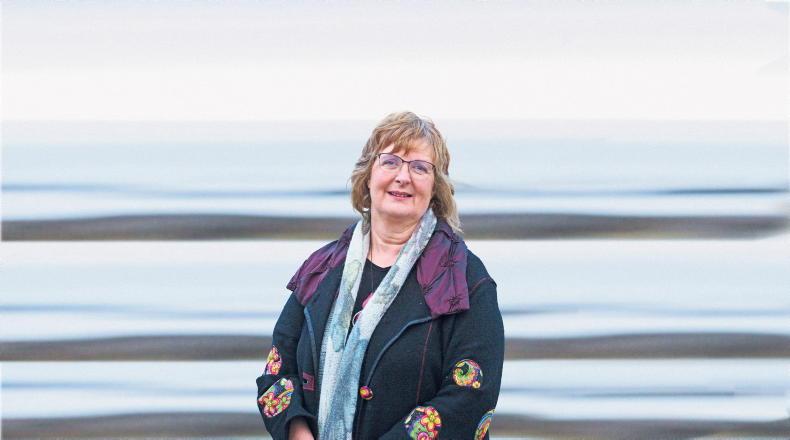
Over the last month amidst the Mayo celebrations, I’ve been thinking back on a dark December night, in Tuam, when my new boyfriend John and I shared a bag of soggy chips outside the dancehall. He noticed I was shivering a little, so he took off his scarf and put it around my shoulders. As a teenager I thought this was a most romantic gesture. I didn’t fully appreciate the significance of it being a green and red scarf.
The penny dropped a few months later when our dates were scheduled around either club or Mayo matches. As was once said by Princess Diana, there were three of us in the relationship. To be more precise, there were often 15 plus subs.
My first Mayo match in MacHale Park was against Roscommon, which Mayo won on the day. It was also my first experience of the post-game car journey commentary. Every kick, foul, free and refereering decision was discussed, with a good spattering of expletives.
But gradually I found myself tuning the car radio to Sunday Sport and the wonderful voices of Micheal O’Hehir and Mícheál Ó Muircheartaigh. I started to engage in the analysis, though maybe not with quite the same level of expertise or expletives.
When I look back at the games I’ve been to, and those I’ve missed, I don’t always remember the score. But there are games I remember because of what was happening in our lives.
My husband John, born in 1956, always said he’d never live to see Mayo win and he was proven right. But he did leave a legacy of an ingrained love of Mayo football in his family
The draw against Meath in 1996 will forever be tied to my husband John having open-heart surgery. I remember sewing a Mayo flag, which he proudly attached to the metal frame of the hospital bed. Watching the match on a TV, high up on the wall of the ward, wasn’t ideal, but as it was a draw he naively thought he’d make it to the replay. His cardiologist put a stop to that notion, but he was allowed home in time for it. I’m not sure the same cardiologist would have been impressed by the jumping out of the chair and roaring at the telly that went on during the game, which, unfortunately, we lost.
A year later he was fit and well, and eager to go to the semi-final against Offaly. People often say they remember where they were when they heard someone famous had died. I clearly remember driving away after dropping John and our sons to the bus for the match when I heard on the radio and heard that Princess Diana had died. We beat Offaly that day, so while the world mourned, our house was full of anticipation for the final. Unfortunately, we were beaten by Kerry that year.
We didn’t go to the final in 2004, as we had to travel to Scotland with our eldest who was starting university there. Once again, we were playing Kerry. We huddled around the radio in our bed and breakfast and after a great start by Mayo, the radio signal dropped. When we got back on air Kerry was so far ahead that John was convinced they were reporting on an old game. I can still see John’s face after Kerry beat us by 13 points two years later.
John, born in 1956, always said he’d never live to see Mayo win and he was proven right. But he did leave a legacy of an ingrained love of Mayo football in his family. Over the years we have travelled to matches the length and breadth of the country. We’ve sat in near deserted stadiums wearing masks. We have travelled to Croke Park full of anticipation only to leave in tears. As the family grew and went outside Ireland, live commentary was by WhatsApp and analysis was over Zoom.
And then came Sunday 26 July 2026. We cried. We hugged complete strangers. We roared out the words of the Green and Red of Mayo. We watched, bursting with pride as the players ran around the pitch with the Sam Maguire. It felt like Croke Park was a big bubble of utter joy and happiness. We almost didn’t want to leave.
We also shed a tear for John and all the Johns who didn’t get to witness a day we all believed would happen some day. The scarf is long gone, but the love of the green and red lives on.




SHARING OPTIONS