


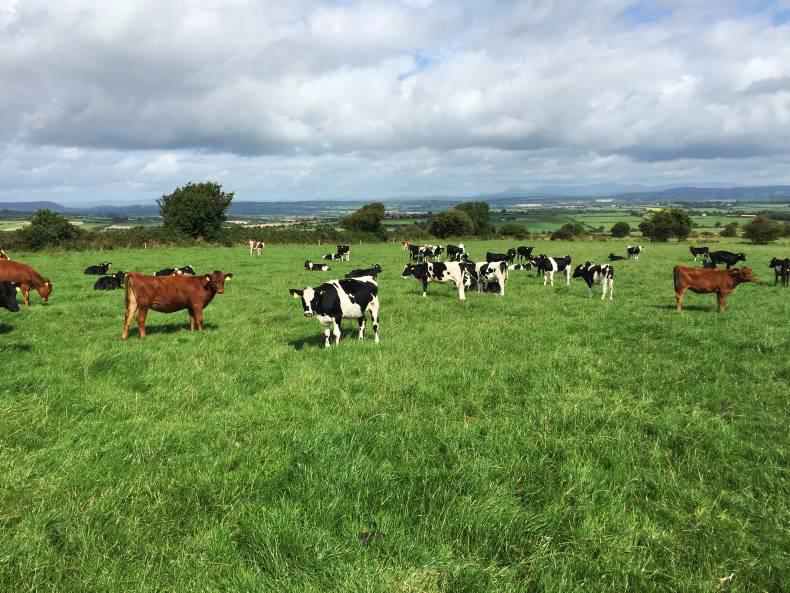
Weather: Most of the country has experienced torrential rain over the past week which is making grazing unpleasant, difficult or impossible, depending on where you are based and what soils you are farming. You can only do your best to manage your own situation. Feed mills would love to see all stock housed and the ration pumped in. In most cases, this should be a very last resort. A bit of craftwork with temporary fences will go a long way to alleviating many of the problems with heavy ground. On/off grazing, back-fencing and small allocations are the secret to keeping grass in the diet and must be used to get cows back out to grass as soon as possible.
The forecast looks like it will be dry for the weekend but mixed enough for early next week, so take the chances when they come. Farmers on drier land who have built up good grass covers should do a grazing plan for the week ahead – where to go in dry weather and where to go in wet weather. That’s what the business gurus call strategy planning.
Planning for winter: The year has crept on and the weather over the past week has focussed minds on the winter. Are all the sheds ready if cows need to be housed for a few hours in a hurry? With the Ploughing on next week, it will be difficult to get jobs done. Make a list of what needs attention and set a timeline for completion. Check that all gates, water drinkers and automatic scrapers are working. With cashflow going to be tight, do your best to fix things yourself or ask a neighbour or a friend for help and then return the favour. While silage yields were good this year with grass growth up on average, now is the time to check silage stocks and do a feed budget.
In many cases, there are more mouths to feed this winter and some of the pits have been opened already. As a rule of thumb, to calculate the amount of silage in a pit, measure the length by breadth by settled height in metres and divide by 1.35 to get tonnes equivalent. Then multiply by the dry matter to get the tonnes dry matter. A round bale of silage will have between 200kg and 300kg of silage dry matter depending how well packed it was and how dry the grass was at baling. A dairy cow will need about 330kg dry matter per month, while a weanling heifer will need about 150kg.
Ploughing: Jack Kennedy and I will be on the Irish Farmers Journal stand at the Ploughing Championships for the three days next week doing live demonstrations with weanling heifer calves. We will go through the management options to achieve good liveweight gains over the next six months in order to hit the target bulling weight next spring, along with discussing other issues on farm. I look forward to meeting you there.


SHARING OPTIONS