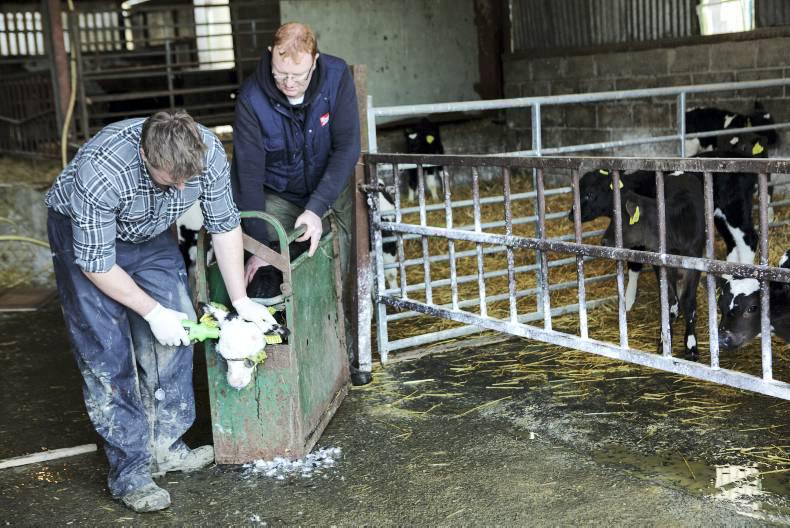
Hundreds of thousands calves will be dehorned on Irish farms over the coming week. The Irish Farmers Journal product tested five dehorners on the Irish market to find the best buy.
Dehorning calves is not a job most farmers like doing – it’s slow, labour-intensive and tough on the calf and the farmer. But it is a necessary job for health and safety, animal welfare and cross-compliance reasons as animals with horns are a danger to people, other animals and themselves.
While we call the job dehorning, really what we are doing is disbudding, as horns are not formed until the calf is a few months old. Most farmers will dehorn calves at between two and six weeks old. According to law, local anaesthetic must be used before dehorning on calves older than two weeks, but is recommended when dehorning all calves.
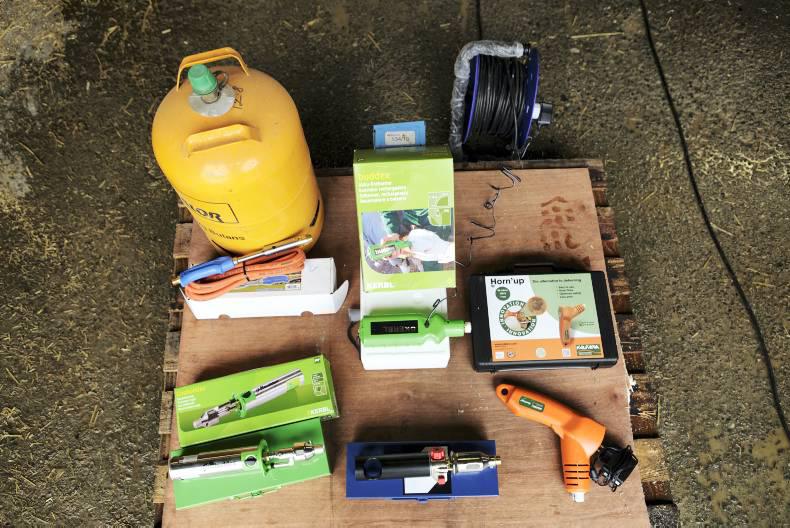
All of the dehorners we tested were designed to cauterise, or burn the buds and prevent horns developing.
ADVERTISEMENT
Three of the dehorners tested used gas, while two were rechargeable electrical. The five dehorners tested are available to buy online, or locally in farm shops.
The test
The purpose of the test is to identify the best buy, in terms of value for money, efficiency and usability. So each dehorner was ranked under the following criteria to get an overall score;
Ease of setup.
Time for iron to heat up.
Ease of use.
Comfort to hold and work with.
Safety between calves.
Time to dehorn.
Cleanliness of burn.
Weight of dehorner.
Price/value for money.
The test was carried out this week on a dairy farm in Tipperary.
How the
dehorners fared
Gas Buddex
The first dehorner we tested was the green Buddex gas dehorner manufactured by Kerbl. This dehorner cost €225 and comes with two gas canisters which are sufficient to dehorn about 25 calves each. Each canister costs about €7. After a few minutes fiddling with the settings we got it lit up. It was the slowest of all dehorners to get to operating temperature at two minutes and 20 seconds. Once fired up, it kept its heat throughout. From a usability point of view, the dehorner performed well. There was no flame from the tip so hair around the horn wasn’t catching fire and it was less smoky than some of the others. The frame of the dehorner is a bit chunky – it’s grand if you have big hands but it could be uncomfortable to hold for someone with small hands. The dehorner gave a good quick clean burn and the bud did not remain in the tip, which was good.
Express
Next up was the Express gas dehorner (€175), which looks similar to the Gas Buddex in that the gas canisters are screwed up into it. The ignition and head are slightly different in the Express. The first thing we observed was that it was much easier to light than the Buddex – one press of the ignition and it was lit. The Express got to its operating temperature in one minute and 40 seconds.
In terms of usability, it performed similarly well to the Buddex, giving a good quick and clean burn. The tip on the Express was the sharpest of all the dehorners so it gave a really clean burn. In fact, the big risk with all the gas dehorners was to go too deep and draw blood, which happened on one occasion. The same criticism of the frame applies to the Express, the handle is too big and not comfortable to hold.
Gas cylinder
The next dehorner was the conventional gas dehorner, with the gas coming from a large cylinder via a hose. The dehorning unit itself cost €105 but this is connected to the gas cylinder via a regulator and this costs a further €28. The cylinder of gas is also needed and this costs about €30 but should be sufficient to do a couple of hundred calves.
To get this dehorner hot, you simply connect to the gas, turn it on and then light the tip with a spark from a lighter or a match. It took one minute and 40 seconds for this gas dehorner to get to operating temperature. This was our favourite dehorner. It was really comfortable to use, the shape of the handle gave the user great control and leverage. The hose to the gas cylinder didn’t get in the way so it wasn’t a nuisance. The downside to this dehorner was the flame which burns some of the hair on the calve’s head and causes extra smoke. It was definitely the smokiest dehorner on trial. The flame also caused a health and safety issue as you can’t leave it down on the ground when loading the next calf in case some straw catches fire.
Horn-up
This dehorner was the most expensive one tested at €360. This is a rechargeable electric dehorner. The first charge should be for 16 hours and, after a full charge, the manual states that the Horn-up should do 80 calves. The Horn-up works in a different way to the gas dehorners. Basically, you put the tip of the Horn-up over the horn, press a button and it heats up. You then have to rotate the tip around a couple of times. The heat only lasts for about seven seconds, which is just sufficient to burn a ring around the horn. In our test, we wanted to remove the bud so we had to press the button again to heat up the device.
Of all the dehorners, this was the slowest to dehorn a calf. The heat just didn’t last long enough to get a nice clean burn and the tip of the dehorner wasn’t sharp at all so it took fair force to remove the bud. Now, it could be argued the Horn-up isn’t designed to remove the bud, but most Irish farmers would prefer to see the bud removed as it guarantees no horn growth. The manual states that hair around the horn should be removed with an electric clippers. We were only using a scissors to cut the hair so this probably reduced the contact between the tip and the horn. Considering the price of the Horn-up, we were unsatisfied with its performance in this test.
Electric Buddex
The final dehorner to be trialled was the Buddex electric dehorner, which worked on the same principle as the Horn-up. Again, this needs to be charged up before use, and when fully charged the manual says that it should dehorn up to 40 calves. On our temperature test, the Buddex electric dehorner produced the most heat quickest, but like the Horn-up it didn’t last long at only seven or eight seconds so it took a couple of attempts to remove the bud.
In terms of usability, the shape of the Buddex is rectangular, so it’s not very comfortable to hold. While lighter, the Horn-up is shaped like a pistol so is easier to hold than the Buddex. The tip, similar to the Horn-up, is blunt, so removing the bud takes a good bit of effort. One thing that we did like about the Buddex was the on button, which is built into the tip and activates when pressure is applied to the tip so it turns on by itself when it comes in contact with the horn.
Register for free to read this story and our free stories.
This content is available to digital subscribers and loyalty code users only. Sign in to your account, use the code or subscribe to get unlimited access.
The reader loyalty code gives you full access to the site from when you enter it until the following Wednesday at 9pm. Find your unique code on the back page of Irish Country Living every week.
CODE ACCEPTED
You have full access to the site until next Wednesday at 9pm.
CODE NOT VALID
Please try again or contact support.
Dehorning calves is not a job most farmers like doing – it’s slow, labour-intensive and tough on the calf and the farmer. But it is a necessary job for health and safety, animal welfare and cross-compliance reasons as animals with horns are a danger to people, other animals and themselves.
While we call the job dehorning, really what we are doing is disbudding, as horns are not formed until the calf is a few months old. Most farmers will dehorn calves at between two and six weeks old. According to law, local anaesthetic must be used before dehorning on calves older than two weeks, but is recommended when dehorning all calves.
All of the dehorners we tested were designed to cauterise, or burn the buds and prevent horns developing.
Three of the dehorners tested used gas, while two were rechargeable electrical. The five dehorners tested are available to buy online, or locally in farm shops.
The test
The purpose of the test is to identify the best buy, in terms of value for money, efficiency and usability. So each dehorner was ranked under the following criteria to get an overall score;
Ease of setup.
Time for iron to heat up.
Ease of use.
Comfort to hold and work with.
Safety between calves.
Time to dehorn.
Cleanliness of burn.
Weight of dehorner.
Price/value for money.
The test was carried out this week on a dairy farm in Tipperary.
How the
dehorners fared
Gas Buddex
The first dehorner we tested was the green Buddex gas dehorner manufactured by Kerbl. This dehorner cost €225 and comes with two gas canisters which are sufficient to dehorn about 25 calves each. Each canister costs about €7. After a few minutes fiddling with the settings we got it lit up. It was the slowest of all dehorners to get to operating temperature at two minutes and 20 seconds. Once fired up, it kept its heat throughout. From a usability point of view, the dehorner performed well. There was no flame from the tip so hair around the horn wasn’t catching fire and it was less smoky than some of the others. The frame of the dehorner is a bit chunky – it’s grand if you have big hands but it could be uncomfortable to hold for someone with small hands. The dehorner gave a good quick clean burn and the bud did not remain in the tip, which was good.
Express
Next up was the Express gas dehorner (€175), which looks similar to the Gas Buddex in that the gas canisters are screwed up into it. The ignition and head are slightly different in the Express. The first thing we observed was that it was much easier to light than the Buddex – one press of the ignition and it was lit. The Express got to its operating temperature in one minute and 40 seconds.
In terms of usability, it performed similarly well to the Buddex, giving a good quick and clean burn. The tip on the Express was the sharpest of all the dehorners so it gave a really clean burn. In fact, the big risk with all the gas dehorners was to go too deep and draw blood, which happened on one occasion. The same criticism of the frame applies to the Express, the handle is too big and not comfortable to hold.
Gas cylinder
The next dehorner was the conventional gas dehorner, with the gas coming from a large cylinder via a hose. The dehorning unit itself cost €105 but this is connected to the gas cylinder via a regulator and this costs a further €28. The cylinder of gas is also needed and this costs about €30 but should be sufficient to do a couple of hundred calves.
To get this dehorner hot, you simply connect to the gas, turn it on and then light the tip with a spark from a lighter or a match. It took one minute and 40 seconds for this gas dehorner to get to operating temperature. This was our favourite dehorner. It was really comfortable to use, the shape of the handle gave the user great control and leverage. The hose to the gas cylinder didn’t get in the way so it wasn’t a nuisance. The downside to this dehorner was the flame which burns some of the hair on the calve’s head and causes extra smoke. It was definitely the smokiest dehorner on trial. The flame also caused a health and safety issue as you can’t leave it down on the ground when loading the next calf in case some straw catches fire.
Horn-up
This dehorner was the most expensive one tested at €360. This is a rechargeable electric dehorner. The first charge should be for 16 hours and, after a full charge, the manual states that the Horn-up should do 80 calves. The Horn-up works in a different way to the gas dehorners. Basically, you put the tip of the Horn-up over the horn, press a button and it heats up. You then have to rotate the tip around a couple of times. The heat only lasts for about seven seconds, which is just sufficient to burn a ring around the horn. In our test, we wanted to remove the bud so we had to press the button again to heat up the device.
Of all the dehorners, this was the slowest to dehorn a calf. The heat just didn’t last long enough to get a nice clean burn and the tip of the dehorner wasn’t sharp at all so it took fair force to remove the bud. Now, it could be argued the Horn-up isn’t designed to remove the bud, but most Irish farmers would prefer to see the bud removed as it guarantees no horn growth. The manual states that hair around the horn should be removed with an electric clippers. We were only using a scissors to cut the hair so this probably reduced the contact between the tip and the horn. Considering the price of the Horn-up, we were unsatisfied with its performance in this test.
Electric Buddex
The final dehorner to be trialled was the Buddex electric dehorner, which worked on the same principle as the Horn-up. Again, this needs to be charged up before use, and when fully charged the manual says that it should dehorn up to 40 calves. On our temperature test, the Buddex electric dehorner produced the most heat quickest, but like the Horn-up it didn’t last long at only seven or eight seconds so it took a couple of attempts to remove the bud.
In terms of usability, the shape of the Buddex is rectangular, so it’s not very comfortable to hold. While lighter, the Horn-up is shaped like a pistol so is easier to hold than the Buddex. The tip, similar to the Horn-up, is blunt, so removing the bud takes a good bit of effort. One thing that we did like about the Buddex was the on button, which is built into the tip and activates when pressure is applied to the tip so it turns on by itself when it comes in contact with the horn.
If you would like to speak to a member of our team, please call us on 01-4199525.
Link sent to your email address
We have sent an email to your address. Please click on the link in this email to reset your password. If you can't find it in your inbox, please check your spam folder. If you can't find the email, please call us on 01-4199525.
ENTER YOUR LOYALTY CODE:
The reader loyalty code gives you full access to the site from when you enter it until the following Wednesday at 9pm. Find your unique code on the back page of Irish Country Living every week.





SHARING OPTIONS