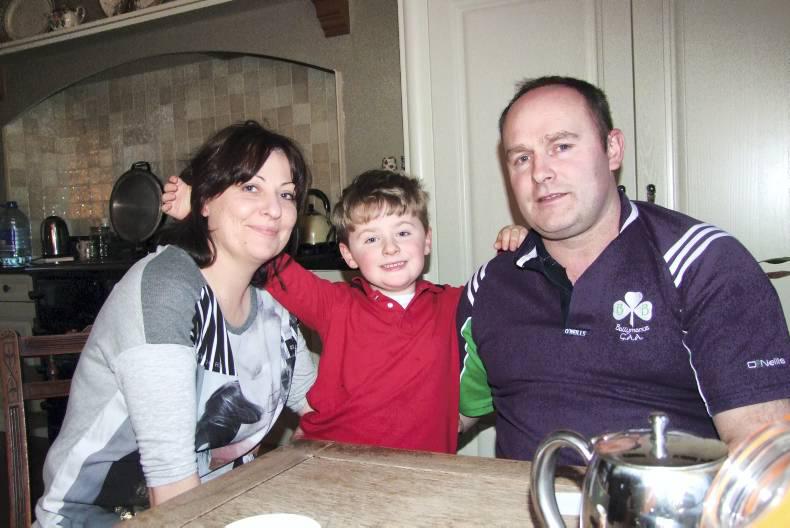
Joe and Siobhán Clancy made the 200km move from farming in south Wicklow to Strokestown in north Roscommon in 2012, in an effort to live their dream of farming full-time on a larger farm. Their experience of moving family and farming life provides an interesting insight into what farmers and their families need to consider when contemplating such a major move.
Joe Clancy had been farming all his life in Tinahely, Co Wicklow, on the family farm and then in his own right as a part-time farmer along with his career as an electrician. Joe’s farming experience extends back to childhood, working beside his late father, seeing his pride in his purebred Charolais cattle on his small but fragmented farm in Wicklow.
Life changed for Joe in late 2007 as the economy crashed and electrical work disappeared. That was the year that his father passed away, so Joe’s ties with Wicklow were not as strong as before. He spent more time farming than at electrical work and now set about planning a full-time career in farming.
The farm at Tinahely was too small and fragmented. He was spending too much time on the road between plots of land, his own and rented. His wife Siobhán is from Knockrockery in south Roscommon and she was starting to do some part-time nursing work at home.
Heading west
With plans to move to a bigger farm in their heads, they headed west towards Roscommon, but not really expecting to find their dream house and farm. It was when Siobhán was working the June bank holiday Sunday in 2012 that Joe and his son Luke went for a drive to explore a farm that was being sold at Toberpatrick, Kiltrustan, outside Strokestown in north Roscommon. They were out for a drive as much as anything else.
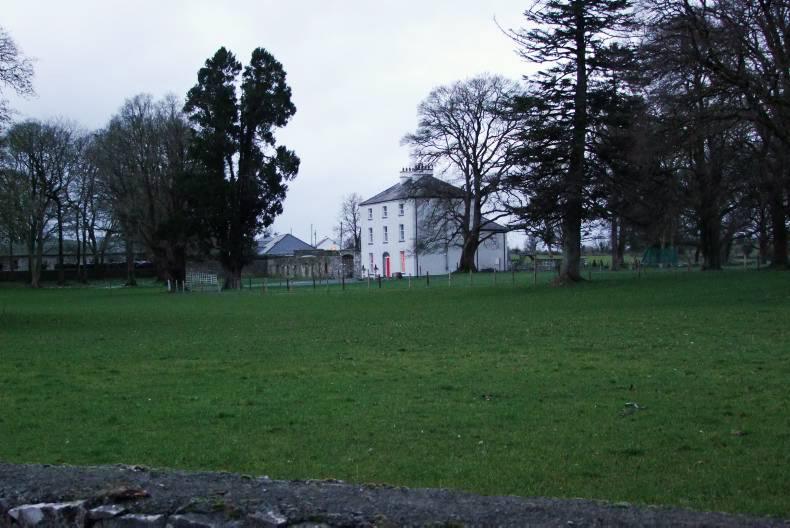
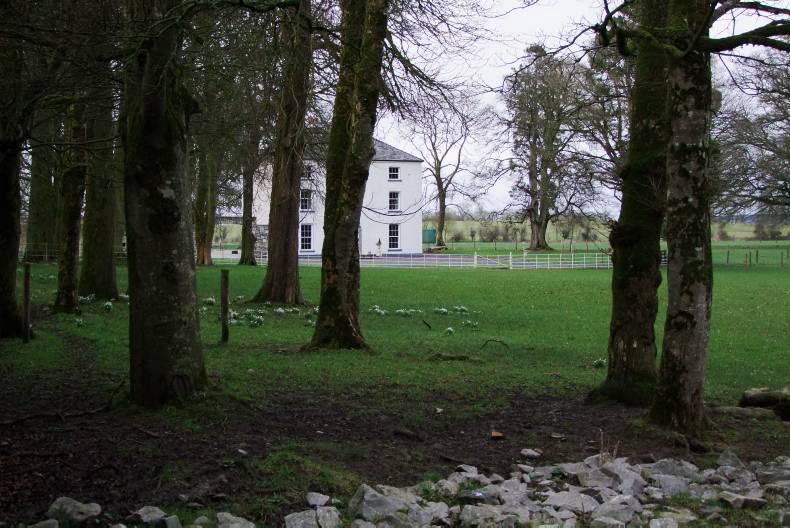
When Joe and Luke arrived at the derelict Toberpatrick House it was raining so heavily that Joe didn’t even get out of his van to explore. The following day Siobhán persuaded him to bring her up for a look, even though he had told her that it was a lovely place, but just too big a project from them to take on.
“Back in Wicklow we had renovated an old barn, and built our own house and I just wanted something simple,” says Joe. “I felt that it was lovely, but too much for us.
Siobhán was off work the following day and wanted to see it for herself. “Siobhán hadn’t got to the back door and she had moved in,” says Joe. “We were both bitten by the dream of a bigger farm in one block and an impressive but derelict house in a fabulous setting.”
Huge undertaking
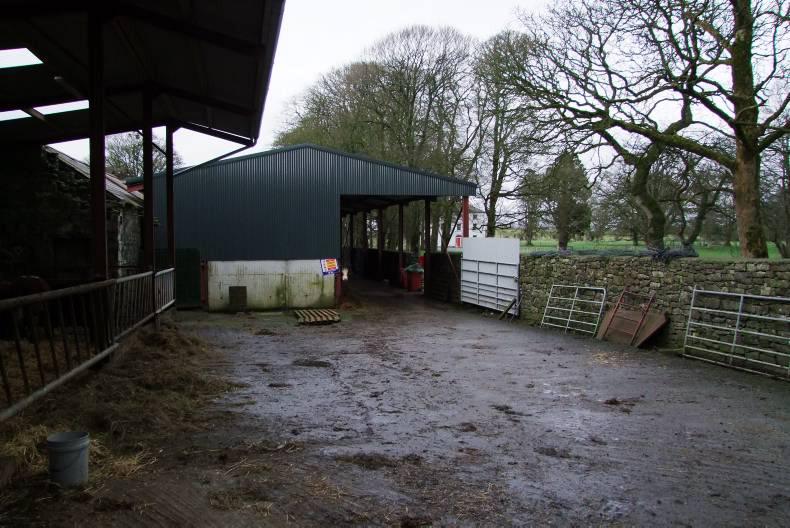
What Joe and Siobhán were about to undertake was a project of major proportions. They quickly agreed a price to buy Toberpatrick and within weeks had their farm and house in Tinahely, over 200km away, up for sale.
“People might think it’s strenuous moving from a house to a house. To move house contents, farm contents, machinery and livestock and keep all that going as well as renting house and rebuilding an old one, was a major undertaking,” says Joe.
“All of this including dealing with a solicitor in Wicklow on the sale of our farm and house, as well as a solicitor in Roscommon on the purchase of Toberpatrick, was a major operation and I still wonder how we did it all,” he adds.
They bought Toberpatrick House and its 135-acre farm in June 2012, sold their place in Wicklow in October and then moved to a rented house and the farm in November of the same year. They had very little money to buy Toberpatrick, so were relying on the successful sale in Tinahely to fund the move and house rebuild without any borrowings.
Getting their home and farm sold and getting the money to move was a hugely stressful time.
“We had to go to auction with the farm and house as we wanted a quick move and we were not in a position to bargain in a private treaty sale,” says Joe.
He found the day of that auction to be very emotional.
“I was selling, I wasn’t coming home without selling. I found that day hugely emotional and was not in any position to bargain, even though the buyers didn’t know that. In my own head, I had to put it on the market and I had to get the necessary money for here (Toberpatrick). We got enough to develop the house, thank God,” says Joe, with some measure of relief.
Toberpatrick House was in a bad state. “We had no electricity, no doors, no water, no windows, a roof and four walls, and holes in the floor – the work was huge,” says Joe. With a lot of effort, energy and skills, they were able to move into the house in May 2013, just about six months later.
Useful hints
Reflecting on the move, the Clancys have some useful hints for those contemplating a move to a new farm. Their experiences provide invaluable guidance for what is a major move for an entire family.
There were issues around seeking Department of Agriculture clearance for the move as Joe and Siobhán were moving their cattle and sheep from Wicklow to Roscommon. All of the cattle were tested first in Wicklow and then transported to Roscommon. They were then tested again in Roscommon within a few days.
The longer journey west was stressful on the animals, according to Joe, as many of the suckler cows had recently calved and the ewes were heavy in lamb. “My advice to drystock farmers is to sell their animals before such a move. It would have been easier on us as a family to have the winter away from the stock. It would have given me more time to spend on the house, rather than running between calving cows, lambing ewes, trying to rebuild the house and occasionally minding our son Luke.”
“It also would have been easier on the animals,” he adds. “That winter will never be forgotten; the following spring will not be forgotten either.”
There were issues around changing to new herd numbers, making arrangements for transferring entitlements and Single Farm Payments that took months to resolve. This delay had a significant impact on cashflow on the farm, and Joe was conscious that suppliers needed to be paid for feed and fertiliser.
Farm not digitized
The farm at Toberpatrick was not digitized when the Clancys bought it, but they did not realise how important that would be in moving the changes through the Department’s processes.
“My advice to anyone buying a farm is make sure that it is digitised before you buy it,” says Joe. “This can save so much time, as we found out.”
There were issues around moving banks that were also slow to resolve. Bank and Department changes required time-consuming legal intervention. So much for a click to move your accounts.
On a practical farm front, Joe reckons that time of year is important if moving to a new farm. “If you are a drystock or suckler/sheep farmer, I think that March and April are the best months to move with your stock,” he adds.
“You need time to understand your winter feeding needs for the coming year and you need time to prepare to have enough silage to get you over that period,” says Joe. “Otherwise, sell all of the stock and buy new stock for the new farm,” he advises.
Farming in Roscommon is not much different from farming in Wicklow, according to Joe. While the rainfall is heavier in Roscommon and the ground takes longer to dry out, a lot is down to individual farm management.
“We will have grass here as quickly as in Wicklow as most of this farm is dry relative to some other farms in the area. I have reseeded much of the farm and applied two tonnes of lime, along with fertiliser, so I plan to let out lighter heifers by the middle of March,” says Joe.
Getting contacts
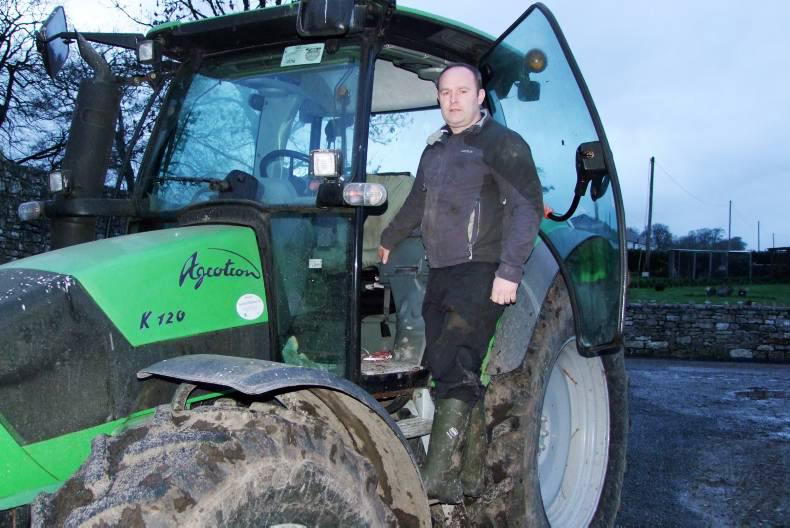
Joe brought all of his farm machinery from Wicklow to Roscommon, including two tractors. Getting a tractor service was an issue initially – that is until more recently he was able to locate someone with good Deutz-Fahr experience.
“We made contact with a local vet through a contact – a friend of ours in Wicklow. It turns out that they were classmates during their veterinary college years, so that was a useful connection to make,” says Joe.
When you move to a new farm, the huge network that grows with you is cut off and you don’t know one person in your new locality.
“Back in Wicklow I used to go to Carnew mart every Saturday and I knew every single person in it. It was a sort of social outing as much as anything else.”
“I went to Elphin mart about three times since we moved and I found that I didn’t know anybody. I suppose that I didn’t give it a chance, and soon I found that I wasn’t buying stock myself, something I used to really enjoy,” says Joe.
“It is easy to become introverted and be comfortable here on the farm. I plan to start going to the mart again, even though I still haven’t got into it just yet.”
Making a move to a new farm means making new contacts and getting some local knowledge about the range of services that a farm and family require. On a family front, this means finding a local doctor, deciding on the dentist and identifying the most suitable local town for your shopping.
Joe and Siobhán’s new neighbours in Kiltrustan, as well as the former owner of Toberpatrick House, were all very helpful in giving good advice in these practical family areas. “We have been blessed with great neighbours and we couldn’t brag enough about them. They have made a big effort for us, helping us to become established and part of our new community with a warm welcome,” they say.
Farming full-time
It didn’t take long for Joe and Siobhán to see that farming full-time was not going to work financially. The dream of more acreage in a single block with no rented land and no borrowings was to allow Joe to be a full-time farmer.
“I had worked out the figures and the dream was to sell Wicklow to fund here to give more acreage for 80 suckler cows so as to generate a good enough income with no borrowings on the farm. We now know that it won’t work”, he explained.
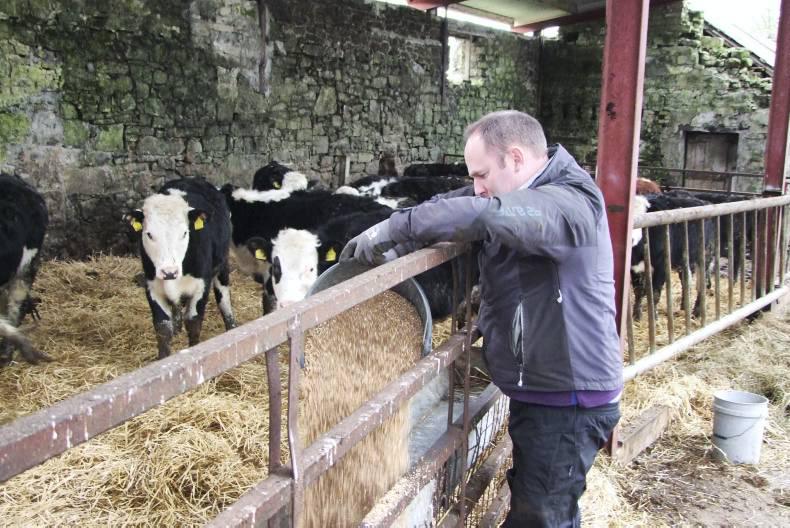
He considered dairying but the costs are too high. He has now opted for drystock rearing heifers, feeding them on silage and meal and selling them off grass the following year, with a target of between 50 and 70 animals per year. The sheep are now gone.
Joe took a part-time job in 2013 and returned to full-time employment the following year with Dunreidy Engineering, who he had worked with many years before. He commutes to Dublin each day. Siobhán is back part-time nursing in Roscommon.
Siobhán believes that the big challenge of restoring the house and enhancing the farm was one that suited Joe. “Sometimes we sit back and look at what we have done and say a large ‘wow’.”
The extent of the project has just about caught up with Joe now. “We were caught in a bubble, lambing ewes, calving cows and building a house and minding Luke some days as a baby. We had everything going on, it was huge. I understand now what we’ve done. I would have brushed it off at the time, but I wouldn’t do it again.”
Did they find any surprises on the farm? “While we have found no riches of any kind in the old house, we have lived the dream. It’s still a dream and it’s lovely to see an old place lived in again, to see lights in a place that was derelict,” they both agree.
Joe and
Siobhán’s
advice
for moving
farm
•Make sure that the farm is digitised.
• Sell animals if moving in any month other than March and April.
• Don’t move to a farm and rebuild a house at the same time.
• Plan your winter feeding needs in good time.
Read more
Agricultural land price report 2015
Joe and Siobhán Clancy made the 200km move from farming in south Wicklow to Strokestown in north Roscommon in 2012, in an effort to live their dream of farming full-time on a larger farm. Their experience of moving family and farming life provides an interesting insight into what farmers and their families need to consider when contemplating such a major move.
Joe Clancy had been farming all his life in Tinahely, Co Wicklow, on the family farm and then in his own right as a part-time farmer along with his career as an electrician. Joe’s farming experience extends back to childhood, working beside his late father, seeing his pride in his purebred Charolais cattle on his small but fragmented farm in Wicklow.
Life changed for Joe in late 2007 as the economy crashed and electrical work disappeared. That was the year that his father passed away, so Joe’s ties with Wicklow were not as strong as before. He spent more time farming than at electrical work and now set about planning a full-time career in farming.
The farm at Tinahely was too small and fragmented. He was spending too much time on the road between plots of land, his own and rented. His wife Siobhán is from Knockrockery in south Roscommon and she was starting to do some part-time nursing work at home.
Heading west
With plans to move to a bigger farm in their heads, they headed west towards Roscommon, but not really expecting to find their dream house and farm. It was when Siobhán was working the June bank holiday Sunday in 2012 that Joe and his son Luke went for a drive to explore a farm that was being sold at Toberpatrick, Kiltrustan, outside Strokestown in north Roscommon. They were out for a drive as much as anything else.
When Joe and Luke arrived at the derelict Toberpatrick House it was raining so heavily that Joe didn’t even get out of his van to explore. The following day Siobhán persuaded him to bring her up for a look, even though he had told her that it was a lovely place, but just too big a project from them to take on.
“Back in Wicklow we had renovated an old barn, and built our own house and I just wanted something simple,” says Joe. “I felt that it was lovely, but too much for us.
Siobhán was off work the following day and wanted to see it for herself. “Siobhán hadn’t got to the back door and she had moved in,” says Joe. “We were both bitten by the dream of a bigger farm in one block and an impressive but derelict house in a fabulous setting.”
Huge undertaking
What Joe and Siobhán were about to undertake was a project of major proportions. They quickly agreed a price to buy Toberpatrick and within weeks had their farm and house in Tinahely, over 200km away, up for sale.
“People might think it’s strenuous moving from a house to a house. To move house contents, farm contents, machinery and livestock and keep all that going as well as renting house and rebuilding an old one, was a major undertaking,” says Joe.
“All of this including dealing with a solicitor in Wicklow on the sale of our farm and house, as well as a solicitor in Roscommon on the purchase of Toberpatrick, was a major operation and I still wonder how we did it all,” he adds.
They bought Toberpatrick House and its 135-acre farm in June 2012, sold their place in Wicklow in October and then moved to a rented house and the farm in November of the same year. They had very little money to buy Toberpatrick, so were relying on the successful sale in Tinahely to fund the move and house rebuild without any borrowings.
Getting their home and farm sold and getting the money to move was a hugely stressful time.
“We had to go to auction with the farm and house as we wanted a quick move and we were not in a position to bargain in a private treaty sale,” says Joe.
He found the day of that auction to be very emotional.
“I was selling, I wasn’t coming home without selling. I found that day hugely emotional and was not in any position to bargain, even though the buyers didn’t know that. In my own head, I had to put it on the market and I had to get the necessary money for here (Toberpatrick). We got enough to develop the house, thank God,” says Joe, with some measure of relief.
Toberpatrick House was in a bad state. “We had no electricity, no doors, no water, no windows, a roof and four walls, and holes in the floor – the work was huge,” says Joe. With a lot of effort, energy and skills, they were able to move into the house in May 2013, just about six months later.
Useful hints
Reflecting on the move, the Clancys have some useful hints for those contemplating a move to a new farm. Their experiences provide invaluable guidance for what is a major move for an entire family.
There were issues around seeking Department of Agriculture clearance for the move as Joe and Siobhán were moving their cattle and sheep from Wicklow to Roscommon. All of the cattle were tested first in Wicklow and then transported to Roscommon. They were then tested again in Roscommon within a few days.
The longer journey west was stressful on the animals, according to Joe, as many of the suckler cows had recently calved and the ewes were heavy in lamb. “My advice to drystock farmers is to sell their animals before such a move. It would have been easier on us as a family to have the winter away from the stock. It would have given me more time to spend on the house, rather than running between calving cows, lambing ewes, trying to rebuild the house and occasionally minding our son Luke.”
“It also would have been easier on the animals,” he adds. “That winter will never be forgotten; the following spring will not be forgotten either.”
There were issues around changing to new herd numbers, making arrangements for transferring entitlements and Single Farm Payments that took months to resolve. This delay had a significant impact on cashflow on the farm, and Joe was conscious that suppliers needed to be paid for feed and fertiliser.
Farm not digitized
The farm at Toberpatrick was not digitized when the Clancys bought it, but they did not realise how important that would be in moving the changes through the Department’s processes.
“My advice to anyone buying a farm is make sure that it is digitised before you buy it,” says Joe. “This can save so much time, as we found out.”
There were issues around moving banks that were also slow to resolve. Bank and Department changes required time-consuming legal intervention. So much for a click to move your accounts.
On a practical farm front, Joe reckons that time of year is important if moving to a new farm. “If you are a drystock or suckler/sheep farmer, I think that March and April are the best months to move with your stock,” he adds.
“You need time to understand your winter feeding needs for the coming year and you need time to prepare to have enough silage to get you over that period,” says Joe. “Otherwise, sell all of the stock and buy new stock for the new farm,” he advises.
Farming in Roscommon is not much different from farming in Wicklow, according to Joe. While the rainfall is heavier in Roscommon and the ground takes longer to dry out, a lot is down to individual farm management.
“We will have grass here as quickly as in Wicklow as most of this farm is dry relative to some other farms in the area. I have reseeded much of the farm and applied two tonnes of lime, along with fertiliser, so I plan to let out lighter heifers by the middle of March,” says Joe.
Getting contacts
Joe brought all of his farm machinery from Wicklow to Roscommon, including two tractors. Getting a tractor service was an issue initially – that is until more recently he was able to locate someone with good Deutz-Fahr experience.
“We made contact with a local vet through a contact – a friend of ours in Wicklow. It turns out that they were classmates during their veterinary college years, so that was a useful connection to make,” says Joe.
When you move to a new farm, the huge network that grows with you is cut off and you don’t know one person in your new locality.
“Back in Wicklow I used to go to Carnew mart every Saturday and I knew every single person in it. It was a sort of social outing as much as anything else.”
“I went to Elphin mart about three times since we moved and I found that I didn’t know anybody. I suppose that I didn’t give it a chance, and soon I found that I wasn’t buying stock myself, something I used to really enjoy,” says Joe.
“It is easy to become introverted and be comfortable here on the farm. I plan to start going to the mart again, even though I still haven’t got into it just yet.”
Making a move to a new farm means making new contacts and getting some local knowledge about the range of services that a farm and family require. On a family front, this means finding a local doctor, deciding on the dentist and identifying the most suitable local town for your shopping.
Joe and Siobhán’s new neighbours in Kiltrustan, as well as the former owner of Toberpatrick House, were all very helpful in giving good advice in these practical family areas. “We have been blessed with great neighbours and we couldn’t brag enough about them. They have made a big effort for us, helping us to become established and part of our new community with a warm welcome,” they say.
Farming full-time
It didn’t take long for Joe and Siobhán to see that farming full-time was not going to work financially. The dream of more acreage in a single block with no rented land and no borrowings was to allow Joe to be a full-time farmer.
“I had worked out the figures and the dream was to sell Wicklow to fund here to give more acreage for 80 suckler cows so as to generate a good enough income with no borrowings on the farm. We now know that it won’t work”, he explained.
He considered dairying but the costs are too high. He has now opted for drystock rearing heifers, feeding them on silage and meal and selling them off grass the following year, with a target of between 50 and 70 animals per year. The sheep are now gone.
Joe took a part-time job in 2013 and returned to full-time employment the following year with Dunreidy Engineering, who he had worked with many years before. He commutes to Dublin each day. Siobhán is back part-time nursing in Roscommon.
Siobhán believes that the big challenge of restoring the house and enhancing the farm was one that suited Joe. “Sometimes we sit back and look at what we have done and say a large ‘wow’.”
The extent of the project has just about caught up with Joe now. “We were caught in a bubble, lambing ewes, calving cows and building a house and minding Luke some days as a baby. We had everything going on, it was huge. I understand now what we’ve done. I would have brushed it off at the time, but I wouldn’t do it again.”
Did they find any surprises on the farm? “While we have found no riches of any kind in the old house, we have lived the dream. It’s still a dream and it’s lovely to see an old place lived in again, to see lights in a place that was derelict,” they both agree.
Joe and
Siobhán’s
advice
for moving
farm
•Make sure that the farm is digitised.
• Sell animals if moving in any month other than March and April.
• Don’t move to a farm and rebuild a house at the same time.
• Plan your winter feeding needs in good time.
Read more
Agricultural land price report 2015





SHARING OPTIONS