


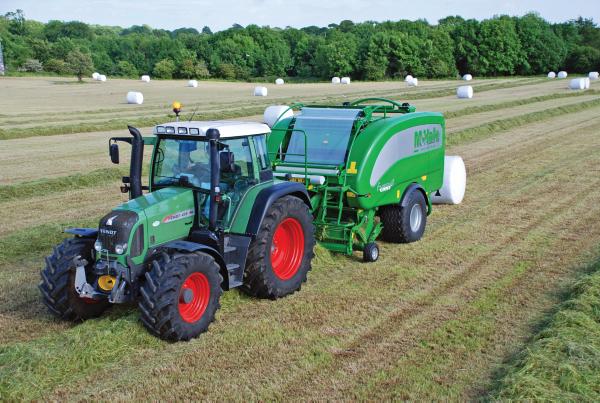
There will be a hive of activity on Stand 217 Row N as the Ballinrobe, Co Mayo-based company unveils the new Fusion 3 Plus combination baler and wrapper for the film on film application and the new RS4 bale splitter.
Why film on film
technology?
Traditionally, when silage or haylage was being made, twine or net wrap was applied to the bale to keep it together. This was followed by plastic wrapping to seal the bale which ensured that fermentation took place.
Over the last number of years, McHale has been working on a system which applies plastic onto the bale in the bale chamber. This eliminates the need to use net wrap or twine to keep the bale together as it passes from the baler to the bale wrapper. The concept of putting plastic onto the bale in the bale chamber and the subsequent wrapping of the bales is being referred to as the ‘film on film’ system.
Film on film
delivers better silage
James Heanue, McHale’s Irish sales manager, has worked closely on the development of the new system. James said: “Our product design engineers have been working on our film on film system for four years. We have run a number of machines around the factory in Ballinrobe for the last number of years. From what we are seeing, once farmers have experienced the increased silage quality which a film on film system delivers, they do not want to move back to more traditional methods.
“Silage quality is improved. For feed-out, the system makes the job much easier as there is only one form of plastic waste to deal with. Using a film on film system eliminates the need to separate the plastic from the net wrap for recycling.”
||PIC2||
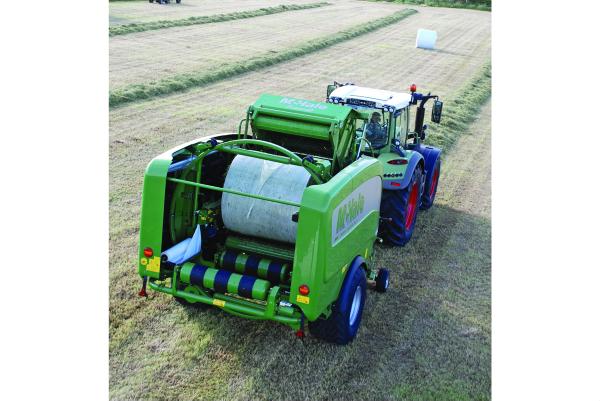
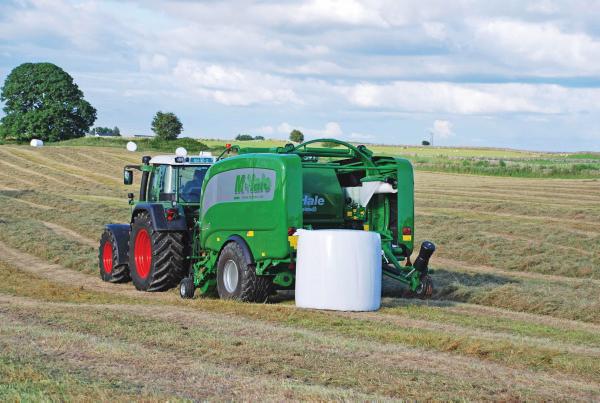
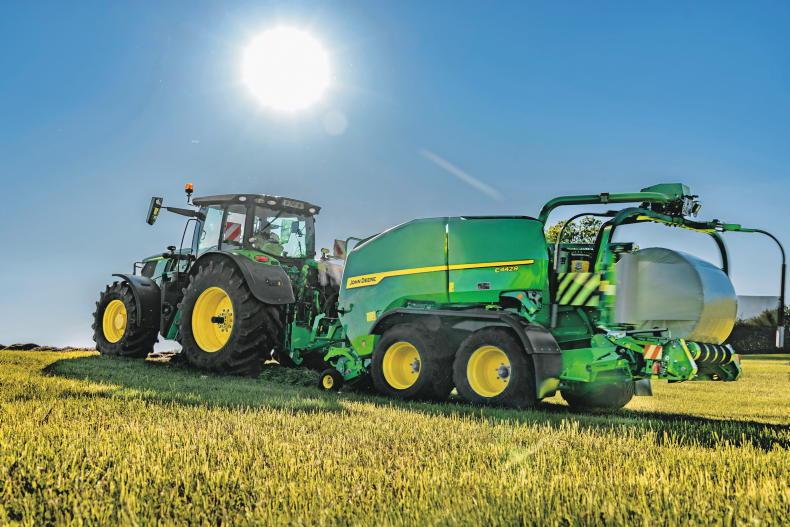
The new McHale Fusion 3 Plus is a combination baler and wrapper which can apply plastic to the barrel of the bale instead of twine or net wrap. McHale Engineering claims that there are a number of advantages to this system.
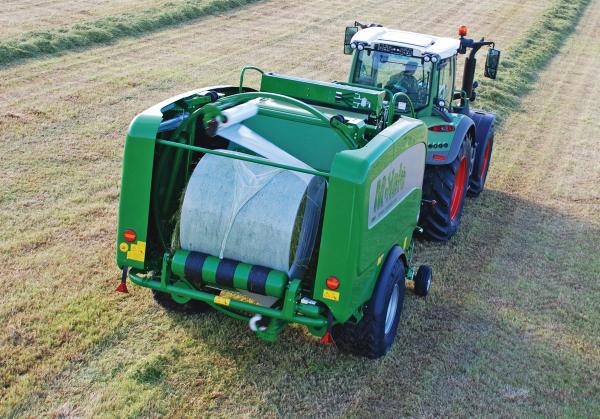
These include the fact that plastic which is added to the barrel of the bale to keep the bale together as the bale passes from the baler to the wrapper also forms part of the wrapping process. It adds value by placing more plastic on the largest surface of the bale.
When plastic is applied to the barrel of the bale, it can be stretched to approximately 20%. This stretch ratio is higher than what can be achieved with net wrap or twine. McHale claims that as a result the material is kept tighter which ultimately leads to better bale shape.
Because the plastic is being stretched as it is being applied to the barrel of the bale, it expels more air than net wrap. McHale also believes that this results in better silage quality.
||PIC3||
And finally, as plastic is used to both bind the bale in the bale chamber and to wrap the bale, during the winter on feed-out the farmer will be left with one form of waste. This reduces the time needed to feed the bale and avoids the unpleasant and time consuming job of separating the twine or net wrap from the plastic before the plastic can be recycled. This one form of waste results in feeding time being reduced.
Patented
technology
Over the last four years the McHale development team has been working with the Fusion Plus concept in various countries and in different climates. In the development of the McHale Fusion 3 Plus system, McHale realised that changes in temperature and sunlight could affect the chamber wrapping film. Researchers found that as the day got hotter or cooler, the film was either being overstretched or under stretched, and this, in turn, would cause reliability problems and result in inefficient film use.
||PIC4||
As a result, McHale developed a patented application system which adjusts the breaking force on the roll of plastic in-line to the working conditions. It allows for a continuously variable stretch which can adjust to changes on the day automatically without the operator having to adjust any settings.
The McHale patent film application system is claimed to ensure consistent film stretch, reliable film application and delivers optimum bale shape and bale density. The system also claims to reduce or eliminate the chances of film breaking due to overstretch on a hot day.
McHale Fusion 3 Plus – ISO Touch control unit
||PIC5||
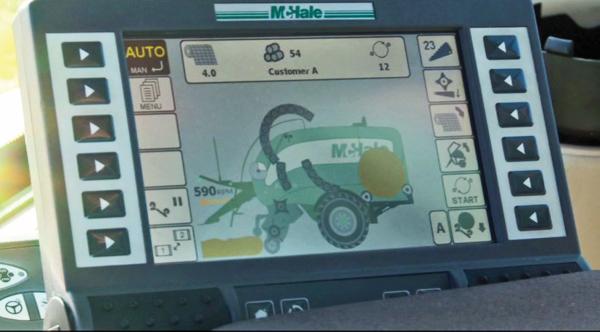
The McHale Fusion 3 Plus is a fully automatic machine which is controlled by the new McHale ISO Touch Control Unit. As the name suggests, the McHale ‘ISO Touch System’ has a colour seven-inch touch screen monitor, which allows for increased levels of monitoring through its colour graphic display.
Operators will be happy to know that McHale has also included a number of physical buttons on the side of the screen which can also control the machine functions for times when hands may be dirty.
The ISO Touch monitor also features a camera to monitor wrapper operation. The camera can work in two ways:
At any point in the cycle the operator can switch to camera mode to monitor the wrapper and rear of the machine.
In automatic mode, the camera will automatically come on the screen at a number of pre-determined points such as when the bale tip is pressed, when the bale transfer takes place and when the first layer of plastic are being applied to the bale by the vertical wrapping ring.
Net wrap can still be used if required, according to James Heanue of McHale. The McHale Fusion 3 Plus can also use net wrap and the switchover process is very simple. If the operator is doing hay or straw, the switch back to net wrap is simple and user friendly.
Chopper Unit
Over the last decade, Fusion machines were supplied with 23 knives as standard. The chopper unit on the McHale Fusion 3 Plus is fitted with 25 knives to give better chopping.
James Heanue said: “When ordering a McHale Fusion 3 Plus, the customer has the option to upgrade the chopper unit on the machine to a selectable knife system, which provides three options: engage and chop with a bank of 12 knives, or with a bank of 13 kniv es. Should fine chopping be required, the operator can choose to engage both knife banks, which will give a 25-knife chopper system, capable of delivering a chop length of approximately 46mm.”
James added: “We have a number of Fusion 3 Plus machines already at work in Ireland, Norway, Holland, Belgium and New Zealand and the concept of film on film is growing quickly.
“The McHale Fusion 3 Plus gives contractors a way to offer a new concept and differentiate themselves from their competition by providing a product which can deliver better silage quality.”




SHARING OPTIONS