

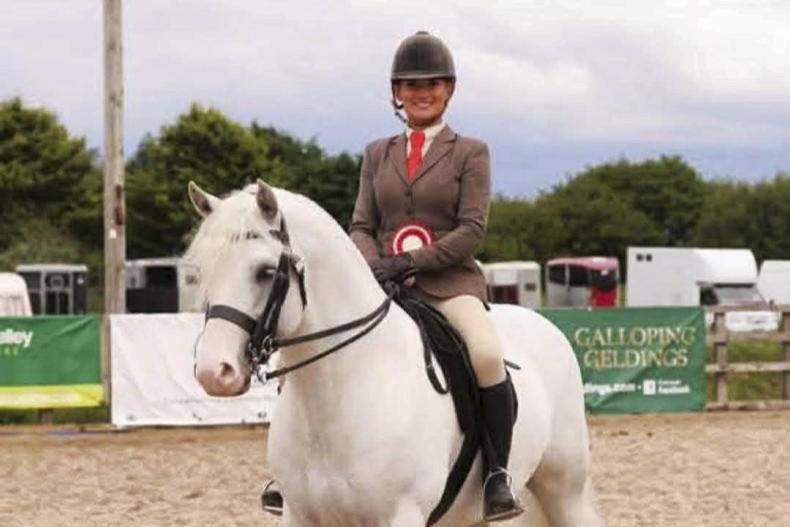
The value of a good mare should never be underestimated. Those fortunate to have bred from a great Connemara broodmare know she is worth her weight in gold. While sire and dam contribute equally in nuclear DNA, the maternal line exerts additional influence through mitochondrial inheritance, temperament, and the cumulative effects of health and nurture. The mare not only carries the foal; she shapes him.
As the Connemara breed continues into another century, careful evaluation and retention of quality broodmares has never been more important. The pony’s global popularity is steady, with 3,284 foals recorded last year by the Connemara Pony Breeders’ Society. As breeding season approaches, conversations often centre on stallion selection.
For breeders intent on consistently producing quality ponies, the importance of the mare selected to breed from should not be undermined. The foundation of an enduring breeding programme lies in the mare herd, understanding strengths and weaknesses of each individual, while breeding with a long-term view rather than responding to market trends.
A true example of someone developing a strong broodmare herd is Fiona Grimes of Copperbeech Connemaras, Co Mayo. Producing four generations of Connemara Pony Show Champions, Copperbeech ponies’ success is built on careful cultivation of dam lines that consistently stamp their stock with quality. Having competed Connemaras through her teenage years, breeding was a natural progression.
When Fiona and husband Tomás established Copperbeech Connemara Ponies at their Ballinrobe home over 20 years ago, they did so while growing a young family and building a yard. Their breeding programme was founded on Curragh Court Lady (Clonberne Boy x Clydagh Marie), a mare bred by Fiona’s late father Willie Donelon. She was joined by Lishín Star (Glencarrig Prince x Dunlewey Lisheen Liath), bred by Joe Cunniffe, and Lackragh Beauty (Carra Cashel x Carnawre Dolly), bred by Tim Connor.
These three mares went on to achieve remarkable success; Lackragh Beauty stood Connemara Pony Show - Clifden Supreme Champion in 2016 and Lishín Star took Reserve Supreme Champion in 2019.
“I’m a mare person,” Fiona says. “The broodmare is your foundation, shaping your programme for generations.”
Each of her foundation mares shared traits she seeks in a Connemara, describing them as embodying femininity without weakness, with well-set, intelligent heads, depth of body, dense bone and balance throughout.
“They were my supermodels,” she shares, “they possess everything I love in a Connemara mare.” The broodmares also have nurturing temperaments to make exceptional mothers.
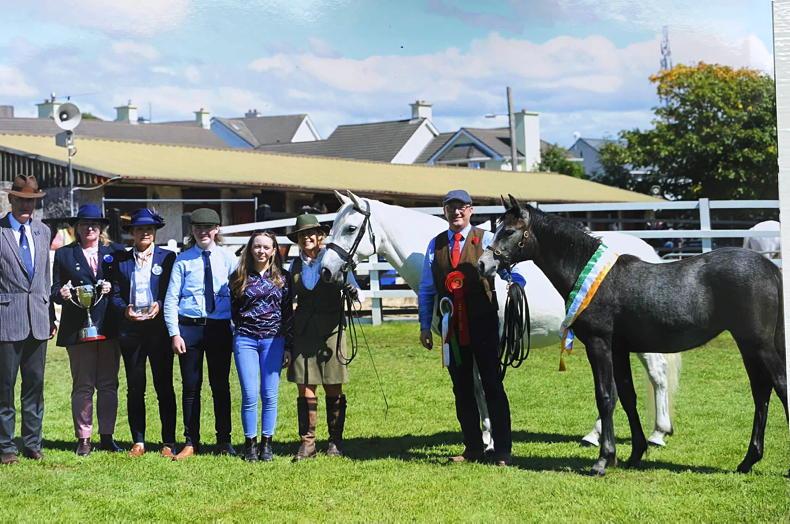
Copperbeech Polly and Copperbeech Ivy Champion Foal Connemara Pony Show - Clifden 2023. \ Foto-Job
Quality over quantity
In the early years, practical realities shaped difficult decisions. Lackragh Beauty was sold during the economic boom, “She put the roof on our shed,” Fiona shares honestly. Years later, the family bought her back in the same ring she was originally sold. “She gave us everything, and we owe her everything.”
Similarly, Curragh Court Lady was sold as a young mare, later her daughter returned to the family when the opportunity arose. From these mare lines, their herd grew. Today, numbers fluctuate between 15 and 20 ponies, with four or five mares bred in a season.
Breeding is balanced alongside full-time careers and is shaped by Fiona’s philosophy: quality over quantity. “Breeding is year-round. Planning, feeding, scanning, evaluation. It never really stops.”
That ethos is central to how the herd has developed, as the Grimes family retain select fillies to secure their next generation of ponies. “We’ll try to keep two fillies from a mare line,” she explains. “You’re looking for her replacement before she needs replacing.”
Their breeding programme selects stallions not to redefine the herd, but to strengthen it. Winter is when deliberation begins, and Fiona’s attention turns to the mares’ physical traits.
“You must stand back, assess each mare as she is. Ask yourself what she needs, not just what you like,” she explains. “Be honest about her weaknesses. Then choose a stallion to complement that.
“Movement is a key informer. If she’s correct and moves well, that gives you options,” Fiona notes. “If there’s something you’d like to strengthen; more reach, more power from behind, that’s where the stallion comes in.”
A stallion must satisfy her eye as an individual. ‘Type remains paramount, does he look unmistakably like a Connemara Pony? Is he a sensible height? Does he possess bone and athleticism required to complement the mare?’
Then she examines his family and progeny performance.
“With younger stallions they don’t always have stock on the ground to assess. Look at siblings, dams, granddams for what the family consistently produces. With established stallions, study their progeny directly and what kind of mares they suit.”
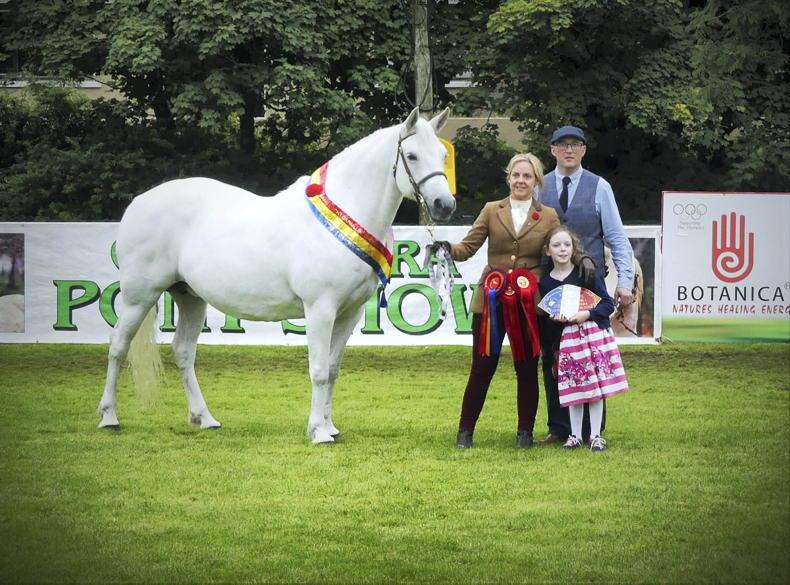
Lackragh Beauty Supreme Champion 2016. \ Andrew Dowes
Genetic tapestry
Performance is considered practically. For Fiona a pony must be capable of doing a job. “Many ponies will be ridden by children at some stage. Soundness, rideability and temperament matter as much as presence,” she says.
Pedigrees on the page completes her decision-making process.
"The pedigree needs to support what you see,” she advises, honestly. “But the pony in front of you has to make sense first.”
Height forms part of the conversation. Copperbeech broodmares generally stand around 146cm, allowing for flexibility in stallion choice.
“We don’t go out to breed extremes and aim to breed to height, but nature decides.”
She explains how ‘throwbacks’ can manifest physically as part of the Connemara’s genetic tapestry, a legacy of historic influences by breeds such as Irish Draught and thoroughbred prior to the closing of the studbook in the 1960s.
A foal may arrive smaller or taller than anticipated. “That’s breeding,” she says simply. “You can plan, but there’s always elements you can’t control.”
Copperbeech Harriet (Ember Grey x Bunowen Paddy) is an example of a 138cm mare the Grimes’ have bred smaller than current average heights but embodies all the physical attributes a Connemara is revered for.
A content mare
As part of preparation for covering, body condition is assessed carefully through the winter.
“Condition is easier to maintain than to correct at the last minute,” Fiona explains.
Veterinary input forms part of the routine with mares scanned, swabbed where necessary, and cycles monitored. Mares live outdoors in a herd, something Fiona believes contributes to overall wellbeing.
“They’re happier out. A content mare is far less likely to give you trouble.”
As due dates approach observation increases. Mares are brought closer to the yard, allowing changes to be monitored.
With spacious foaling boxes near the family home, the mare is brought indoors when foaling is expected to be monitored in person and on camera. Early handling of foals is prioritised with her children James and Bláthnaid playing key roles at this stage. Mares that will be bred again are covered 10-12 days postpartum.
While colts are not kept, the influence of the Copperbeech programme is evident in those they have bred. Several have secured Class 1 stallion status, carrying their prefix beyond Ireland. Among them Copperbeech Encore, owned by Debbie Todd in the UK and ridden by Vicki Smith, who stood second at last year’s Ridden Connemara Pony of the Year at HOYS.
Copperbeech Franklin, owned by Michaela Pavlisová, stands in the Czech Republic. Their progress abroad offers confirmation that the type cultivated as part of the Grimes’ breeding programme holds its own internationally.
The clearest illustration of the Copperbeech mare-centric philosophy is found in the Lishín Star line. A four-time winner at the Clifden Show, the family sadly said goodbye to this foundation mare at the start of the year. Having been part of their lives for over 22 years, through her daughters and granddaughters the strength of focusing on the mares you breed from is evident. Her first daughter, Carrowkeel Star (Currachmore Cashel), was Reserve Supreme Champion at Clifden in 2014, confirming quality was not confined to a single individual.
The next generation strengthened that position when Copperbeech Polly (Menlough Owen x Carrowkeel Star) won the Reserve Broodmare Championship in 2023, demonstrating continuity of type. That same day, Polly’s filly foal, Copperbeech Ivy (Innellan Condor), was crowned Champion Foal, making it the fourth consecutive generation to stand at the top of the line at the Connemara Pony Show.
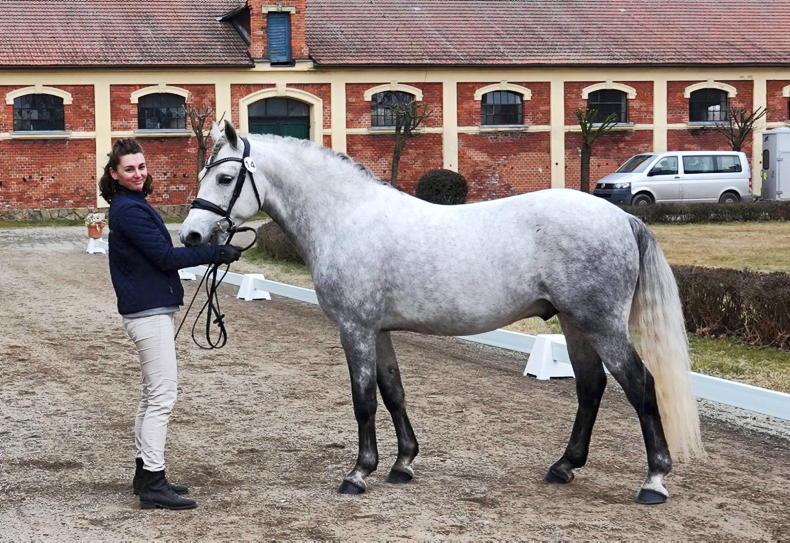
Class 1 stallion Copperbeech Franklin with Czech Republic owner Michaela Pavlisová . \ Michaela Pavlisová.
For Fiona, it reflects their commitment to making breeding decisions that complement the attributes of a quality mare.
“If you protect the mare line and make careful decisions, quality will carry,” she says. “For us that’s what breeding is all about.”
Her advice for breeders is “never underestimate your foundation mare. She is the most important investment you will make. Make sure she represents the type of Connemara you genuinely admire, not just what’s fashionable at the time.”
Building a broodmare band capable of consistent quality is a long-term undertaking, not immune to setbacks.
“You can do everything right and still get a surprise,” she says, laughing. “Nature always has the final say. But if you breed the best to the best and manage them properly, you have the best possible chance.”
Fiona’s ambition is that each generation of Copperbeech Connemaras measures up to the last.
“I’d like to think we’re always improving. Not changing direction, just fine-tuning. The Connemara has lasted because it’s versatile, sound and kind. We can’t lose that in pursuit of fashion.”
Four generations of champions did not arrive by chance. They are the outcome of consistent selection and patient retention with a clear breeding vision. “When you look back and realise you’ve bred four generations, you understand the value of staying the course,’’ Fiona reflects.
In an era where speed often dominates, the Copperbeech Connemara philosophy is a reminder that in breeding, as in the Connemara pony itself, substance endures.
The value of a good mare should never be underestimated. Those fortunate to have bred from a great Connemara broodmare know she is worth her weight in gold. While sire and dam contribute equally in nuclear DNA, the maternal line exerts additional influence through mitochondrial inheritance, temperament, and the cumulative effects of health and nurture. The mare not only carries the foal; she shapes him.
As the Connemara breed continues into another century, careful evaluation and retention of quality broodmares has never been more important. The pony’s global popularity is steady, with 3,284 foals recorded last year by the Connemara Pony Breeders’ Society. As breeding season approaches, conversations often centre on stallion selection.
For breeders intent on consistently producing quality ponies, the importance of the mare selected to breed from should not be undermined. The foundation of an enduring breeding programme lies in the mare herd, understanding strengths and weaknesses of each individual, while breeding with a long-term view rather than responding to market trends.
A true example of someone developing a strong broodmare herd is Fiona Grimes of Copperbeech Connemaras, Co Mayo. Producing four generations of Connemara Pony Show Champions, Copperbeech ponies’ success is built on careful cultivation of dam lines that consistently stamp their stock with quality. Having competed Connemaras through her teenage years, breeding was a natural progression.
When Fiona and husband Tomás established Copperbeech Connemara Ponies at their Ballinrobe home over 20 years ago, they did so while growing a young family and building a yard. Their breeding programme was founded on Curragh Court Lady (Clonberne Boy x Clydagh Marie), a mare bred by Fiona’s late father Willie Donelon. She was joined by Lishín Star (Glencarrig Prince x Dunlewey Lisheen Liath), bred by Joe Cunniffe, and Lackragh Beauty (Carra Cashel x Carnawre Dolly), bred by Tim Connor.
These three mares went on to achieve remarkable success; Lackragh Beauty stood Connemara Pony Show - Clifden Supreme Champion in 2016 and Lishín Star took Reserve Supreme Champion in 2019.
“I’m a mare person,” Fiona says. “The broodmare is your foundation, shaping your programme for generations.”
Each of her foundation mares shared traits she seeks in a Connemara, describing them as embodying femininity without weakness, with well-set, intelligent heads, depth of body, dense bone and balance throughout.
“They were my supermodels,” she shares, “they possess everything I love in a Connemara mare.” The broodmares also have nurturing temperaments to make exceptional mothers.

Copperbeech Polly and Copperbeech Ivy Champion Foal Connemara Pony Show - Clifden 2023. \ Foto-Job
Quality over quantity
In the early years, practical realities shaped difficult decisions. Lackragh Beauty was sold during the economic boom, “She put the roof on our shed,” Fiona shares honestly. Years later, the family bought her back in the same ring she was originally sold. “She gave us everything, and we owe her everything.”
Similarly, Curragh Court Lady was sold as a young mare, later her daughter returned to the family when the opportunity arose. From these mare lines, their herd grew. Today, numbers fluctuate between 15 and 20 ponies, with four or five mares bred in a season.
Breeding is balanced alongside full-time careers and is shaped by Fiona’s philosophy: quality over quantity. “Breeding is year-round. Planning, feeding, scanning, evaluation. It never really stops.”
That ethos is central to how the herd has developed, as the Grimes family retain select fillies to secure their next generation of ponies. “We’ll try to keep two fillies from a mare line,” she explains. “You’re looking for her replacement before she needs replacing.”
Their breeding programme selects stallions not to redefine the herd, but to strengthen it. Winter is when deliberation begins, and Fiona’s attention turns to the mares’ physical traits.
“You must stand back, assess each mare as she is. Ask yourself what she needs, not just what you like,” she explains. “Be honest about her weaknesses. Then choose a stallion to complement that.
“Movement is a key informer. If she’s correct and moves well, that gives you options,” Fiona notes. “If there’s something you’d like to strengthen; more reach, more power from behind, that’s where the stallion comes in.”
A stallion must satisfy her eye as an individual. ‘Type remains paramount, does he look unmistakably like a Connemara Pony? Is he a sensible height? Does he possess bone and athleticism required to complement the mare?’
Then she examines his family and progeny performance.
“With younger stallions they don’t always have stock on the ground to assess. Look at siblings, dams, granddams for what the family consistently produces. With established stallions, study their progeny directly and what kind of mares they suit.”

Lackragh Beauty Supreme Champion 2016. \ Andrew Dowes
Genetic tapestry
Performance is considered practically. For Fiona a pony must be capable of doing a job. “Many ponies will be ridden by children at some stage. Soundness, rideability and temperament matter as much as presence,” she says.
Pedigrees on the page completes her decision-making process.
"The pedigree needs to support what you see,” she advises, honestly. “But the pony in front of you has to make sense first.”
Height forms part of the conversation. Copperbeech broodmares generally stand around 146cm, allowing for flexibility in stallion choice.
“We don’t go out to breed extremes and aim to breed to height, but nature decides.”
She explains how ‘throwbacks’ can manifest physically as part of the Connemara’s genetic tapestry, a legacy of historic influences by breeds such as Irish Draught and thoroughbred prior to the closing of the studbook in the 1960s.
A foal may arrive smaller or taller than anticipated. “That’s breeding,” she says simply. “You can plan, but there’s always elements you can’t control.”
Copperbeech Harriet (Ember Grey x Bunowen Paddy) is an example of a 138cm mare the Grimes’ have bred smaller than current average heights but embodies all the physical attributes a Connemara is revered for.
A content mare
As part of preparation for covering, body condition is assessed carefully through the winter.
“Condition is easier to maintain than to correct at the last minute,” Fiona explains.
Veterinary input forms part of the routine with mares scanned, swabbed where necessary, and cycles monitored. Mares live outdoors in a herd, something Fiona believes contributes to overall wellbeing.
“They’re happier out. A content mare is far less likely to give you trouble.”
As due dates approach observation increases. Mares are brought closer to the yard, allowing changes to be monitored.
With spacious foaling boxes near the family home, the mare is brought indoors when foaling is expected to be monitored in person and on camera. Early handling of foals is prioritised with her children James and Bláthnaid playing key roles at this stage. Mares that will be bred again are covered 10-12 days postpartum.
While colts are not kept, the influence of the Copperbeech programme is evident in those they have bred. Several have secured Class 1 stallion status, carrying their prefix beyond Ireland. Among them Copperbeech Encore, owned by Debbie Todd in the UK and ridden by Vicki Smith, who stood second at last year’s Ridden Connemara Pony of the Year at HOYS.
Copperbeech Franklin, owned by Michaela Pavlisová, stands in the Czech Republic. Their progress abroad offers confirmation that the type cultivated as part of the Grimes’ breeding programme holds its own internationally.
The clearest illustration of the Copperbeech mare-centric philosophy is found in the Lishín Star line. A four-time winner at the Clifden Show, the family sadly said goodbye to this foundation mare at the start of the year. Having been part of their lives for over 22 years, through her daughters and granddaughters the strength of focusing on the mares you breed from is evident. Her first daughter, Carrowkeel Star (Currachmore Cashel), was Reserve Supreme Champion at Clifden in 2014, confirming quality was not confined to a single individual.
The next generation strengthened that position when Copperbeech Polly (Menlough Owen x Carrowkeel Star) won the Reserve Broodmare Championship in 2023, demonstrating continuity of type. That same day, Polly’s filly foal, Copperbeech Ivy (Innellan Condor), was crowned Champion Foal, making it the fourth consecutive generation to stand at the top of the line at the Connemara Pony Show.

Class 1 stallion Copperbeech Franklin with Czech Republic owner Michaela Pavlisová . \ Michaela Pavlisová.
For Fiona, it reflects their commitment to making breeding decisions that complement the attributes of a quality mare.
“If you protect the mare line and make careful decisions, quality will carry,” she says. “For us that’s what breeding is all about.”
Her advice for breeders is “never underestimate your foundation mare. She is the most important investment you will make. Make sure she represents the type of Connemara you genuinely admire, not just what’s fashionable at the time.”
Building a broodmare band capable of consistent quality is a long-term undertaking, not immune to setbacks.
“You can do everything right and still get a surprise,” she says, laughing. “Nature always has the final say. But if you breed the best to the best and manage them properly, you have the best possible chance.”
Fiona’s ambition is that each generation of Copperbeech Connemaras measures up to the last.
“I’d like to think we’re always improving. Not changing direction, just fine-tuning. The Connemara has lasted because it’s versatile, sound and kind. We can’t lose that in pursuit of fashion.”
Four generations of champions did not arrive by chance. They are the outcome of consistent selection and patient retention with a clear breeding vision. “When you look back and realise you’ve bred four generations, you understand the value of staying the course,’’ Fiona reflects.
In an era where speed often dominates, the Copperbeech Connemara philosophy is a reminder that in breeding, as in the Connemara pony itself, substance endures.
SHARING OPTIONS