

If Ireland is the ‘land of the horse’, Normandy ranks as France’s premier region for horse breeding. Generations of traditional farmer-breeders built bloodlines that have appeared again and again in top results and medal winners.
No surprise, then, that Marina Storgato and Christian Gonsolin took their Irish friend Roy Workman’s advice: “If you want to make films, you go to Hollywood; if you want to raise horses, you come to Normandy.”
That move, to the Manche area, happened 26 years ago and in just two equine generations, the couple have bred the supremely talented Good Star du Bary, Jessica Burke’s hope for next month’s FEI World Cup final.
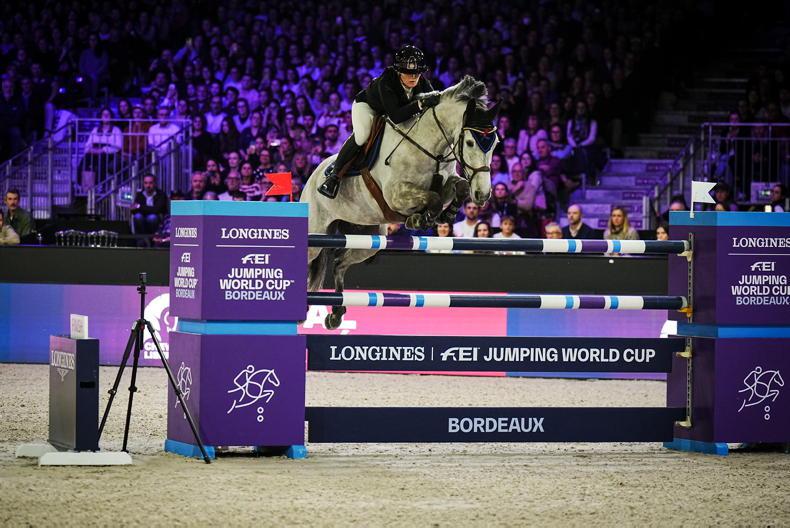
The pair shot to prominence after their stunning World Cup qualifier win at Bordeaux – where Clareman and Good Star du Bary’s owner, Liam Nicholas, celebrated his 60th birthday – and a result that put Italian-born Marina “sur un neige!” (On a cloud).
Norman bloodlines
Proven old Norman bloodlines, if they ever come on the market, are often beyond the budget of start-up breeders. Instead, Marina and Christian came up with an alternative plan of buying older competition mares in Italy.
“Some thought it was risky to breed 15 to 17-year-old mares for the first time. But, having no other options, we took the plunge, and everything went very well for us” says Marina.
“Moreover, these mares had long competitive careers, which for us was a guarantee of soundness, and we knew their temperaments well. Today, the daughters of these mares make up our broodmare herd.”
Trends are avoided
The breeding policy at their Élevage du Bary – named after Pont du Bary, a local landmark bridge – is to “produce horses that are both beautiful and easy to handle. We know that not all of them will be destined for high-level competitions, but it is essential that they are well-suited to amateur riders,” she says.
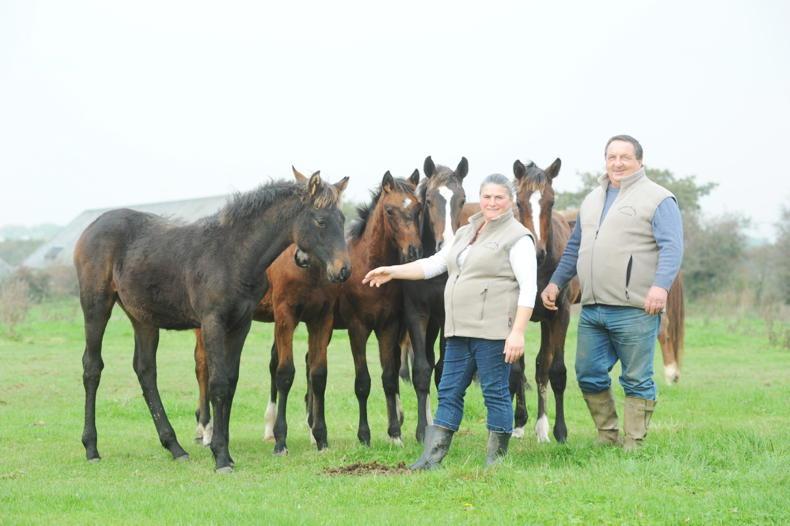
Marina and Christian, who moved to Normandy 26 years ago, with some of their foals at Élevage du Bary. \ Studio Delaroque
Trends are avoided, such as using ‘big name’ fashionable stallions. “We use many young stallions, as the late Fernand Leredde (Elevage des Rouges) advised: ‘When a stallion is fashionable, don’t use him, he’s too expensive! You have to use the best of his sons, because if the genetics work, he’ll be better than the sire’.
“We made an exception for Rosée du Bary [Good Star du Bary’s dam] with Rock ’n Roll de Semilly” says Christophe.
“Here’s a little anecdote: when we inseminated one of our first broodmares Perle Grise du Beaumont, Rosée’s dam, we asked the National Stud’s inseminator to give us a pretty grey filly with a beautiful head and a good jumper. And that’s exactly what we got.”
Rosée du Bary is a cross between Oberon du Moulin (SF) and Skippy II (SF).
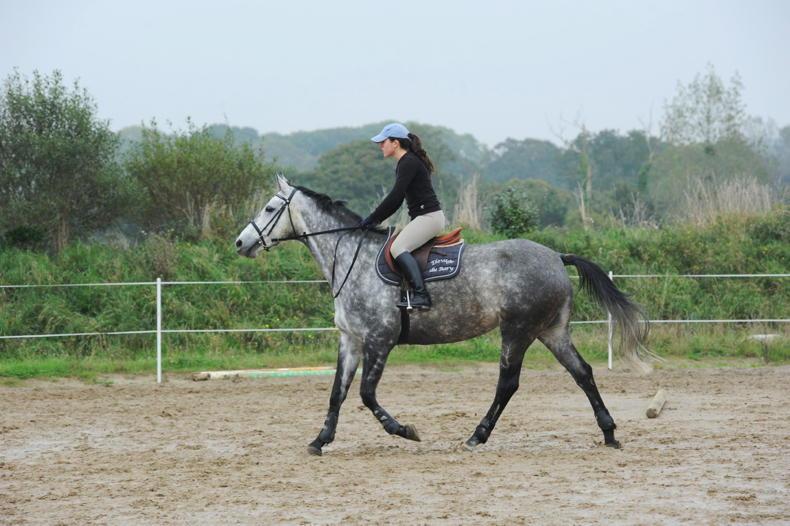
A young Rosée du Bary, beingridden at home at Élevage du Bary. \ Studio Delaroque
His thoroughbred sire Laudanum was Oberon du Moulin’s selling point as they hoped to breed a future broodmare. Before she went to the breeding paddock, Rosée had competed in young horse classes, and although the couple received several offers for her, she was instead covered by their own stallion, Urlevent du Bary (Hurlevent de Brekka x Corrado II).
That first foal was “very beautiful but very spirited”, says Marina, so they opted for the young stallion they’d spotted competing alongside Rosée in young horse classes: Rock ’n Roll Semilly.
“Besides being a Diamant de Semilly son, he comes from a mare who has produced very well.”
The result was Good Star du Bary, described as “a small colt with a pretty, but rather ordinary head.”
As a two-year-old, when loose jumped for the first time, Christian and Marina discovered they had a “little jumping genius.”
Approaching top level
As a youngster, Good Star du Bary’s small size put off several would-be buyers. Instead, he was brought along slowly – “we weren’t aiming for the young horse finals at Fontainebleau anyway” – by Olivier Guillon and Inès Vesine. He was sold at the end of his six-year-old career, going from Ivan Dalton’s Butler Court yard in Belgium to Jessica Burke.
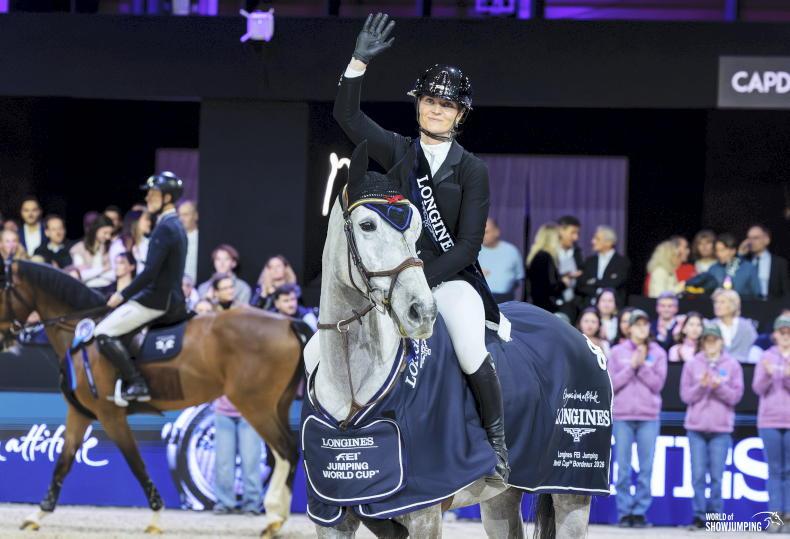
Jessica Burke, Good Star du Bary Jumping International de Bordeaux 2026-02-06 \ © Jenny Abrahamsson/World of Showjumping
“Perle also gave us Viking du Bary, an approved Selle Français stallion who won, among others, the six-bar event at the CSI5* in Madrid with Luca Moneta. Unfortunately, he died of colic on the way to the Sunshine Tour when he was approaching top-level sport,” says Christophe.
There are currently nine in-foal broodmares on their farm, including Good Star du Bary’s dam Rosée, back in foal to Rock’n Roll de Semilly. Others include Cachemire Belmaniere and Eden de La Lande, (both by resident stallion Salto de L’Isle), Eliria du Bary, Bellepoque du Bary Z and Etoile du Bary.
There’s also three pony broodmares, as some notable junior performers were bred here, such as Allana Clutterbuck’s Quesaco du Bary, her two-time European championship pony Sultan du Bary and Demon du Bary; then the two-time pony Grand Prix winner at Olympia Atomic du Bary, competed by both Allana and Ireland’s Tabitha Kyle.
Exceptional winners
Their dam is Gozzilla, the €700 buy that, along with the Selle Français mare Dear Life Boulais, accompanied the couple to their new Normandy home. A pony mare of unknown breeding, Gozzilla has bred 10 exceptional winners up to 1.35m and is the dam of Violette du Bary. Then there’s two more resident pony broodmares: Jolie Môme du Bary and Jazda Belmaniere.
The latter pair are both in foal to Midnight Express d’Ho, one of the stud’s two pony stallions; the other being Gozzilla’s son: Gozzillo du Bary, by their Selle Français stallion Salto de l’Isle.
By Hurlevent de Brekka, he was their first approved stallion and amongst his successful progeny is Filou du Manoir, the Spanish Pro-Elite champion two years ago.
More du Bary stallions include Urlevent du Bary, winner of the four-year-old stallion Masters in St. Lô and sire of 1.60m horse Emir de Moens and top-priced six-year-old at the Arkana sales (€560,000): Dakota de L’Ardrais; Viking du Bary and Ilarius du Bary, winner of the 2018 Normandy supreme foal championship.
“We know the dams, which give us an indication of the horse’s temperament, (even if there are exceptions), and we already observe a lot about a foal. Of course, we let them grow up in the pasture, but we handle them very early – worming, moving them to different pastures, observing their behaviour with each other – it’s already part of our passion,” says Marina.
“We’re very grateful to the people around us who participate in the du Bary adventure, and we hope to have many more wonderful stories to tell,” says Marina, with a smile
That passion – and foaling season – means the couple are unlikely to make the World Cup finals in Texas (7-12 April) to watch Good Star du Bary and Jessica. However, their appearance is a dream result for the couple who arrived from Italy to settle in Normandy in early September 2000.
Vision of sport
“It was the beginning of the adventure, and the beginnings weren’t easy. No one in my family had an equestrian background, and I worked in a factory for 10 years.”
To keep expenses down in the early years, Marina learned all about foaling, artificial insemination and marketing. “Thanks to social media, I can follow up on horses we sold and build up friendly relationships with their owners,” says Marina.
The skills of Christian, a fourth-generation farrier, also means a healthier balance sheet.
“Our respective roles are very complementary,” he says, “and our strength lies in the fact that we’ve always shared the same vision of sport and breeding. We’re uncompromising on the wellbeing of our horses and their training: no step should be skipped or underestimated.
“We don’t seek competition results. Our primary objective is to build confidence in young horses and make them enjoyable to ride. If this takes longer with a particular horse, we just adapt. This is precisely the case with Good Star, for whom patience was a crucial key to his success.”
And what a success story he has been with many more chapters to follow.
“We’re very grateful to the people around us who participate in the du Bary adventure, and we hope to have many more wonderful stories to tell,” says Marina, with a smile.
If Ireland is the ‘land of the horse’, Normandy ranks as France’s premier region for horse breeding. Generations of traditional farmer-breeders built bloodlines that have appeared again and again in top results and medal winners.
No surprise, then, that Marina Storgato and Christian Gonsolin took their Irish friend Roy Workman’s advice: “If you want to make films, you go to Hollywood; if you want to raise horses, you come to Normandy.”
That move, to the Manche area, happened 26 years ago and in just two equine generations, the couple have bred the supremely talented Good Star du Bary, Jessica Burke’s hope for next month’s FEI World Cup final.
The pair shot to prominence after their stunning World Cup qualifier win at Bordeaux – where Clareman and Good Star du Bary’s owner, Liam Nicholas, celebrated his 60th birthday – and a result that put Italian-born Marina “sur un neige!” (On a cloud).
Norman bloodlines
Proven old Norman bloodlines, if they ever come on the market, are often beyond the budget of start-up breeders. Instead, Marina and Christian came up with an alternative plan of buying older competition mares in Italy.
“Some thought it was risky to breed 15 to 17-year-old mares for the first time. But, having no other options, we took the plunge, and everything went very well for us” says Marina.
“Moreover, these mares had long competitive careers, which for us was a guarantee of soundness, and we knew their temperaments well. Today, the daughters of these mares make up our broodmare herd.”
Trends are avoided
The breeding policy at their Élevage du Bary – named after Pont du Bary, a local landmark bridge – is to “produce horses that are both beautiful and easy to handle. We know that not all of them will be destined for high-level competitions, but it is essential that they are well-suited to amateur riders,” she says.

Marina and Christian, who moved to Normandy 26 years ago, with some of their foals at Élevage du Bary. \ Studio Delaroque
Trends are avoided, such as using ‘big name’ fashionable stallions. “We use many young stallions, as the late Fernand Leredde (Elevage des Rouges) advised: ‘When a stallion is fashionable, don’t use him, he’s too expensive! You have to use the best of his sons, because if the genetics work, he’ll be better than the sire’.
“We made an exception for Rosée du Bary [Good Star du Bary’s dam] with Rock ’n Roll de Semilly” says Christophe.
“Here’s a little anecdote: when we inseminated one of our first broodmares Perle Grise du Beaumont, Rosée’s dam, we asked the National Stud’s inseminator to give us a pretty grey filly with a beautiful head and a good jumper. And that’s exactly what we got.”
Rosée du Bary is a cross between Oberon du Moulin (SF) and Skippy II (SF).

A young Rosée du Bary, beingridden at home at Élevage du Bary. \ Studio Delaroque
His thoroughbred sire Laudanum was Oberon du Moulin’s selling point as they hoped to breed a future broodmare. Before she went to the breeding paddock, Rosée had competed in young horse classes, and although the couple received several offers for her, she was instead covered by their own stallion, Urlevent du Bary (Hurlevent de Brekka x Corrado II).
That first foal was “very beautiful but very spirited”, says Marina, so they opted for the young stallion they’d spotted competing alongside Rosée in young horse classes: Rock ’n Roll Semilly.
“Besides being a Diamant de Semilly son, he comes from a mare who has produced very well.”
The result was Good Star du Bary, described as “a small colt with a pretty, but rather ordinary head.”
As a two-year-old, when loose jumped for the first time, Christian and Marina discovered they had a “little jumping genius.”
Approaching top level
As a youngster, Good Star du Bary’s small size put off several would-be buyers. Instead, he was brought along slowly – “we weren’t aiming for the young horse finals at Fontainebleau anyway” – by Olivier Guillon and Inès Vesine. He was sold at the end of his six-year-old career, going from Ivan Dalton’s Butler Court yard in Belgium to Jessica Burke.

Jessica Burke, Good Star du Bary Jumping International de Bordeaux 2026-02-06 \ © Jenny Abrahamsson/World of Showjumping
“Perle also gave us Viking du Bary, an approved Selle Français stallion who won, among others, the six-bar event at the CSI5* in Madrid with Luca Moneta. Unfortunately, he died of colic on the way to the Sunshine Tour when he was approaching top-level sport,” says Christophe.
There are currently nine in-foal broodmares on their farm, including Good Star du Bary’s dam Rosée, back in foal to Rock’n Roll de Semilly. Others include Cachemire Belmaniere and Eden de La Lande, (both by resident stallion Salto de L’Isle), Eliria du Bary, Bellepoque du Bary Z and Etoile du Bary.
There’s also three pony broodmares, as some notable junior performers were bred here, such as Allana Clutterbuck’s Quesaco du Bary, her two-time European championship pony Sultan du Bary and Demon du Bary; then the two-time pony Grand Prix winner at Olympia Atomic du Bary, competed by both Allana and Ireland’s Tabitha Kyle.
Exceptional winners
Their dam is Gozzilla, the €700 buy that, along with the Selle Français mare Dear Life Boulais, accompanied the couple to their new Normandy home. A pony mare of unknown breeding, Gozzilla has bred 10 exceptional winners up to 1.35m and is the dam of Violette du Bary. Then there’s two more resident pony broodmares: Jolie Môme du Bary and Jazda Belmaniere.
The latter pair are both in foal to Midnight Express d’Ho, one of the stud’s two pony stallions; the other being Gozzilla’s son: Gozzillo du Bary, by their Selle Français stallion Salto de l’Isle.
By Hurlevent de Brekka, he was their first approved stallion and amongst his successful progeny is Filou du Manoir, the Spanish Pro-Elite champion two years ago.
More du Bary stallions include Urlevent du Bary, winner of the four-year-old stallion Masters in St. Lô and sire of 1.60m horse Emir de Moens and top-priced six-year-old at the Arkana sales (€560,000): Dakota de L’Ardrais; Viking du Bary and Ilarius du Bary, winner of the 2018 Normandy supreme foal championship.
“We know the dams, which give us an indication of the horse’s temperament, (even if there are exceptions), and we already observe a lot about a foal. Of course, we let them grow up in the pasture, but we handle them very early – worming, moving them to different pastures, observing their behaviour with each other – it’s already part of our passion,” says Marina.
“We’re very grateful to the people around us who participate in the du Bary adventure, and we hope to have many more wonderful stories to tell,” says Marina, with a smile
That passion – and foaling season – means the couple are unlikely to make the World Cup finals in Texas (7-12 April) to watch Good Star du Bary and Jessica. However, their appearance is a dream result for the couple who arrived from Italy to settle in Normandy in early September 2000.
Vision of sport
“It was the beginning of the adventure, and the beginnings weren’t easy. No one in my family had an equestrian background, and I worked in a factory for 10 years.”
To keep expenses down in the early years, Marina learned all about foaling, artificial insemination and marketing. “Thanks to social media, I can follow up on horses we sold and build up friendly relationships with their owners,” says Marina.
The skills of Christian, a fourth-generation farrier, also means a healthier balance sheet.
“Our respective roles are very complementary,” he says, “and our strength lies in the fact that we’ve always shared the same vision of sport and breeding. We’re uncompromising on the wellbeing of our horses and their training: no step should be skipped or underestimated.
“We don’t seek competition results. Our primary objective is to build confidence in young horses and make them enjoyable to ride. If this takes longer with a particular horse, we just adapt. This is precisely the case with Good Star, for whom patience was a crucial key to his success.”
And what a success story he has been with many more chapters to follow.
“We’re very grateful to the people around us who participate in the du Bary adventure, and we hope to have many more wonderful stories to tell,” says Marina, with a smile.
SHARING OPTIONS