



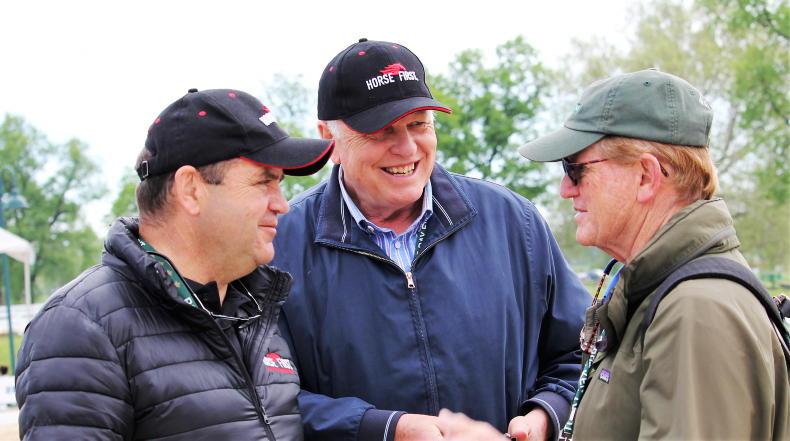
Growing up in Kansas, our backyard was the boundary to the reservation which was around 100,000 acres. This was all tall grass prairie, the buffalo had roamed through there for centuries and the quality of the grass was such that after a hard frost it cures to hay on the stem.
The cavalry needed this space for manoeuvres and my family bought the farm due to its proximity to the cavalry centre at Fort Riley. My father [Colonel John Wofford] was named US Military Attaché to Dublin from 1939-1941. His letters are a stitch. He had arrived in Ireland obviously full of military combat tactics and would write home to my mother saying he had supervised so many hundred metres of barbed wire installations and machine gun nests along the coast.
About a year later, he’d say “I had a great days racing with Cyril Harty. Tonight I was out walking along the Curragh and I bumped into Fred Ahern and he asked me to go greyhound racing tomorrow,” and you could tell my father was being taken into the sporting scene in Ireland.
My father and Cyril Harty were great friends so I had a built-in semi-family network anytime I ever came over to Ireland.
The horse shows that I went to at an early age were either dusty ring local operations or the indoor shows in the Fall. Harrisburg was the last weekend in October, Madison Square Garden was usually the first week in November and then the Royal Winter Fair in mid-November.
Familiar smell
Every time I smell mothballs, I think of Madison Square Garden because the ladies kept many of their long gowns and the gentlemen put their white tie and tails in mothballs for the year. Madison Square Garden featured in the society pages, not in the sports pages, Washington International was relatively new and I was dragged along by my family to the Royal Winter Fair once when I was still in short pants.
I do remember Dublin Horse Show in 1952 and that’s when I get my story of sneaking into the international pocket by waiting until a horse was coming. I would take the offside rein and then walk with a very purposeful attitude, they would wave me on through and then I’d be in the pocket for the day.
That’s a true story – just grab a hold of the snaffle rein and look as if you knew what you were doing, I made a career of it!
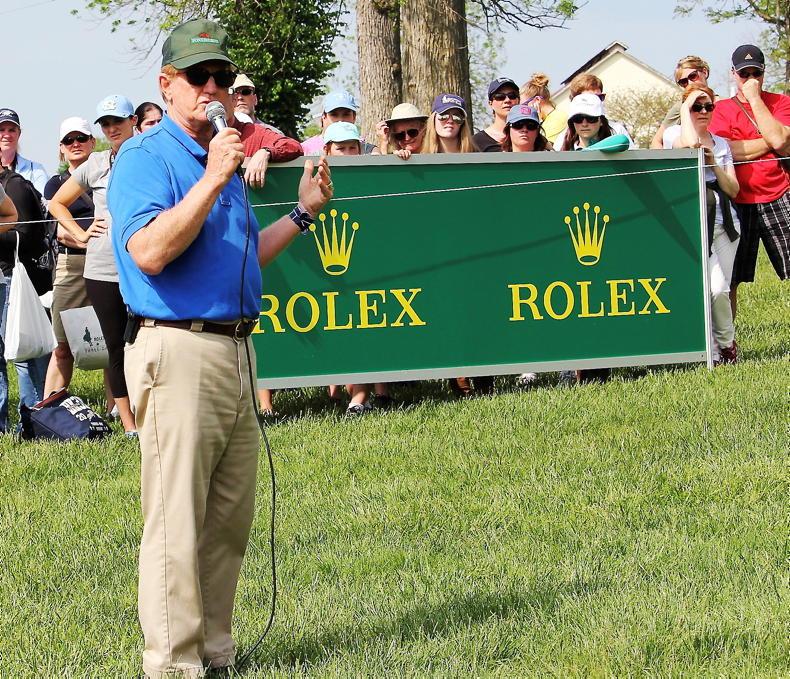
Kilkenny
One of Philip Dutton’s owners, Mrs Gardner is putting together a book as a fundraising venture, she’s gotten people such as Michael Matz, Philip and myself to write articles on how horses changed our lives, and I wrote about Kilkenny.
Only Ireland could have produced a horseman like Tommy Brennan. He and Kilkenny were on the Irish Olympic team in 1964 at Tokyo, where they were fourth. He went show jumping in 1965, but at the upper levels, Kilkenny was a bit of a four-faulter.
They put him back into training, went to Badminton in 1966 and then he was on the Irish gold medal winning team at the world championships at Burghley in September 1966.
During that time my brother Warren who was show jumping in England, came to Ireland looking for a horse and saw Kilkenny. He was coming nine, priced to move as an event horse’s career was about through then, so Warren was not interested at all. He went home that winter and when he was speaking to my mother, said “Kilkenny would suit Jimmy as a schoolmaster.”
Peter Scott-Dunn vetted him and said he was fit for purpose as a schoolmaster and on 1 February 1967, I got a telephone call from my mother saying: “I just wanted you to know I’ve purchased Kilkenny for you. He’s landing at JFK today, he’ll be released from quarantine tomorrow and will be shipped to Gladstone.”
I’d been at Gladstone, training with the US eventing team, with Atos, a 15.3hh roan Appaloosa. Getting Kilkenny was like going from a jalopy to a Ferrari! By early June, we won the national championships, made the Pan-American Games gold medal winning team, finished individual fourth there, 13th at Badminton the following spring while preparing for the Mexico Olympics, sixth at the Olympics.
That all happened in an 18-month span, something which would not happen now for many reasons.
Number one, qualifying; a young kid would have to work their way up the ladder and two, horses like Kilkenny – they don’t get sold on quite as often as they used to.
There’s not many Cinderella stories left in eventing because the skill curve is so high and so steep that even if you bought La Biosthetique Sam, you wouldn’t know where all the buttons were on the dashboard.
If you had led Kilkenny around Cheltenham, he would not have looked out of place, he was that typey. Substantial bone, great size, 17 hands and a great presence. You’d have lost a lot of bets if you’d bet on whether he was a thoroughbred or not.
Kilkenny and another Irish-bred, Grasshopper, are two of only three horses to ever compete at three Olympics. Grasshopper was formerly Copper Coin – Sir John Galvin bought him and changed his name because he bucked like a grasshopper. Should have been terrible luck but it worked. Sir John gave the ride to Michael Page, they won the individual gold in the 1963 Pan-Am Games in Sao Paolo.
Buster, the other Irish horse on the American Olympic team in 1968, belonged to Meg Spencer, later Meg Spencer-Plumb. So the American teams have done pretty well by Ireland and Ireland’s done pretty well by the Americans!
Including my sister-in-law Dawn, who show jumped for England, we competed at six Olympic Games. Father competed at the Olympics in 1932, my oldest brother J.E.B in eventing in 1952. My father coached both the show jumping and the eventing teams, which both won bronze medals. In the American eventing team that year [1952], they were all American thoroughbreds, the average age of the horses was seven and the average of the riders was 20.
Looking ahead
I do think the pendulum will swing back to thoroughbreds, for several reasons. The riders are becoming better at training hot horses. So long as we have the Olympics as the focal point of the sport, it’s going to be run in hot weather and so your thoroughbreds and Anglo-Arabs are going to shine in those conditions.
And finally, the overall athleticism and the intellect of the thoroughbred. They’re hyper intelligent, they’ll learn the wrong lesson as quickly as they’ll learn the right lesson but that’s on the riders and trainers. As I say, I do think the riders are getting sharper and the trainers are getting better about dealing with that type of four-legged personality.
With Covid-19, our eventing season didn’t really kick off until mid-August. Tryon, the site of the 2018 Games, has stepped in for next weekend and that will close out our season. Our season has been active enough that people have kept their hand in and are looking forward to next year.
Yes, it was my 76th birthday on US presidential election day. It’s not unusual and has happened before, say in 1952 which was Eisenhower’s first term. It just takes a time to come round again, like Halley’s Comet!
Jimmy Wofford was in conversation with Susan Finnerty.


SHARING OPTIONS