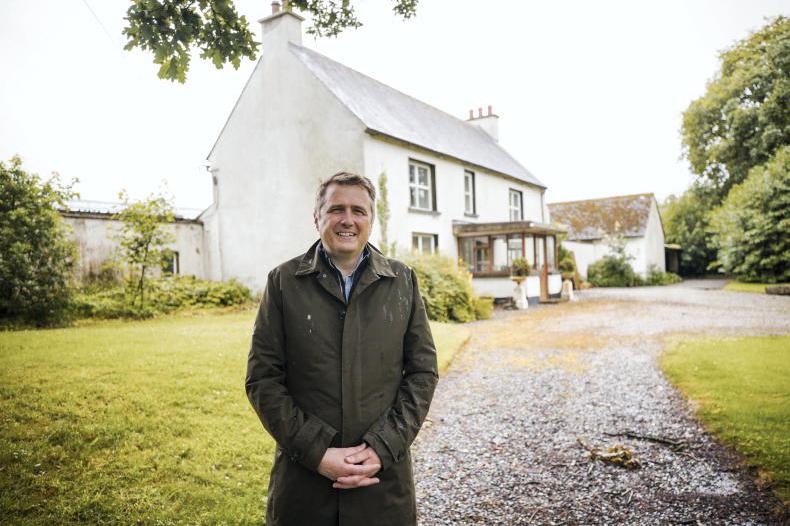
Growing up, Dermot Bannon used to spend every summer in his granny’s farmhouse, just outside New Ross in Co Wexford. Like a lot of farmhouses, he describes it as deceptively small.
“It looks like a lovely, big, two-storey house, but when you go into the second floor, the windows are right down to the ground, and you’re hitting your head off the ceiling.”
Making a farmhouse like his grandmother’s fit for contemporary life “without ruining it” is what the architect describes as one of the biggest challenges when it comes to building a home in rural Ireland.
Speaking to Irish Country Living just before the 17th series of Room to Improveaired on RTÉ One last Sunday, Dermot explains: “People want a nice, big kitchen now, and they’re not willing to stoop their head going in a door.
“How do you protect the setting and not over-develop it, yet give people the space that they need? Because you put a massive extension onto an old farmhouse, it really dominates it, and it can take away the charm.
“Always consider your setting. It’s easy enough to design a farmhouse that will blend in, but it’s actually where you position it on the site. People love putting the house on the top of the hill so you get a massive view. But if you’ve got a fantastic view, you’ve got loads and loads of wind and rain and elements.
There are also other considerations to think about. “Planners have a job to do. We have to protect the rural countryside, and I think that people have to respect that a little bit. If you build on the top of a hill, and everybody for 20 miles can see it, you have a responsibility to build something that doesn’t destroy people’s views.”
Planning permission
When it comes to the question of planning permissions, Dermot says it “is not something that intimidates me or puts me off”. However, he does feel “a bigger responsibility” building in the countryside than in the city.
“I find there is more responsibility on me, because I’m creating something that could have an impact for five miles around. I’m shaping and creating somebody’s view. For everybody who lives locally, whatever I build, they have to drive past it, look at it, open up their bedroom window, and they see it across the couple of fields. I consider that a responsibility.
“Every single local authority will have guidelines on how to build and how to build sensitively,” Dermot adds. These are available to download for free on each local authority website. “I think a lot of people give planning in rural Ireland a bad name, but they are the custodians of the bigger picture. You can work with them and set up pre-planning meetings and stick within their guidance, and meet your local needs. And if you do that, there are ways of designing a house in rural Ireland that planners will accept.
“I look at the drawings that somebody has been refused on over and over again, and I can tell exactly why they’ve been refused – because it’s too big. It’s too bulky. The proportions are wrong. In rural Ireland, if you place a building into the landscape, it is of real importance. Some of our favourite views in rural Ireland are when you drive up a road and you see a farmhouse nestled into the trees on a corner.”
If you are considering home improvements this year, Dermot flags the Government grants for which you may be eligible. Between the SEAI One Stop Shop, the Vacant Property Refurbishment Grant (VPRG) and Warmer Homes Scheme, he insists anyone making changes to their home this year “would be mad not to really investigate. There’s a little bit of upskilling yourself. It is just a little bit of time on the internet researching, and it is really straightforward.”
He points out that the Government has set a target of retrofitting 500,000 dwellings to a B2 Ber rating or higher by 2030 – “so they want you to avail of this,” Dermot adds. “They’re not making you jump through unreasonable hoops to try and get the money. They’re trying to give you the money so that we can get our housing stock up to on par with the rest of Europe.
“Between the VPRG and the SEAI grant, there is potentially €100,000 up for grabs in grant aid for a house. I think that you’d be mad to overlook the cottages and the old farmhouses that you might think are so run down. I love that they’re making people think about the old buildings.”
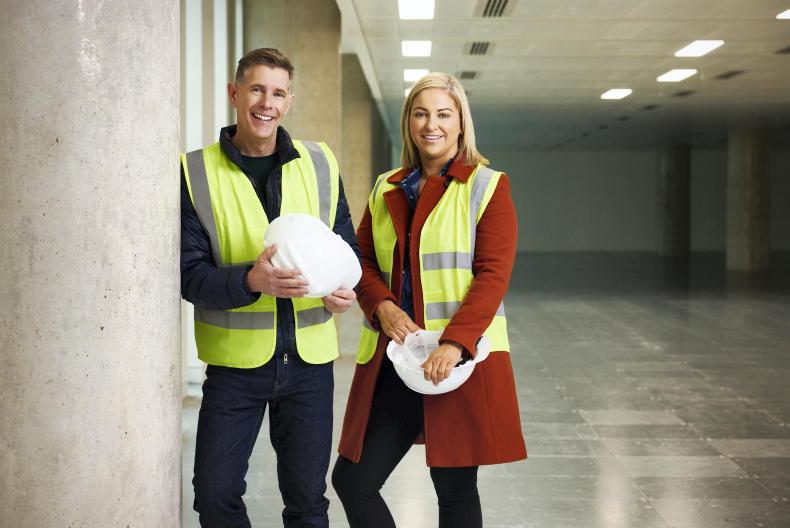
Architect Dermot Bannon and quantity surveyor Claire Irwin. \ Evan Doherty
Design trends
Looking ahead to design trends in 2026, Dermot predicts “colour is going to be huge”, joking that he is “probably partly responsible”.
“We’ve tired of minimalist. We’re ready for a bit of colour.
“I would never design my house around a trend but paint is so easy to change, and it’s a really great way to make the house feel totally different, and it’s not expensive, and it’s something you can experiment with.
If you get it wrong, it’s not a difficult thing to repair.
“I think for a long time, people liked minimalism because it was safe. Many feel like when it comes to colour, they don’t have the confidence. But there are loads of professionals out there – designers, architects, interior designers, and spending a couple of hundred quid to get a professional eye on your home is worth the investment.
“We still feel that it’s an extravagance, that asking an interior designer or colour consultant or an architect for their advice is a bit of a luxury. But we spend money on other things, like meals and dinners out. Your home is where you are most of the time, and I think it’s worth a little bit of an investment.
Listing what he jokingly calls “stupid trends” – the conservatory that became the en suite, the en suite that became the walk-in wardrobe, the walk-in wardrobe that became the walk-in pantry (the current trend) – Dermot says “design isn’t really for me about aesthetics”.
“Design is about finding out what are the problems in people’s lives to do with their home – and helping to fix them.”
In rural Ireland, the kitchen is a very important space in house design, he insists. “The kitchen and family living space is always at the heart of every home, and it’s about continuing to invest in that.
“Especially in rural Ireland, people come in and they go straight into the kitchen. Nobody goes into the sitting room, that’s the good room.”
A utility room is another space Dermot flags. “In rural Ireland, you’ve got a lot of outdoor activity, somebody may be working on a farm, so you need somewhere to wash and dry clothes, somewhere that you can leave wellies, school bags, all that kind of stuff.”
Viewers can expect plenty more of these design tips from Dermot in the show’s new series, as he transforms four homes with budgets spanning €200k - €350k.
Room to Improve airs Sundays at 9.30pm on RTÉ One and RTÉ Player.
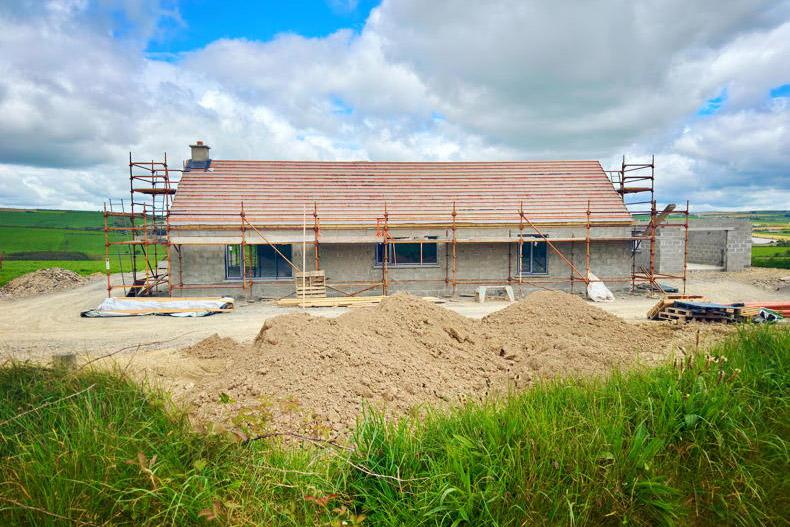
Growing up, Dermot Bannon used to spend every summer in his granny’s farmhouse, just outside New Ross in Co Wexford. Like a lot of farmhouses, he describes it as deceptively small.
“It looks like a lovely, big, two-storey house, but when you go into the second floor, the windows are right down to the ground, and you’re hitting your head off the ceiling.”
Making a farmhouse like his grandmother’s fit for contemporary life “without ruining it” is what the architect describes as one of the biggest challenges when it comes to building a home in rural Ireland.
Speaking to Irish Country Living just before the 17th series of Room to Improveaired on RTÉ One last Sunday, Dermot explains: “People want a nice, big kitchen now, and they’re not willing to stoop their head going in a door.
“How do you protect the setting and not over-develop it, yet give people the space that they need? Because you put a massive extension onto an old farmhouse, it really dominates it, and it can take away the charm.
“Always consider your setting. It’s easy enough to design a farmhouse that will blend in, but it’s actually where you position it on the site. People love putting the house on the top of the hill so you get a massive view. But if you’ve got a fantastic view, you’ve got loads and loads of wind and rain and elements.
There are also other considerations to think about. “Planners have a job to do. We have to protect the rural countryside, and I think that people have to respect that a little bit. If you build on the top of a hill, and everybody for 20 miles can see it, you have a responsibility to build something that doesn’t destroy people’s views.”
Planning permission
When it comes to the question of planning permissions, Dermot says it “is not something that intimidates me or puts me off”. However, he does feel “a bigger responsibility” building in the countryside than in the city.
“I find there is more responsibility on me, because I’m creating something that could have an impact for five miles around. I’m shaping and creating somebody’s view. For everybody who lives locally, whatever I build, they have to drive past it, look at it, open up their bedroom window, and they see it across the couple of fields. I consider that a responsibility.
“Every single local authority will have guidelines on how to build and how to build sensitively,” Dermot adds. These are available to download for free on each local authority website. “I think a lot of people give planning in rural Ireland a bad name, but they are the custodians of the bigger picture. You can work with them and set up pre-planning meetings and stick within their guidance, and meet your local needs. And if you do that, there are ways of designing a house in rural Ireland that planners will accept.
“I look at the drawings that somebody has been refused on over and over again, and I can tell exactly why they’ve been refused – because it’s too big. It’s too bulky. The proportions are wrong. In rural Ireland, if you place a building into the landscape, it is of real importance. Some of our favourite views in rural Ireland are when you drive up a road and you see a farmhouse nestled into the trees on a corner.”
If you are considering home improvements this year, Dermot flags the Government grants for which you may be eligible. Between the SEAI One Stop Shop, the Vacant Property Refurbishment Grant (VPRG) and Warmer Homes Scheme, he insists anyone making changes to their home this year “would be mad not to really investigate. There’s a little bit of upskilling yourself. It is just a little bit of time on the internet researching, and it is really straightforward.”
He points out that the Government has set a target of retrofitting 500,000 dwellings to a B2 Ber rating or higher by 2030 – “so they want you to avail of this,” Dermot adds. “They’re not making you jump through unreasonable hoops to try and get the money. They’re trying to give you the money so that we can get our housing stock up to on par with the rest of Europe.
“Between the VPRG and the SEAI grant, there is potentially €100,000 up for grabs in grant aid for a house. I think that you’d be mad to overlook the cottages and the old farmhouses that you might think are so run down. I love that they’re making people think about the old buildings.”

Architect Dermot Bannon and quantity surveyor Claire Irwin. \ Evan Doherty
Design trends
Looking ahead to design trends in 2026, Dermot predicts “colour is going to be huge”, joking that he is “probably partly responsible”.
“We’ve tired of minimalist. We’re ready for a bit of colour.
“I would never design my house around a trend but paint is so easy to change, and it’s a really great way to make the house feel totally different, and it’s not expensive, and it’s something you can experiment with.
If you get it wrong, it’s not a difficult thing to repair.
“I think for a long time, people liked minimalism because it was safe. Many feel like when it comes to colour, they don’t have the confidence. But there are loads of professionals out there – designers, architects, interior designers, and spending a couple of hundred quid to get a professional eye on your home is worth the investment.
“We still feel that it’s an extravagance, that asking an interior designer or colour consultant or an architect for their advice is a bit of a luxury. But we spend money on other things, like meals and dinners out. Your home is where you are most of the time, and I think it’s worth a little bit of an investment.
Listing what he jokingly calls “stupid trends” – the conservatory that became the en suite, the en suite that became the walk-in wardrobe, the walk-in wardrobe that became the walk-in pantry (the current trend) – Dermot says “design isn’t really for me about aesthetics”.
“Design is about finding out what are the problems in people’s lives to do with their home – and helping to fix them.”
In rural Ireland, the kitchen is a very important space in house design, he insists. “The kitchen and family living space is always at the heart of every home, and it’s about continuing to invest in that.
“Especially in rural Ireland, people come in and they go straight into the kitchen. Nobody goes into the sitting room, that’s the good room.”
A utility room is another space Dermot flags. “In rural Ireland, you’ve got a lot of outdoor activity, somebody may be working on a farm, so you need somewhere to wash and dry clothes, somewhere that you can leave wellies, school bags, all that kind of stuff.”
Viewers can expect plenty more of these design tips from Dermot in the show’s new series, as he transforms four homes with budgets spanning €200k - €350k.
Room to Improve airs Sundays at 9.30pm on RTÉ One and RTÉ Player.
SHARING OPTIONS