



Long before whiskey was available in expensive glass bottles, it was consumed out of a jar. But did you know the best-known song about whiskey in a jar actually has nothing to do with whiskey? Instead, the iconic Whiskey in the Jar tells the story of how a highwayman was captured when his lover filled his flintlock pistol with water. The whiskey, oddly enough, has nothing to do with the storyline.
Modern adaptations
Today, it is one of the best-known Irish ballads, found as Gilgarry Mountain in the American folk tradition (recorded by Peter, Paul and Mary), and subject of delicious adaptions such as Bob Kotta’s Tequila in the Jar (“As I was going over the mountains of Morellos/I met with Captain Sanchez/He was counting his dineros”) and Sake in the Jar, arranged by Derek Bell (of The Chieftains) for Akiko Yano.
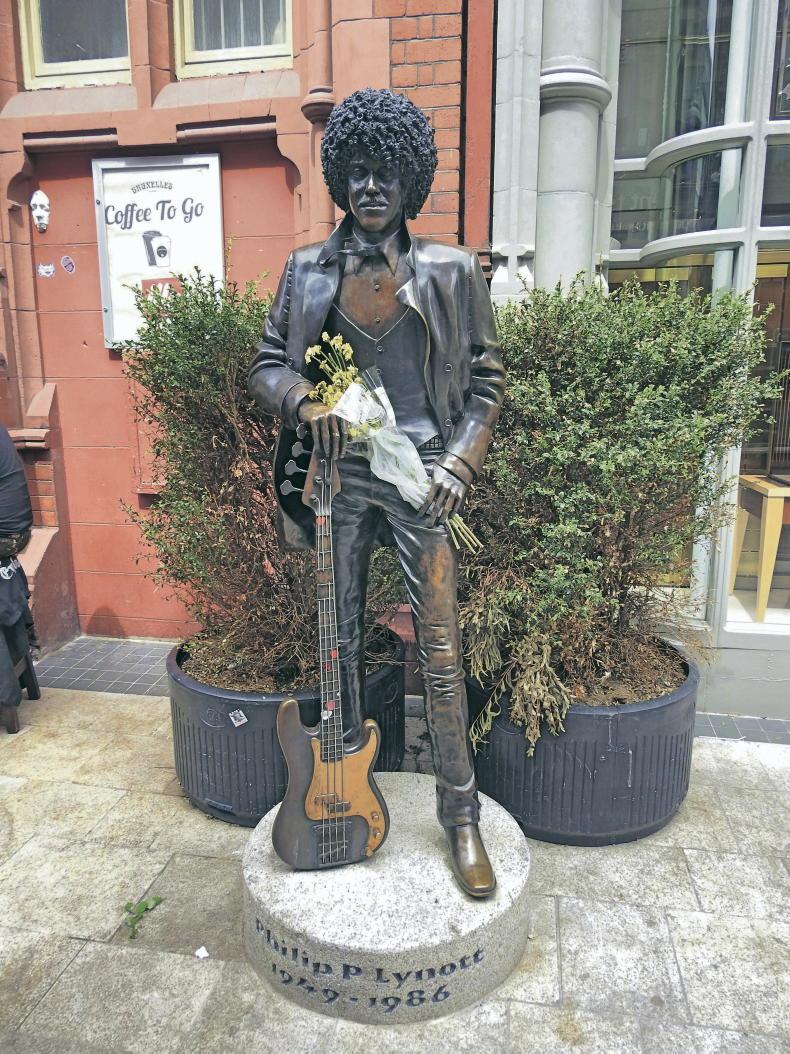
The Clancy Brothers sang the classic version of recent generations. Phil Lynott of Thin Lizzy reinterpreted it to turn it into a rock classic; hurriedly promoted from the B side of an otherwise unremarkable single from 1972, Black Boys on the Corner.
But the actual origin of the song is richer in Irish religious and political history than Phil Lynott or Liam Clancy would have us know, and is tied in to the wars of the 1640s.
The origin of whiskey in the jar relates to the flintlock, not the jar, and its popularity may be due to a once-famous miscarriage of justice.
Faux-folk history
The song took on a faux-folk history of its own (as was confidently asserted in the 2016 TG4 series Na Bailéid) about how it relates to the capture of a real highwayman - Patrick Fleming - in a Maynooth tavern in 1650.
At first sight, this is credible. Geography is meaningless in old ballads, so lyrical names and places were changed to fit local knowledge. Kildare could easily become “the Cork and Kerry mountains”, or the brother “stationed in Cork and Killarney” (another version of the song mentions a judge in Sligo).
Notorious Irish highwaymen
At this time, Co Kildare had the main highways to the south and west. Kildare’s stage coach passengers were among the wealthiest, and there was nearby bogland in which to hide.
Cosgrove’s “Notorious Irish Highwaymen” (printed in 1783) tells the story of the capture of Patrick Fleming in great detail:
“The landlord sent advice to the sheriff and the sheriff came one evening and beset the House. Patrick and his company would have defended themselves; but the landlord had taken care to wet all their fire-arms, and prevent their going off; by which means they became useless and our desperado, with 14 more were taken, carry’d to Dublin, and there executed on Wednesday the twenty-fourth of April, in the Year 1650, after which Patrick Fleming was hang’d in chains on the high Road a little without the city.”
A salacious history of highwaymen in 1813 concocts a detailed and dubious biography for Fleming: born in Athlone (though the author is not sure where Athlone is), youth as a footman to the Countess of Kildare, escaping from jail in Cork, robbing bishops and archbishops, threatening to kill the four-year-old son of Lady Baltimore and cutting off the nose of Donogh O’Brien. This is all fiction.
The real story
The Patrick Fleming of history was killed outside a shebeen near Inniskeen in 1677, and is the subject of “Mairgne Phádraig Fléimionn”, a famous lament in Irish.
“Gan chlaidheamh, gan phiostal, nó urchar pughdair, A bhainfeadh urraim as Gallaibh, nó bata dá rúsgadh Is och, ochón.”
(“Without a sword, without a pistol, bullet or powder that might fell a foreigner, not even a stick with which to fight, alas.”)
According to the Ormonde Papers, the real Patrick Fleming was forced into outlawry by a series of false allegations by Cromwellian settlers, was betrayed to the Ardee soldiery by innkeeper Conn Fada McMahon and put to death attempting to escape – in spite of the fact that he produced a pardon from the authorities in Dublin.
Amongst his papers was a letter from Saint Oliver Plunkett (who would be executed himself, four years later).
The Ormonde papers claim that Caitrín Gearr, MacMahon’s wife, “engaged to pour water into the firearms of the free booters, so as to render them useless for defence.”
That line brings us from Saint Oliver Plunkett to Phil Lynott in one verse:
“Whack for the daddy-oh.”





SHARING OPTIONS