


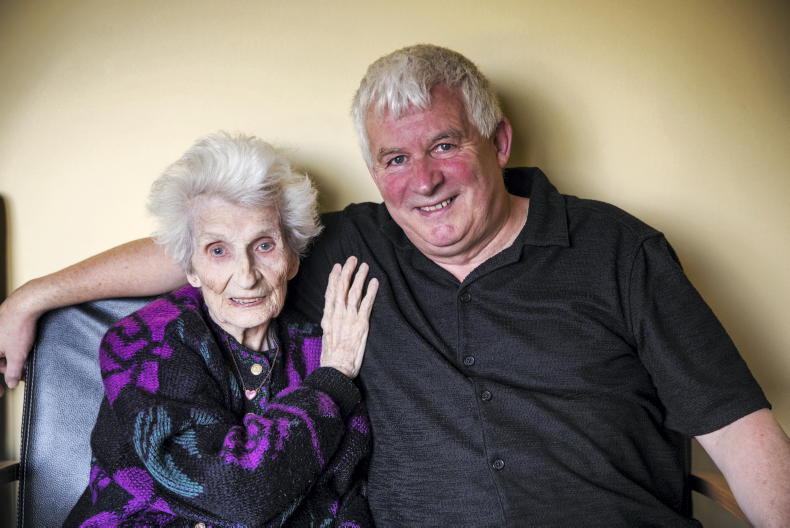
‘I’m Bridget Mary Naughton of Cornadrum [near Ballygar] on the 1926 Census,” Bridie O’Connor says with a smile, pointing to the tablet computer screen in the company of her son, Tim. Aged just 11 months, her entry in the first census of the Irish Free State is detailed in beautiful handwriting alongside her brother Owen and parents Maria and Tim.
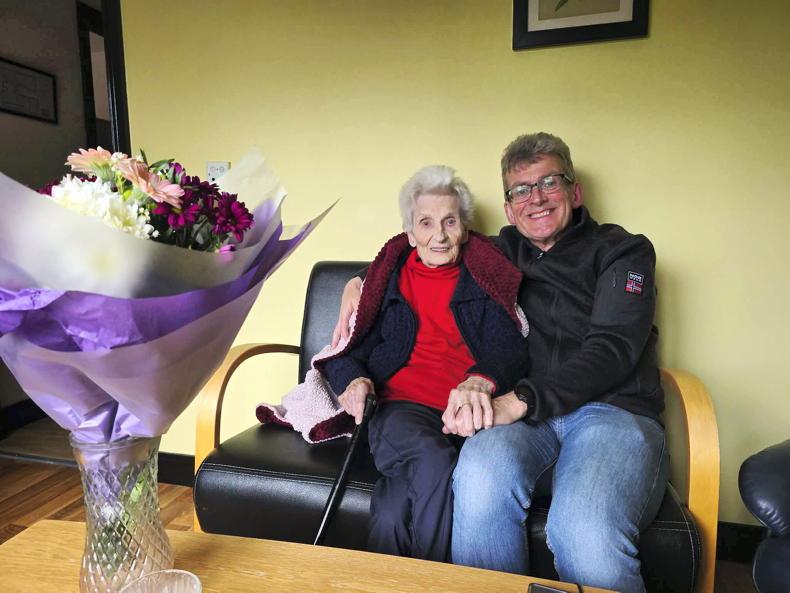
For many of us, the census is a fascinating snapshot into our fledgling State’s history, but for Bridie and her family, it is a precious record of her remarkable life. Here in the Nightingale Nursing Home in Ahascragh, where she has lived for the last 18 months, it prompts many memories of her childhood on a farm in Gowla, a short distance away.
A delightful conversationalist, even though she apologises that her hearing is not as good as it used to be (she wears headphones to assist her), Bridie has a wonderful sense of humour and an air of mischief. The Galway woman laughs a lot and has Irish Country Living in stitches many times as she regales us with recollections from her youth, going to dances and céilís and long days working on the bog and farm, and even meeting Éamon de Valera.
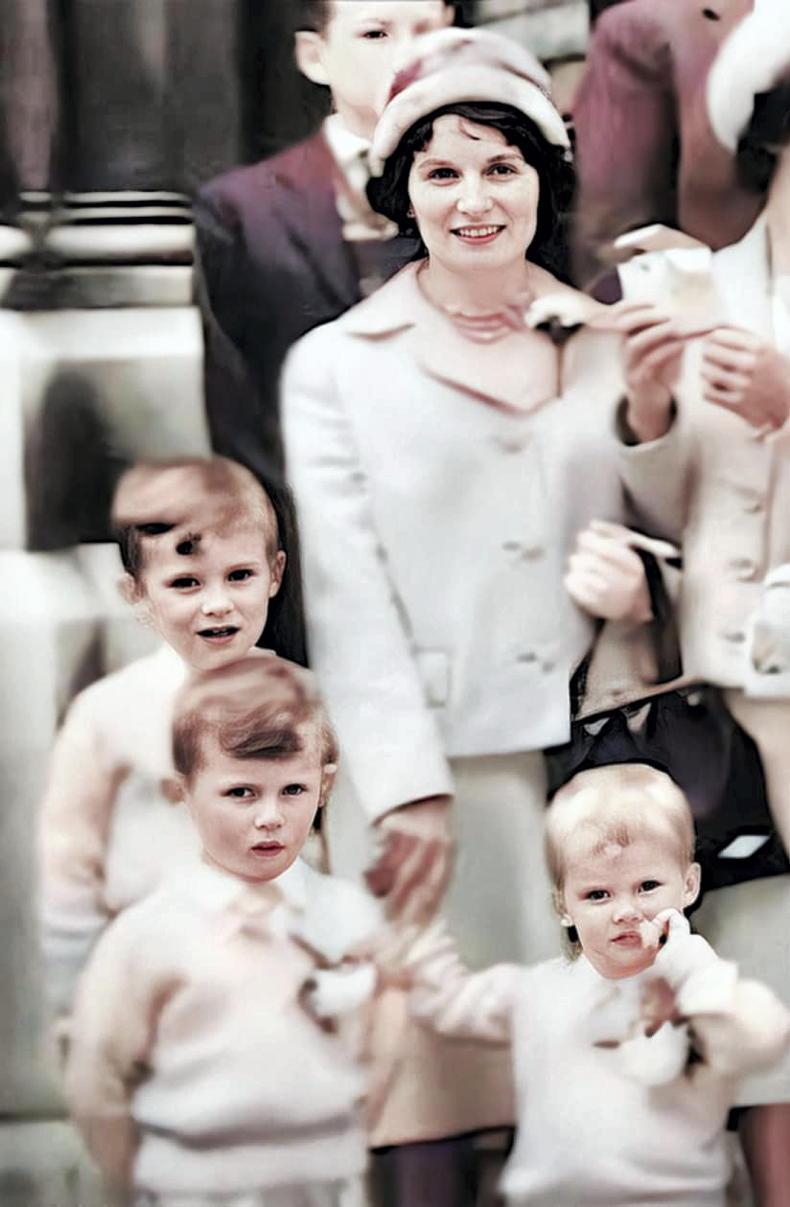
She later moved to Killure when she got married and raised her young family there until 1960, when she moved to Birmingham with her four sons. After four decades in the UK, where Bridie made friends with lots of different nationalities, she moved home as part of the Safe Home Programme more than 25 years ago (to bring home older emigrants), settling in Clonberne. She was heavily involved in the ICA on her return and in the local community.
Bridie later featured in a book entitled Coming Home, by Frances Browner, featuring many emigration stories. Around that time, she was received by the then Minister for Foreign Affairs, Micheál Martin, a photo she proudly has on display during our visit. She has also published poetry.
“I’m making you famous,” she quips to her son Tim as they get their photo taken. “I never thought I’d be doing this at near 101,” Bridie says with disbelief as part of her role as one of 48 Centenarian Ambassadors announced by the National Archives of Ireland to coincide with the historic release of the census records on 18 April.
Farming childhood
Asked about her childhood on the farm, Bridie remembers moving from her birthplace in a thatched house in Cornadrum to a new home and a farm allocated to the family by the Land Commission in Gowla, a few miles from Ahascragh.
“I’d milk a cow, no trouble,” she says, laughing heartily at the memory of work on the farm. “My father liked me the best at the milking. I had two older sisters, but the girls were always brought in for the milking.
“The cow would often kick the bucket, and there goes the milk,” she recalls, throwing her hands up in the air, chuckling. She remembers fondly making butter and using the soured milk to make a cake of bread with a crane and a pot over a turf fire.
“Everything was homemade. The odd time we’d bring home a pot of jam, or if you were going to the shop, bring home a loaf for a change. It was mostly home food. Cabbages were grown, oats for porridge, and we had wheaten bread from the wheat,” Bridie explains.
“We had a good few cattle, and we milked cows. We supplied the dairies sometimes. We had a donkey and two horses and what they needed to draw [things in and out] on a cart,” she recalls in a clear voice. There were also pigs, chickens and turkeys.
While they were out from “morning to night, dawn to dark” working in the fields, it was something they grew up with, and it was the norm in those times. There wasn’t much time for “devilment”, but they did manage some, she adds, joking that “we used to hide eggs in the ditch so we could buy something in the shop”. She also recalls playing games at the fair in Ballinamore Bridge.
Her face lights up in a particularly wide smile when she tells stories about going to a ceilí in Ahascragh or dances in Caltra.
“There was no such thing as hair oil at the time,” Bridie says for the boys, “but they had bicycle oil, and they had to have it greasy [their hair]. It’d be dripping down [their faces], she says, erupting into laughter. “We saw it all… You’d say, “Oh, Janey, he’s looking over at me,” and then you’d head for the toilet. “It was comical,” recollects Bridie before saying she could still do a tap dance or a reel with a glint in her eye.
One of six children, she is the last of her family and is predeceased by her brothers Owen Joe, Paddy and Johnny and her sisters Greta and Lily.
“My father was a very dedicated farmer, and he’d go out the happiest man and come home the happiest man and was never demanding,” she says.
“My mother was 12 years in America, so she had the knack of things from there. She worked in a restaurant, and she was very good at making sweet things and puddings. The other neighbours didn’t know how to do it.
“So, we had a lot going for us in the way of our parenthood. We were lucky. They never smacked us or shouted, and we turned out better than the ones that did.”
While neither of her parents spoke Irish, Bridie and her siblings learned Gaeilge in school and all had fáinne pins that they wore proudly. “Tá mé go maith. Cé a bhfuil tu fhéin? How’s that?” she asks, with a mischievous laugh, before querying my language credentials. When the answer from Irish Country Living is beagán or a little, she replies, “No focail at all,” laughing.
“You’d speak Irish if you met another person wearing a fáinne,” continues Bridie, remembering a priest stopping them to talk as Gaeilge on the way to a station mass [in houses] when he saw the pin. “I think the Naughtons were known to be Gaelic-minded,” she observes.
\ Claire Nash
Meeting de Valera
One memorable encounter speaking her native tongue was an audience with Éamon de Valera, who she says was in power at the time and was very much in favour of agriculture and the farming way of life.
“He was very tall, and I’m down here somewhere,” she says, referring to her petite stature with a smile. “He had silver little glasses and was very regal. He said, ‘How do you do? And I said, ‘How did you do?’ ‘Go maith,’ I replied.
“He was a lovely gentleman. I told him my father was not an Irish speaker, but he was a very big fan of his, and I said you can be sure of his vote,” she remembers. De Valera, who served three separate terms as Taoiseach, sent his regards to her father and thanked him, which Bridie recalls he “was over the moon” to hear about the following weekend.
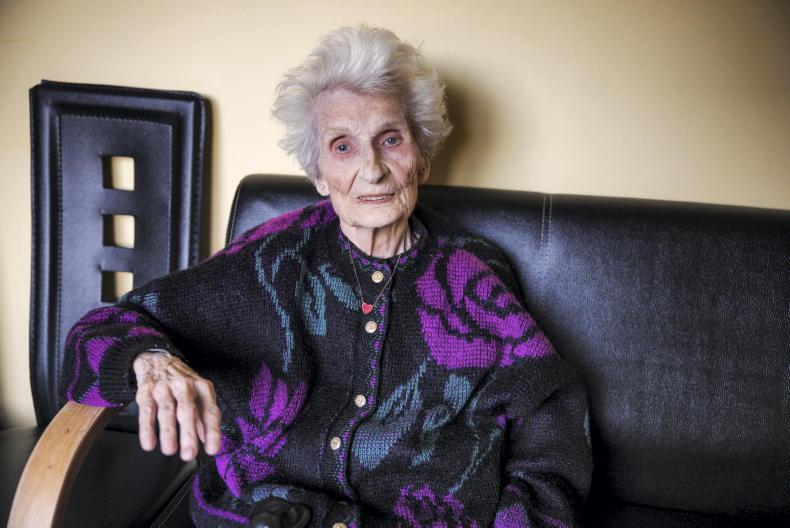
With her 101st birthday only around the corner on 26 May, the centenarian is clear on the reason for her longevity – hard work and an active life. Bear in mind she was still driving her car until the age of 97.
“Do you know what? I don’t think about my age because if I did, I’d feel old,” she concludes with a youthful grin before walking back to her room.
See nationalarchives.ie

