To most of us, Glastonbury is home to a world-famous music festival. But did you know the town is also associated with a sacred landscape of stories of a land-based goddess, as well as mythology associated with King Arthur and stories linking it to the roots of the early Christian church?
It was here in the Somerset countryside that Pauline Breen found a real connection with Brigit [the spelling used to denote the goddess as opposed to the saint Brigid], unexpectedly, after doing a guided meditation many years ago.
“Glastonbury is a small town, and it’s very open to the goddess movement, and for a long time, that didn’t come on my radar. However, during one of my visits over there, I did a guided meditation, and it was a really beautiful, spiritual, empowering moment.
“The essence of Brigit was really felt and it was so different to how she was portrayed in the Catholic church or as a saint,” she recalls.
Roots of first of four books
Pauline was always looking for that feeling of “putting a plug in a socket and feeling like, oh, that’s it”. When she didn’t find that in Catholicism, Pauline tried a lot of other spiritualities before discovering it in the divine feminine.
She later signed up for priestess training in Glastonbury for several years, where she “underwent a deep journey back to myself through Brigit”, and before she knew it, her first book had emerged from her study.
“I started learning about Brigit and researching about her, not so much as a saint but as a goddess, looking at Irish mythology, what snippets there are available to us. And there isn’t much because it was an oral tradition rather than a written form, but before I knew it, I had the guts of a book.
“I really wanted fact even though I can’t get fact. But I really wanted concrete myths, concrete beliefs about the Pagan aspect of Brigit and in that exploration so many different aspects of her opened up that we don’t really acknowledge in Ireland. It always seems to be a bit of a tug at her mantle between the pagan and the Christian.
“I wanted to dismiss the saint aspect of her and just go down the avenue of pagan goddess, but I think in my research and my journey with her, I came to realise it doesn’t really matter how you venerate her or what you call her. That energy intermingling and found in both is very much the same.”
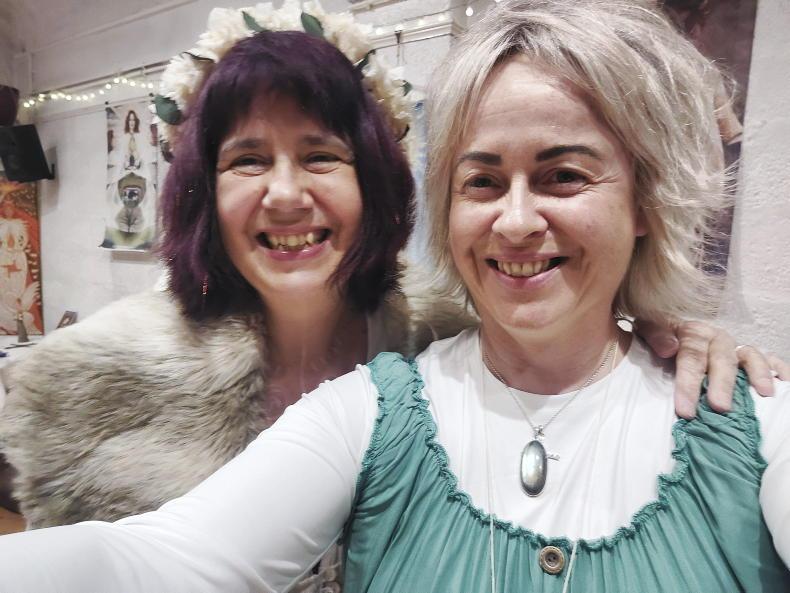
Writer Pauline Breen with Marion Van Eupen, known as Marion Brigantia, who does the Brighde-Brigantia priestess training in Glastonbury.
Her first book, Brigid: This is Brigid – Goddess & Saint of Ireland, which was self-published directly led to another, Maman Brigitte, published by Moon Press in the UK.
During research for her debut publication, she discovered Maman Brigitte, which means Mother Brigitte, pertinent to Haiti and Louisiana where she is a death goddess.
“Everything Brigit represents at Imbolc is new life here in Ireland. As a returning light of spring, she is that ever-returning maternal figure in voodoo, whether that is spelled voodoo in Louisiana or voodou from Haiti. She represents the realm of death; she gathers lost souls in the afterlife and brings them to her.
“So she is still that maternal figure, and really, it was looking at how Irish people emigrated throughout the ages, most pertinently before and after An Gorta Mór (the Great Famine), bringing their Catholic faith and St Brigid with them.
“Then you have the slave trade prior to that, where Irish sailors would have ended up in the Caribbean meeting the enslaved people from Benin, in west Africa, and how that fused with the Catholic faith to become Maman Brigitte.”
Full circle
Pauline, who is an educator, found the research process endlessly fascinating, and during work on her second book came across the pre-Roman Brigantes tribe in northern England, who migrated into the southeast of Ireland, possibly bringing their goddess Brigantia and “possibly where we got the notion of Brigit to begin with”. This material formed the basis of her third book Brigantia and Brigit.
“For me, the fascination is that she [Brigit] is a complete contradiction. She belongs nowhere, but she is that permanent essence that is just constantly there, whatever side of the world or whatever faith you are coming from. She is that liminal essence and energy that attracts so many people.”
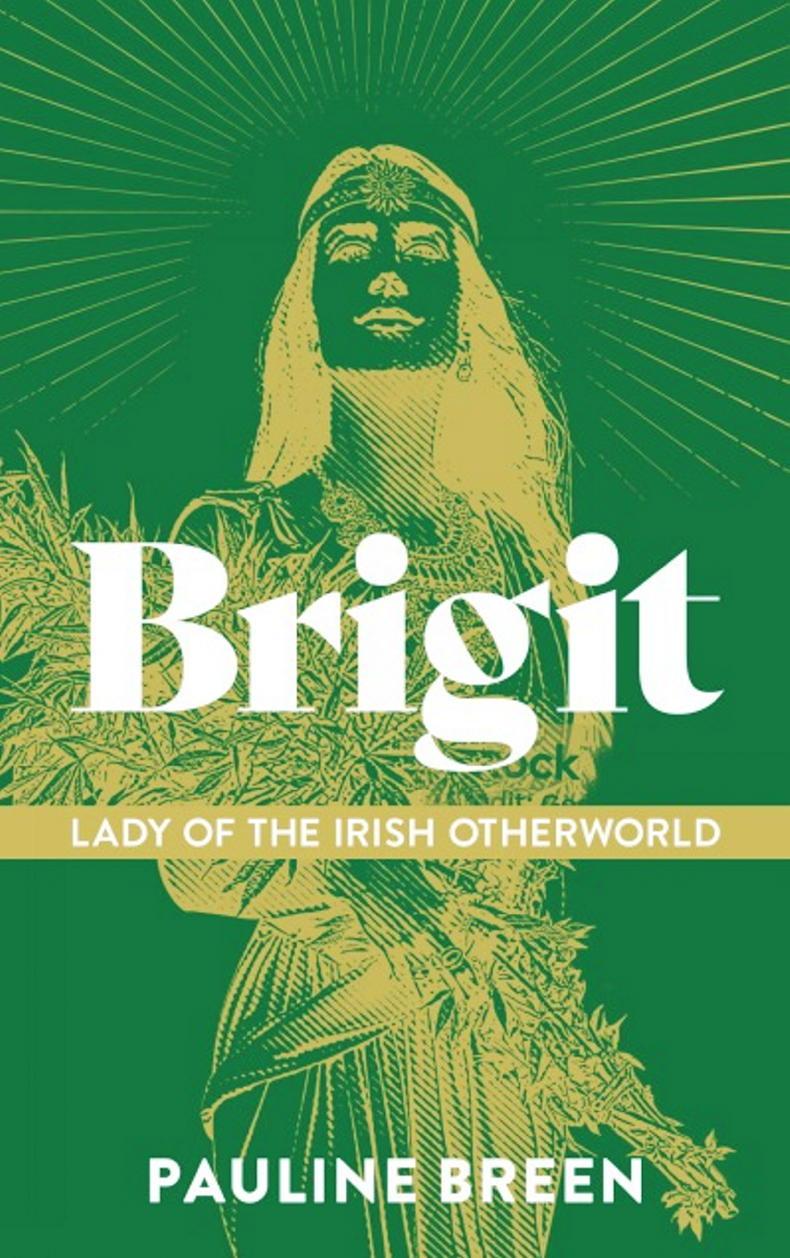
The writer believes her latest book Brigit: Lady Of The Irish Otherworld has brought her full circle back to mythical Brigit of pre-Christian Ireland, who is “of the land, of the sí [fairies] steeped in otherworldly magic.
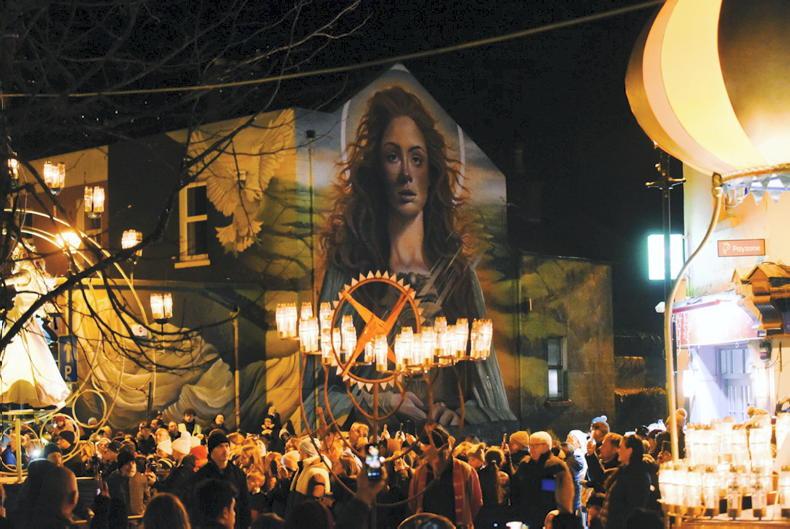
An illumination from the Brigid 2024 Festival in Kildare entitled 'She Moves Through the Fair' by Miguel Ruiz.
“I really wanted to show that she isn’t just at Imbolc. She is very much beyond that and deeper, and I suppose the connection with death and the fae folk was quite surprising. When we look at who are the sí, where are they in Ireland, and what are the sacred sites? We can see then that it is linked to Brigit too.
“Croghan Hill, for example, in Offaly is one of the sites of the sí. It is where the Fothairt tribe would have migrated to, and she is associated with Faughart [in Louth] from whom the tribe is named after. There are loads of little nuggets and threads [to Brigit],” she explains, excitedly.
Among the topics her new book explores are her lineage among the Tuatha Dé Danann, Ireland’s mythical race of divine beings, and her deep kinship with the fairy folk. It also examines the rituals, wells, and seasonal customs that link Brigit.
Her connection to death rites and customs is something Pauline also found fascinating during her latest book journey.
“We know that she gave birth to the old tradition of keening, the lamenting and yowling and the wail at the death of her only son, so really that was her encouragement as the goddess of poetry and expression to acknowledge the expression of grief.
“You don’t need the stiff upper lip; let it out and let the community lament the loss also. Through that lament, it is the music if you like, that surrounds the soul on its journey back home to the otherworld.”
Asked how she feels about the increased focus on Brigit or Brigid since the introduction of St Brigid’s Day as our newest bank holiday, Pauline replies that she is absolutely delighted to see all of the events and celebrations, however, she would like to see Brigit honoured at other times of the year too.
Honouring Brigit
Will Pauline mark 1 February in any special way herself? She laughs that she’ll probably collapse because her book is being launched and she has a whole series of interviews to coincide with that. Describing herself as a quiet person, she doesn’t get involved in the big celebrations, but the Offaly resident will honour Brigit on the eve of 1 February in simple ways, like maybe making oat bread, having a bath or doing a deep clean of the house.
“I can feel that energy coming in. I love this time of year where, as cold and miserable as it is, it is so important to go with the seasons. It’s something I’m really trying to do,” she says, urging people to embrace the tranquility of this time of year. “In another couple of weeks the beautiful, gentle Imbolc energy will be here, and then it’s more action and the increasing daylight, and that is when she [Brigit] is very palpably present.”
Brigit: Lady Of The Irish
Otherworld, €16.99, is published by Mercier Press.
St Brigid events around the country
1. St Brigid medieval-style candlelit procession
Hosted by the Faughart Community Group, this ancient-style candlelit procession begins at St Brigid’s Shrine and walks to Faughart graveyard, led by robed figures and a lone drummer. Open to people of all faiths and none. 31 January, at St Brigid’s Shrine, Faughart, Co Louth.
discoverireland.ie2. Féile na mBan
Donegal will celebrate St Brigid’s Day with the return of Féile na mBan in Bundoran from 30 January to 2 February, featuring concerts by Niamh Regan, The Henry Girls, and Mairéad Ní Mhaonaigh. Féile na mBan is now recognised as a weekend of women-led artistry, discussion and celebration.
feilenamban.ie3. Féile na Tána
Now in its 12th year, Féile na Tána celebrates the very best of Irish traditional music, song and dance across intimate venues at the foot of the Cooley Mountains. Programmed by acclaimed local violinist Zoë Conway and guitarist John McIntyre, the festival presents world-class concerts, workshops and sessions led by some of Ireland’s finest traditional artists. Events take place from 25 January to 2 February at Carlingford Heritage Centre, Co Louth.
feilenatana.com4. National Museum of Ireland: Turlough Park
Join Clodagh Doyle, Keeper of the Irish Folklife Division, at the museum showcasing rural life near Castlebar from 12 noon to 1pm on Saturday 31 January, for a special talk on folklife objects in the museum associated with the traditional celebration of St Brigid’s Day.
museum.ie5.Wextrad Weekend
Wexford town is set to host the inaugural Wextrad Weekend from 29 January to 2 February, coinciding with the bank holiday weekend. A range of activities will take place across the town, including performances and workshops run by local and national arts organisations like the National Opera House in Wexford, Wexford Arts Centre and Eclectic Avenue.
To most of us, Glastonbury is home to a world-famous music festival. But did you know the town is also associated with a sacred landscape of stories of a land-based goddess, as well as mythology associated with King Arthur and stories linking it to the roots of the early Christian church?
It was here in the Somerset countryside that Pauline Breen found a real connection with Brigit [the spelling used to denote the goddess as opposed to the saint Brigid], unexpectedly, after doing a guided meditation many years ago.
“Glastonbury is a small town, and it’s very open to the goddess movement, and for a long time, that didn’t come on my radar. However, during one of my visits over there, I did a guided meditation, and it was a really beautiful, spiritual, empowering moment.
“The essence of Brigit was really felt and it was so different to how she was portrayed in the Catholic church or as a saint,” she recalls.
Roots of first of four books
Pauline was always looking for that feeling of “putting a plug in a socket and feeling like, oh, that’s it”. When she didn’t find that in Catholicism, Pauline tried a lot of other spiritualities before discovering it in the divine feminine.
She later signed up for priestess training in Glastonbury for several years, where she “underwent a deep journey back to myself through Brigit”, and before she knew it, her first book had emerged from her study.
“I started learning about Brigit and researching about her, not so much as a saint but as a goddess, looking at Irish mythology, what snippets there are available to us. And there isn’t much because it was an oral tradition rather than a written form, but before I knew it, I had the guts of a book.
“I really wanted fact even though I can’t get fact. But I really wanted concrete myths, concrete beliefs about the Pagan aspect of Brigit and in that exploration so many different aspects of her opened up that we don’t really acknowledge in Ireland. It always seems to be a bit of a tug at her mantle between the pagan and the Christian.
“I wanted to dismiss the saint aspect of her and just go down the avenue of pagan goddess, but I think in my research and my journey with her, I came to realise it doesn’t really matter how you venerate her or what you call her. That energy intermingling and found in both is very much the same.”
Writer Pauline Breen with Marion Van Eupen, known as Marion Brigantia, who does the Brighde-Brigantia priestess training in Glastonbury.
Her first book, Brigid: This is Brigid – Goddess & Saint of Ireland, which was self-published directly led to another, Maman Brigitte, published by Moon Press in the UK.
During research for her debut publication, she discovered Maman Brigitte, which means Mother Brigitte, pertinent to Haiti and Louisiana where she is a death goddess.
“Everything Brigit represents at Imbolc is new life here in Ireland. As a returning light of spring, she is that ever-returning maternal figure in voodoo, whether that is spelled voodoo in Louisiana or voodou from Haiti. She represents the realm of death; she gathers lost souls in the afterlife and brings them to her.
“So she is still that maternal figure, and really, it was looking at how Irish people emigrated throughout the ages, most pertinently before and after An Gorta Mór (the Great Famine), bringing their Catholic faith and St Brigid with them.
“Then you have the slave trade prior to that, where Irish sailors would have ended up in the Caribbean meeting the enslaved people from Benin, in west Africa, and how that fused with the Catholic faith to become Maman Brigitte.”
Full circle
Pauline, who is an educator, found the research process endlessly fascinating, and during work on her second book came across the pre-Roman Brigantes tribe in northern England, who migrated into the southeast of Ireland, possibly bringing their goddess Brigantia and “possibly where we got the notion of Brigit to begin with”. This material formed the basis of her third book Brigantia and Brigit.
“For me, the fascination is that she [Brigit] is a complete contradiction. She belongs nowhere, but she is that permanent essence that is just constantly there, whatever side of the world or whatever faith you are coming from. She is that liminal essence and energy that attracts so many people.”
The writer believes her latest book Brigit: Lady Of The Irish Otherworld has brought her full circle back to mythical Brigit of pre-Christian Ireland, who is “of the land, of the sí [fairies] steeped in otherworldly magic.
An illumination from the Brigid 2024 Festival in Kildare entitled 'She Moves Through the Fair' by Miguel Ruiz.
“I really wanted to show that she isn’t just at Imbolc. She is very much beyond that and deeper, and I suppose the connection with death and the fae folk was quite surprising. When we look at who are the sí, where are they in Ireland, and what are the sacred sites? We can see then that it is linked to Brigit too.
“Croghan Hill, for example, in Offaly is one of the sites of the sí. It is where the Fothairt tribe would have migrated to, and she is associated with Faughart [in Louth] from whom the tribe is named after. There are loads of little nuggets and threads [to Brigit],” she explains, excitedly.
Among the topics her new book explores are her lineage among the Tuatha Dé Danann, Ireland’s mythical race of divine beings, and her deep kinship with the fairy folk. It also examines the rituals, wells, and seasonal customs that link Brigit.
Her connection to death rites and customs is something Pauline also found fascinating during her latest book journey.
“We know that she gave birth to the old tradition of keening, the lamenting and yowling and the wail at the death of her only son, so really that was her encouragement as the goddess of poetry and expression to acknowledge the expression of grief.
“You don’t need the stiff upper lip; let it out and let the community lament the loss also. Through that lament, it is the music if you like, that surrounds the soul on its journey back home to the otherworld.”
Asked how she feels about the increased focus on Brigit or Brigid since the introduction of St Brigid’s Day as our newest bank holiday, Pauline replies that she is absolutely delighted to see all of the events and celebrations, however, she would like to see Brigit honoured at other times of the year too.
Honouring Brigit
Will Pauline mark 1 February in any special way herself? She laughs that she’ll probably collapse because her book is being launched and she has a whole series of interviews to coincide with that. Describing herself as a quiet person, she doesn’t get involved in the big celebrations, but the Offaly resident will honour Brigit on the eve of 1 February in simple ways, like maybe making oat bread, having a bath or doing a deep clean of the house.
“I can feel that energy coming in. I love this time of year where, as cold and miserable as it is, it is so important to go with the seasons. It’s something I’m really trying to do,” she says, urging people to embrace the tranquility of this time of year. “In another couple of weeks the beautiful, gentle Imbolc energy will be here, and then it’s more action and the increasing daylight, and that is when she [Brigit] is very palpably present.”
Brigit: Lady Of The Irish
Otherworld, €16.99, is published by Mercier Press.
St Brigid events around the country
1. St Brigid medieval-style candlelit procession
Hosted by the Faughart Community Group, this ancient-style candlelit procession begins at St Brigid’s Shrine and walks to Faughart graveyard, led by robed figures and a lone drummer. Open to people of all faiths and none. 31 January, at St Brigid’s Shrine, Faughart, Co Louth.
discoverireland.ie2. Féile na mBan
Donegal will celebrate St Brigid’s Day with the return of Féile na mBan in Bundoran from 30 January to 2 February, featuring concerts by Niamh Regan, The Henry Girls, and Mairéad Ní Mhaonaigh. Féile na mBan is now recognised as a weekend of women-led artistry, discussion and celebration.
feilenamban.ie3. Féile na Tána
Now in its 12th year, Féile na Tána celebrates the very best of Irish traditional music, song and dance across intimate venues at the foot of the Cooley Mountains. Programmed by acclaimed local violinist Zoë Conway and guitarist John McIntyre, the festival presents world-class concerts, workshops and sessions led by some of Ireland’s finest traditional artists. Events take place from 25 January to 2 February at Carlingford Heritage Centre, Co Louth.
feilenatana.com4. National Museum of Ireland: Turlough Park
Join Clodagh Doyle, Keeper of the Irish Folklife Division, at the museum showcasing rural life near Castlebar from 12 noon to 1pm on Saturday 31 January, for a special talk on folklife objects in the museum associated with the traditional celebration of St Brigid’s Day.
museum.ie5.Wextrad Weekend
Wexford town is set to host the inaugural Wextrad Weekend from 29 January to 2 February, coinciding with the bank holiday weekend. A range of activities will take place across the town, including performances and workshops run by local and national arts organisations like the National Opera House in Wexford, Wexford Arts Centre and Eclectic Avenue.





SHARING OPTIONS