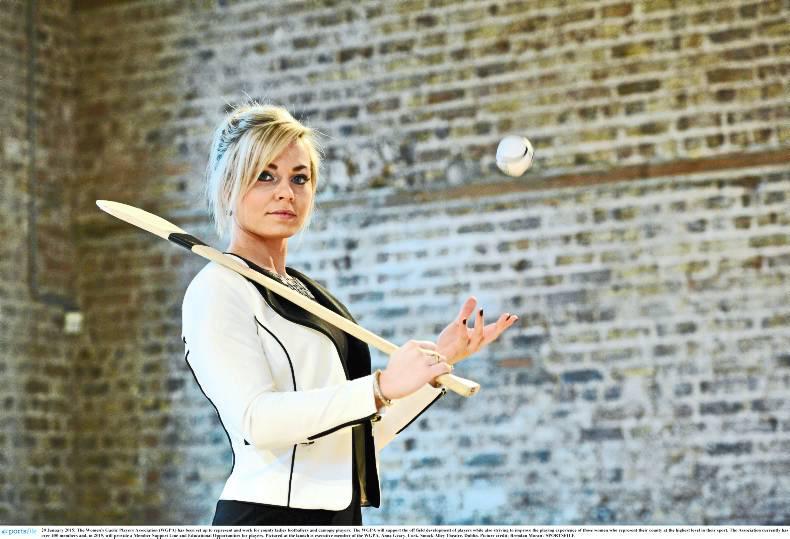
With seven All-Ireland medals for Cork and freelance work for RTÉ and TV3, Anna Geary is proving her prowess on and off the field. Such experience puts her in a perfect position to speak about the inequalities that exist in ladies’ GAA, as well as the strides that are being made.
“Like any player, I know there are inequalities between men’s and ladies’ sports in the GAA. However, I feel that it would be unfair to only acknowledge what is wrong. Thankfully there are great strides being made and it would be a great injustice to ignore these.
“Ladies’ GAA is viewed differently in the eyes of the public; it’s a sad reality. With the exception of a few players, we more than often receive very little financial support. Many ladies’ teams find it very difficult to even get to train on the main grounds in the county. We struggle to get top facilities. For the 12 years I played inter-county camogie, I was never offered mileage.
Inequality issues
“Most players buy their own boots and hurleys and pay for their own transport. It shows that women play for the love of the jersey. They sacrifice time and money just to play their sport. These are admirable qualities.
“But paths are being paved to slowly eradicate these inequality issues. Liberty Insurance recently announced a joint sponsorship of both hurling and camogie championships, placing men’s and ladies’ GAA on an equal footing.
“I’m proud to be the Cork ambassador with Liberty Insurance. It’s the first sponsorship of its kind in the world. It makes business and financial sense to get involved with ladies’ teams. The reality is, it can cost millions to sponsor a men’s team, be it soccer, rugby or GAA. Women’s teams, however, cost companies a lot less money, while simultaneously receiving media attention and kudos.
“One of the best memories of my camogie career was in the 2012 league final in Thurles against Wexford. We played before the Kilkenny and Cork men’s match. Afterwards, people said that the women’s game was far more entertaining as there was only a poc of the ball between the two teams.
“The attendance at that game brought a great atmosphere to the ladies’ match. I feel that prior to the All-Ireland semi-final and final, there should be more double-headers to get numbers up at games.
“How are we expected to increase numbers at games if these matches are not getting the coverage they deserve? I feel players play a pivotal role here and anyone involved in the game needs to start promoting their sport on social media platforms.
Raising the issue
“I try to speak about women’s sport when I can on air. For example in the Connaught final this year, Cora Staunton scored 2-14 for Mayo to win their first provincial title since 2011. It’s some achievement for a team to collectively score 2-14 in a game, but for one person to attain a score like that is something inconceivable. If Cora had the coverage of her male counterparts, she would be hailed the superstar that she is.
“The network opportunities in GAA are excellent. Without GAA I wouldn’t have had the opportunities I have gotten in life or indeed be the person I am today. I’m in a privileged position because of sport, not just thanks to Cork but through my club also.
“I believe in the concept of synergy that together is better. Women’s sporting associations need to work together, perhaps through something as simple as a breakfast morning to discuss their issues. If a problem exists in one sport, more than likely the same problem is evident in another.
“Men are still the top dogs when it comes to sport. My experience is that most men are very respectful of women’s achievements. They take what I won very seriously. If the big names in men’s GAA, the sporting heroes, are seen to give genuine credit and authentic support to ladies’ GAA, people may start to view the sport a lot more seriously.
“Parents need to ask, if they have a daughter and she is seriously talented, would they like her to get the credit and recognition she deserves, and to be treated like the professional that she is?
“Progress is being made in ladies sport, but we have a long way to go yet,” says Anna.
Inequality in the GAA
Catherine McGourty from Down won the camogie poc fada Ulster Championship on Hen Mountain in Co Down while Tyrone’s Paddy McKillion won the male equivalent. But despite playing the exact same course as the men, all Catherine received was a medal while McKillion won a skiing holiday. In 2014, a survey was sent to over 600 county ladies’ football and camogie players to gather information about their playing and personal experiences in sport. The Women’s Gaelic Players’ Association (WGPA) then wrote up the Let’s Make Things Better report. The findings were:
• 50% of respondents reported that GAA had an effect on their relationships and their work and college responsibilities.• 43% had to take time off work or college due to an injury.• 7% of players surveyed received expenses for travelling to training/games with remuneration of 18-30c per mile.• 62% did not receive medical expenses associated with injuries.• 88% of camogie players buy their own hurls.• 63% indicated that they had been out of pocket on some occasion due to county commitments.• 82% of players reported taking part in their own fundraising for gear, food, travel expenses.THE GENDER DIVIDE
Are women in the GAA getting the same support as men?
Anne Eviston
Tipperary camogie player
The gap between men’s and ladies’ GAA still exists. We have to do all our own fundraising to pay for the essentials, such as food after training and transport. For example, we were playing a match in Derry and each player had to fundraise to pay for our accommodation. We don’t get enough funding for the things we need. There’s a lot to be desired from the numbers coming to our games, the support just isn’t there. We train the same as the men’s teams and give the same commitment, but don’t get the same respect or recognition.
Una Sinnott
Wexford camogie player
The gear, food, training and facilities supplied to us have improved over the past year alone. The new Wexford Centre of Excellence, which has been constructed in Ferns, makes me believe that the fight for gender equality among athletes is slowly becoming more balanced. Although I am only 18 and have been playing with the senior camogie team for two years now, I believe the standard of support has improved greatly over the past decade; that’s judged by the remarks from my more experienced county team mates.
Niamh Kelly
Mayo footballer
I don’t think men and women in the GAA are treated equally. Yes, improvements have been made such as Lidl sponsoring the championship and Elvery’s have come on board with our team, which we greatly appreciate, but more has to be done. For example, we are only allowed on the county pitch twice a year, even though the men train there regularly. Only for TG4 we would get no media coverage. The All-Ireland final is the only game ladies play in Croke Park. Food after training, physios and doctor services all fall short of what men get.
Karen McGrath
Waterford footballer
It is fair to say that ladies are not getting the same support in the GAA as men. You can see this when you compare the attendance levels at games, sponsorship, promotion and media coverage. However, I feel people’s perception is changing towards women’s GAA. The establishment of the Women’s Gaelic Players’ Association (WGPA) has been a big driver of this. Not just does it aim to market the ladies’ game in a way never done before, but it also lends personal support to players, which is very beneficial for female GAA players today.
With seven All-Ireland medals for Cork and freelance work for RTÉ and TV3, Anna Geary is proving her prowess on and off the field. Such experience puts her in a perfect position to speak about the inequalities that exist in ladies’ GAA, as well as the strides that are being made.
“Like any player, I know there are inequalities between men’s and ladies’ sports in the GAA. However, I feel that it would be unfair to only acknowledge what is wrong. Thankfully there are great strides being made and it would be a great injustice to ignore these.
“Ladies’ GAA is viewed differently in the eyes of the public; it’s a sad reality. With the exception of a few players, we more than often receive very little financial support. Many ladies’ teams find it very difficult to even get to train on the main grounds in the county. We struggle to get top facilities. For the 12 years I played inter-county camogie, I was never offered mileage.
Inequality issues
“Most players buy their own boots and hurleys and pay for their own transport. It shows that women play for the love of the jersey. They sacrifice time and money just to play their sport. These are admirable qualities.
“But paths are being paved to slowly eradicate these inequality issues. Liberty Insurance recently announced a joint sponsorship of both hurling and camogie championships, placing men’s and ladies’ GAA on an equal footing.
“I’m proud to be the Cork ambassador with Liberty Insurance. It’s the first sponsorship of its kind in the world. It makes business and financial sense to get involved with ladies’ teams. The reality is, it can cost millions to sponsor a men’s team, be it soccer, rugby or GAA. Women’s teams, however, cost companies a lot less money, while simultaneously receiving media attention and kudos.
“One of the best memories of my camogie career was in the 2012 league final in Thurles against Wexford. We played before the Kilkenny and Cork men’s match. Afterwards, people said that the women’s game was far more entertaining as there was only a poc of the ball between the two teams.
“The attendance at that game brought a great atmosphere to the ladies’ match. I feel that prior to the All-Ireland semi-final and final, there should be more double-headers to get numbers up at games.
“How are we expected to increase numbers at games if these matches are not getting the coverage they deserve? I feel players play a pivotal role here and anyone involved in the game needs to start promoting their sport on social media platforms.
Raising the issue
“I try to speak about women’s sport when I can on air. For example in the Connaught final this year, Cora Staunton scored 2-14 for Mayo to win their first provincial title since 2011. It’s some achievement for a team to collectively score 2-14 in a game, but for one person to attain a score like that is something inconceivable. If Cora had the coverage of her male counterparts, she would be hailed the superstar that she is.
“The network opportunities in GAA are excellent. Without GAA I wouldn’t have had the opportunities I have gotten in life or indeed be the person I am today. I’m in a privileged position because of sport, not just thanks to Cork but through my club also.
“I believe in the concept of synergy that together is better. Women’s sporting associations need to work together, perhaps through something as simple as a breakfast morning to discuss their issues. If a problem exists in one sport, more than likely the same problem is evident in another.
“Men are still the top dogs when it comes to sport. My experience is that most men are very respectful of women’s achievements. They take what I won very seriously. If the big names in men’s GAA, the sporting heroes, are seen to give genuine credit and authentic support to ladies’ GAA, people may start to view the sport a lot more seriously.
“Parents need to ask, if they have a daughter and she is seriously talented, would they like her to get the credit and recognition she deserves, and to be treated like the professional that she is?
“Progress is being made in ladies sport, but we have a long way to go yet,” says Anna.
Inequality in the GAA
Catherine McGourty from Down won the camogie poc fada Ulster Championship on Hen Mountain in Co Down while Tyrone’s Paddy McKillion won the male equivalent. But despite playing the exact same course as the men, all Catherine received was a medal while McKillion won a skiing holiday. In 2014, a survey was sent to over 600 county ladies’ football and camogie players to gather information about their playing and personal experiences in sport. The Women’s Gaelic Players’ Association (WGPA) then wrote up the Let’s Make Things Better report. The findings were:
• 50% of respondents reported that GAA had an effect on their relationships and their work and college responsibilities.• 43% had to take time off work or college due to an injury.• 7% of players surveyed received expenses for travelling to training/games with remuneration of 18-30c per mile.• 62% did not receive medical expenses associated with injuries.• 88% of camogie players buy their own hurls.• 63% indicated that they had been out of pocket on some occasion due to county commitments.• 82% of players reported taking part in their own fundraising for gear, food, travel expenses.THE GENDER DIVIDE
Are women in the GAA getting the same support as men?
Anne Eviston
Tipperary camogie player
The gap between men’s and ladies’ GAA still exists. We have to do all our own fundraising to pay for the essentials, such as food after training and transport. For example, we were playing a match in Derry and each player had to fundraise to pay for our accommodation. We don’t get enough funding for the things we need. There’s a lot to be desired from the numbers coming to our games, the support just isn’t there. We train the same as the men’s teams and give the same commitment, but don’t get the same respect or recognition.
Una Sinnott
Wexford camogie player
The gear, food, training and facilities supplied to us have improved over the past year alone. The new Wexford Centre of Excellence, which has been constructed in Ferns, makes me believe that the fight for gender equality among athletes is slowly becoming more balanced. Although I am only 18 and have been playing with the senior camogie team for two years now, I believe the standard of support has improved greatly over the past decade; that’s judged by the remarks from my more experienced county team mates.
Niamh Kelly
Mayo footballer
I don’t think men and women in the GAA are treated equally. Yes, improvements have been made such as Lidl sponsoring the championship and Elvery’s have come on board with our team, which we greatly appreciate, but more has to be done. For example, we are only allowed on the county pitch twice a year, even though the men train there regularly. Only for TG4 we would get no media coverage. The All-Ireland final is the only game ladies play in Croke Park. Food after training, physios and doctor services all fall short of what men get.
Karen McGrath
Waterford footballer
It is fair to say that ladies are not getting the same support in the GAA as men. You can see this when you compare the attendance levels at games, sponsorship, promotion and media coverage. However, I feel people’s perception is changing towards women’s GAA. The establishment of the Women’s Gaelic Players’ Association (WGPA) has been a big driver of this. Not just does it aim to market the ladies’ game in a way never done before, but it also lends personal support to players, which is very beneficial for female GAA players today.





SHARING OPTIONS